The drive from Changi Airport to most of central Singapore takes about 20 to 35 minutes in normal traffic. Marina Bay and Orchard Road sit inside that range, and the busiest hours add roughly a quarter to a half more. The drive itself is rarely the uncertain part of an arrival. The wait before it is: immigration, baggage and finding your ride. A pre-booked chauffeur, such as our airport transfer service, removes the last of those, because your driver meets you instead of you queuing for a car.
This guide gives realistic driving times from Changi to the places visitors and business travellers actually go. It also shows how the time of day changes them, and how to build a sensible buffer for flights, meetings and group arrivals.
TL;DR
- Changi to Marina Bay or Orchard Road by car: about 20 to 40 minutes, depending on the hour and the route.
- Changi is one of the less congestion-sensitive starting points in Singapore, but allow extra time in the morning and evening peaks.
- The time from landing to sitting in the car often matters more than the drive. Plan for immigration, baggage and meeting your driver.
- Going to Sentosa, the west or Malaysia takes noticeably longer than going to the city.
- A pre-booked private transfer fixes your pick-up point and fare before you land. Our airport arrival rates are S$65 to S$140 per trip, depending on vehicle and group size.
Table of Contents
- How long is the drive from Changi to the city?
- Drive times to the places people actually go
- How much does time of day change the drive?
- The part that takes longer than the drive
- What affects your drive on departure
- Is the car the fastest way from Changi?
- Planning by traveller type
- Short layover: can you leave Changi and come back?
- Going beyond Singapore: Malaysia and long trips
- Booking a transfer that matches your timing
- FAQ
- Sources
How long is the drive from Changi to the city?
Changi sits at the eastern tip of the island. The East Coast Parkway (ECP) and the Pan-Island Expressway (PIE) both run from the airport towards the city, and a CNN city guide for Singapore puts the drive at about 20 minutes in normal traffic on either one. A Wikivoyage entry on Changi gives a wider range, 30 to 40 minutes, for downtown and central Singapore, and notes that Tampines is about 10 minutes away.
The two figures are not in conflict. The shorter one describes a clear road to the nearest part of the Central Business District. The longer one covers the wider centre, including the hotel belt, with some traffic. For planning, use this rule of thumb:
- Best case, quiet roads: around 20 minutes to Marina Bay.
- Typical daytime: 25 to 35 minutes to the central districts.
- Busy periods: 35 to 45 minutes or more, especially towards Orchard Road.
If your plans depend on a tight connection, plan with the middle figure, not the best case.
Drive times to the places people actually go
Most visitors are heading for one of a handful of areas. The table below combines the published ranges with the geography of Singapore’s expressways. The Marina Bay and Orchard figures come from TaxiFareCalc’s Changi-to-city comparison, which lists distances and times by car.
| Destination | Distance by road | Typical drive time |
|---|---|---|
| Marina Bay (hotels, Marina Bay Sands, Gardens by the Bay) | 18 to 22 km | 20 to 35 minutes |
| Orchard Road | 20 to 25 km | 25 to 40 minutes |
| Tampines and the east | short hop | about 10 minutes |
| Central Business District, Raffles Place | about 20 km | 20 to 35 minutes |
| Sentosa and the south-west | further across the island | longer than the city, plan on 40 minutes or more |
| Jurong and the west | opposite end of the PIE | about twice the downtown time |
The Tampines and Jurong comparisons follow the Wikivoyage description: Jurong is at the western end of the expressway and takes about double the time of a trip downtown. Sentosa is a rough planning figure for the south-west, not a published one, so treat it as a minimum and add margin for the Sentosa approach roads.
A few practical points make these numbers more useful:
- Marina Bay is the quickest of the common hotel destinations because the ECP runs straight to it along the coast.
- Orchard Road is a few minutes slower because the last stretch is through busier city streets, and drop-off points at hotels can add a short wait.
- Sentosa is a different journey. If that is where you are going, our guide to Changi to Sentosa transfers explains the route and how to skip the arrival queue.
- Ferry terminals such as HarbourFront, Tanah Merah and Changi have their own timing, because the ferry schedule, not the road, is your deadline. See our note on ferry terminal transfers.
For a closer look at the single most popular route, read our comparison of Changi to Marina Bay Sands by taxi, MRT or private transfer.
How much does time of day change the drive?
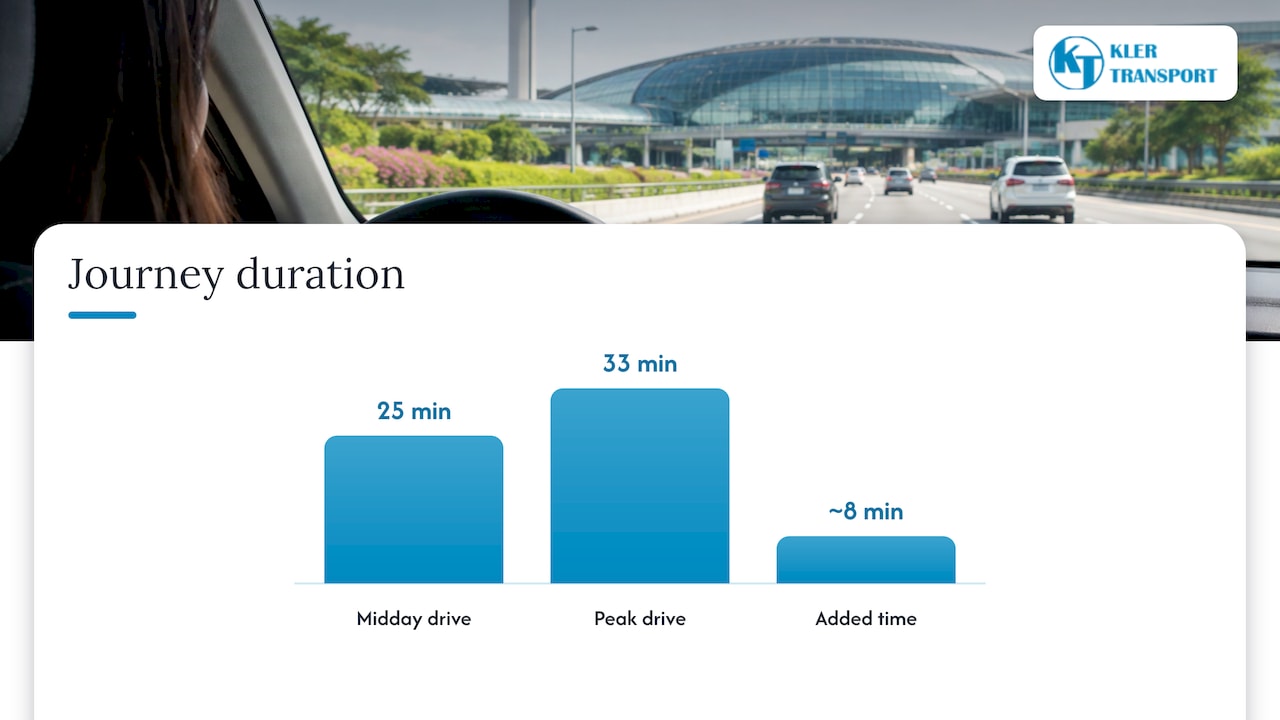
Less than most people fear. A TomTom study of Singapore drivers reported by Techgoondu found Changi was among the areas least affected by peak-hour congestion. Drivers from Changi spent 31 per cent more time reaching Raffles Place in the peak hours (7am to 9am and 5pm to 7pm) than in the quiet hours between 1am and 5am. Drivers starting in Bukit Timah spent 111 per cent more in the morning.
The study is from 2013, so treat it as a picture of how the network behaves rather than a current minute count. But the logic still holds today: at Changi you are at the start of the expressways, and your traffic is flowing in the direction away from the airport rather than into a jam of commuters heading to work.
Applied to a 25-minute base drive, a 31 per cent increase is about 8 minutes. So a journey that takes 25 minutes at midday might take 33 minutes at the peak. That is a manageable difference, but it is not the whole picture, because:
- Events and accidents can close or slow a lane. A race weekend, a concert at the National Stadium or a stalled vehicle on the ECP can add much more than the average.
- Wet weather slows expressway traffic, and Singapore’s afternoon showers can arrive without warning.
- Pick-up and drop-off at a hotel entrance, a convention centre or an office tower adds minutes that no road-time figure includes.
If you are travelling in the morning or evening peak, add 10 to 15 minutes to your estimate and you will rarely be caught out.
The part that takes longer than the drive
Most searches for Changi travel time are really asking one question: how long until I am at my hotel, my meeting or my event? The drive is only one block of that. On arrival, you need to allow for each of these in turn:
- Landing and taxiing to the gate. Some flights park at a gate immediately, others wait for one.
- Immigration. Queue length varies with how many flights landed together, and with whether you can use the automated lanes.
- Baggage reclaim. If you have checked luggage, your bags may take a while to reach the belt.
- Finding your ride. At a taxi rank this means a queue. For a pre-booked chauffeur it means finding the person with your name.
The point of listing them is that all of them come before the 20 to 35 minutes of driving. A traveller who lands at 9:00 and has a 10:30 meeting in the CBD has less margin than the road time suggests. As a working rule, plan the arrival hall to car stage as taking an hour or more for a full-service arrival with luggage, and shorter for a cabin-bag-only traveller who can use fast lanes.
For business travellers, the safest approach is to set the meeting time from the time you leave the airport, not from the time you land. For families, add time for strollers, car seats and a slower pace through the terminal.
What affects your drive on departure
Driving to Changi for a departure is the reverse of the arrival, and the traffic logic is much the same. The difference is that the deadline is hard. A missed meeting is annoying, a missed check-in is expensive.
A few habits help:
- Work backwards from check-in closing, not from take-off. Airlines close check-in well before departure, and the time varies by airline and route, so confirm it on your booking.
- Add the peak-hour margin if you leave between 7am and 9am or 5pm and 7pm.
- Allow for early starts. Very early morning departures have the quickest roads, but late-night and early-morning rides can carry a midnight surcharge. Ours is S$10 to S$20, published on our rates page, so you know it before you book.
- Choose the right terminal. Changi has several terminals, and telling the driver the wrong one costs you time. Check your e-ticket.
Our published rate for airport departure is S$60 to S$130 per trip, depending on the vehicle and the size of your group.
Is the car the fastest way from Changi?
Door to door, a car is usually the quickest and the least effort, especially with luggage. The MRT takes a similar amount of time in the abstract, but it involves a station walk, a change at Tanah Merah and a final walk from the station to your hotel. A car goes from kerb to kerb.
The three common ways to get into the city are:
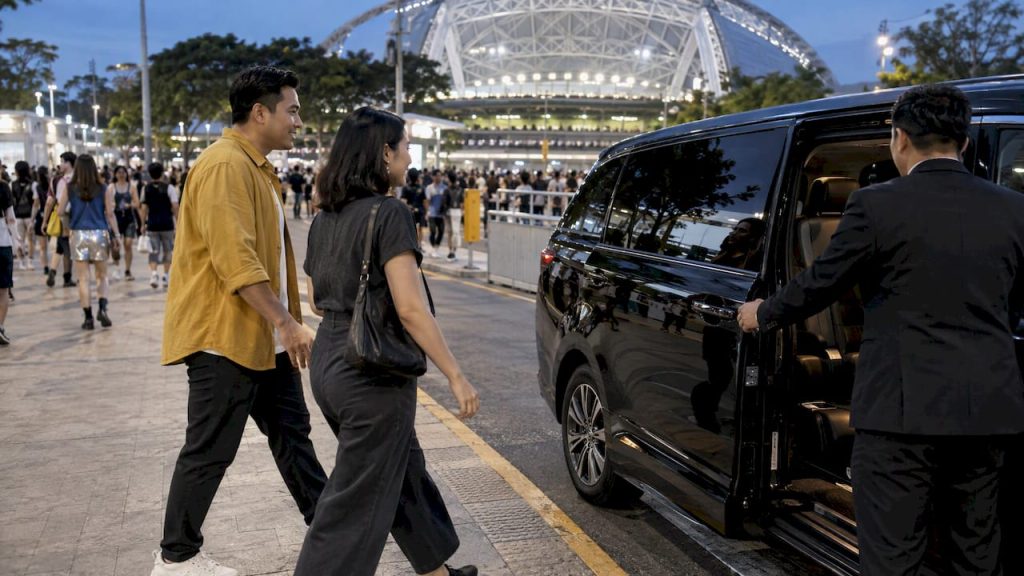
- A private chauffeured transfer. Your driver meets you, takes your luggage and goes straight to your address. The price is agreed in advance.
- A street taxi from the rank. Convenient, but you join a queue at peak arrival times, and the fare is metered and subject to surcharges.
- The MRT. The cheapest by far, and not affected by road traffic, but not practical for several suitcases or a group.
For a deeper breakdown of the costs, see our guide on airport transfer costs in Singapore, and for the full set of choices, Changi airport transfer options for travellers.
Planning by traveller type
Tourists on a first visit
The main risk for a first-time visitor is not the drive, it is the uncertainty at the arrivals hall. Know the name of your hotel, have the address saved in your phone, and decide your ride before you land. If you have a pre-booked driver, you can use the time in the baggage hall to message them rather than to compare options.
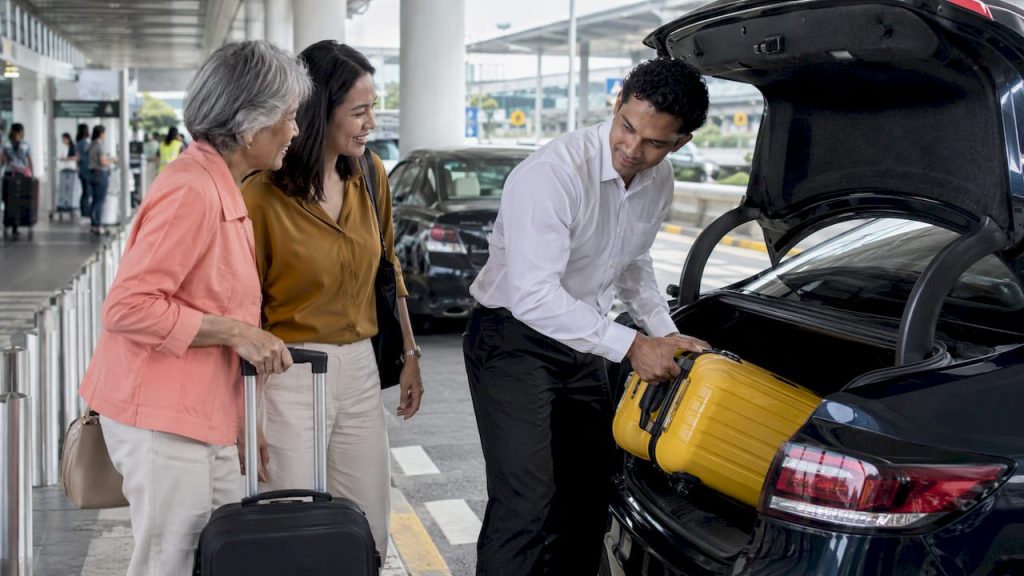
Our drivers are experienced and English-speaking, and the service includes meet-and-greet and luggage handling, so you can walk out of the arrivals hall and be met rather than hunting for a pick-up point.
Business travellers
If you land and go straight to a meeting, count the whole sequence, not the road time. Build in a buffer of at least 15 minutes beyond your best estimate. If you travel for work regularly, a chauffeured service on a repeat basis removes the booking effort each time. We cover this on our business and corporate transport page.
Families and groups
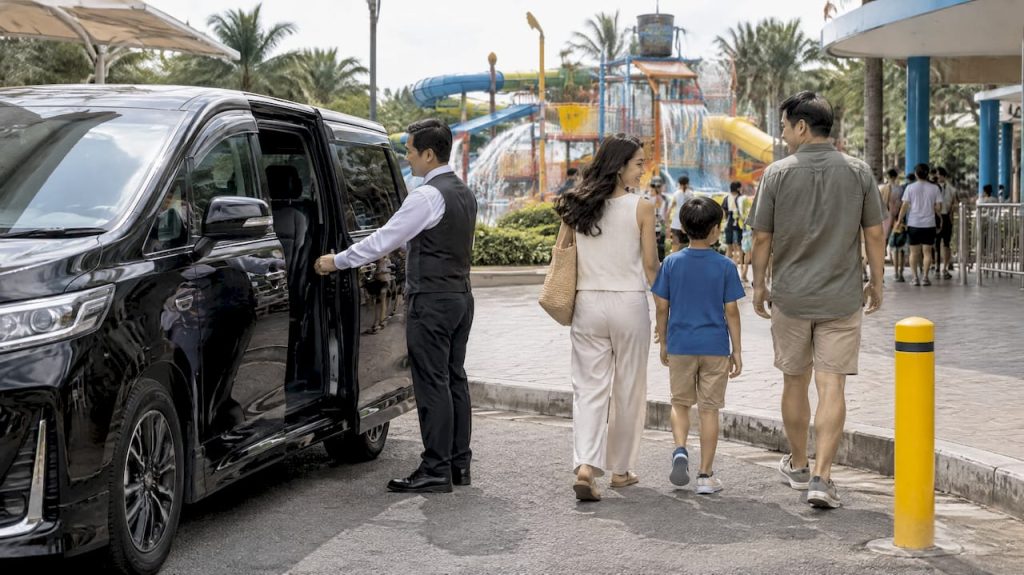
Groups have two timing problems. The first is that everyone clears immigration at a different speed, and the group is not complete until the last person and the last bag arrive. The second is vehicle size: five or six people with luggage do not fit in one saloon car.
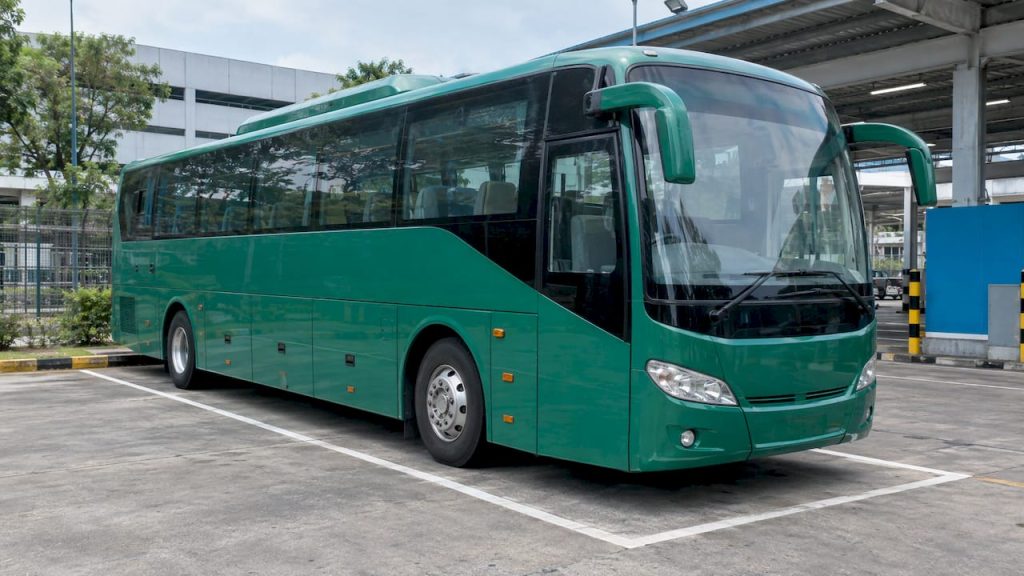
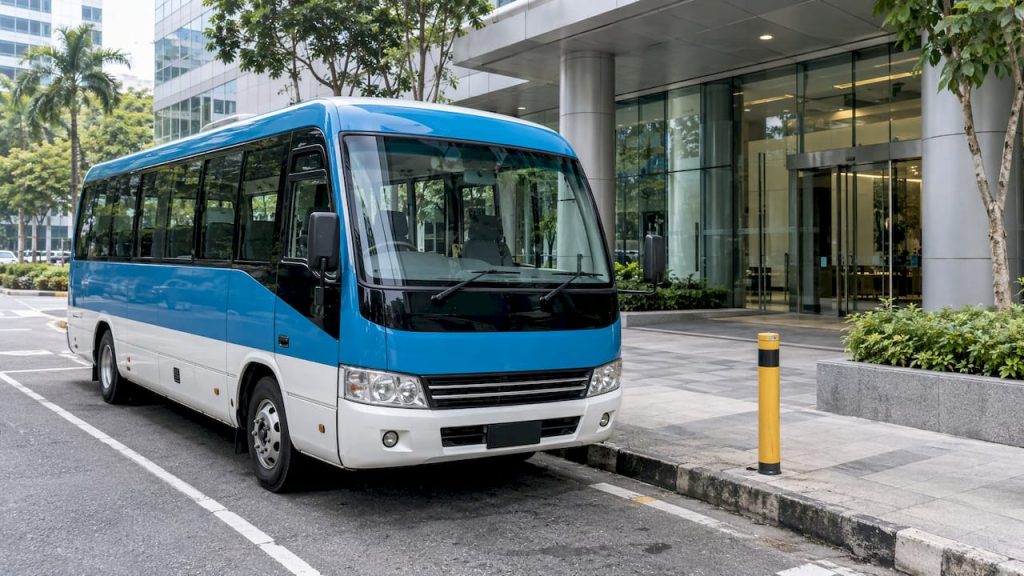
Our fleet includes sedans, MPVs, minibuses and coaches, so a group can travel together in one vehicle rather than splitting across several. For larger parties, read our group airport transfer guide.
Event organisers
When you are moving guests to a venue, the arrival times are staggered and the drive is the predictable part. Plan the run in waves, with vehicles matched to flight arrival times, and keep a margin for the venue drop-off, which is often slower than the drive itself. Our event transfers page sets out the vehicles available.
Staff and daily commuting
For workers and regular commuters, the key is consistency. A fixed pick-up window and route make the journey easier to schedule than ad hoc bookings. We offer staff and workers transport as part of our services.
Short layover: can you leave Changi and come back?
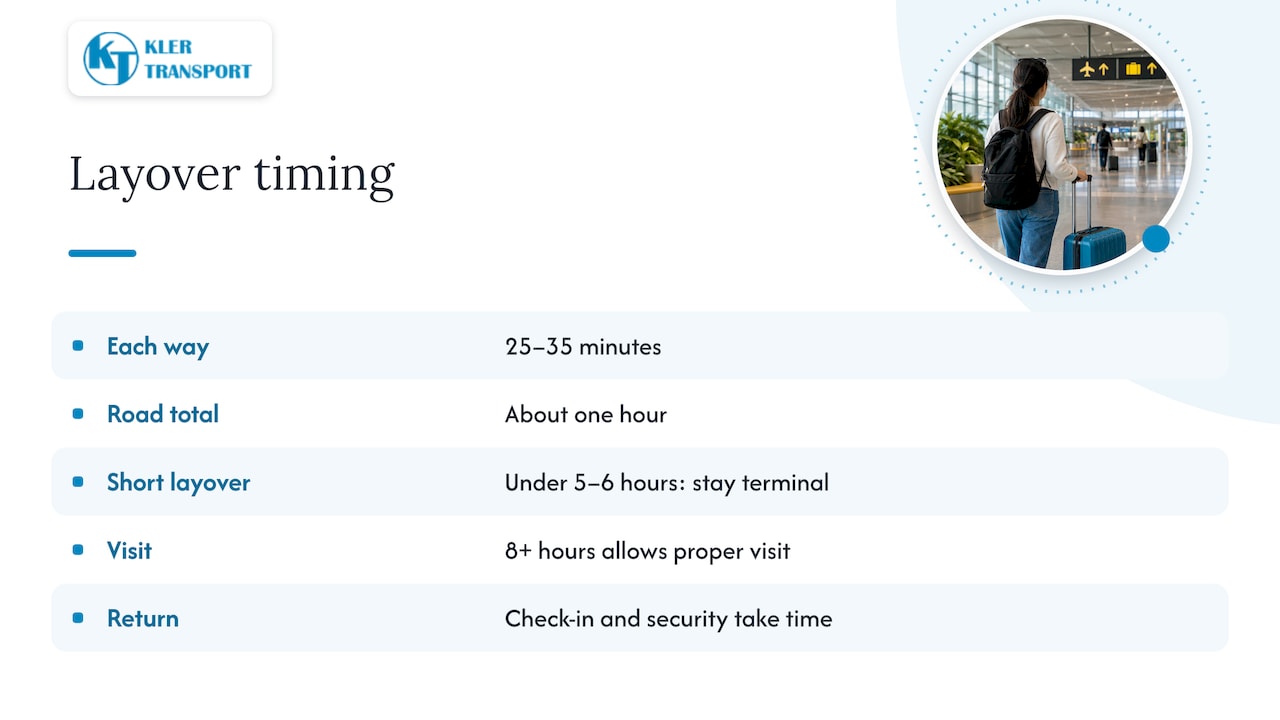
If you have a few hours between flights, the car time is a smaller part of the decision than the clearance times at both ends. With a 25 to 35 minute drive each way, you spend about an hour on the road before you have seen anything, and you must allow for departure check-in and security on return. As a result, a layover shorter than five or six hours is usually better spent in the terminal, while a stopover of eight hours or more gives you time for a proper visit. Check the airline’s check-in cut-off for your onward flight, and the entry rules for your nationality, before you leave the airside area.
If you do go out, an hourly booking works better than a single transfer, because the same driver can take you to your stops and back to the terminal in time. Our hourly rate is S$50 to S$100 per hour, depending on the vehicle.
Going beyond Singapore: Malaysia and long trips
The times above are for the island. Trips to Johor, Malacca and other places in Malaysia depend on the land checkpoint queues, which can be far longer than the drive itself. For these, a daily charter is more practical than a single trip: our charter vehicle is S$450 per day, with details on our Malaysia rates page. Allow generous margin for border crossing, and book your driver for the whole day.
Booking a transfer that matches your timing
If the time between landing and arriving matters to you, a pre-booked chauffeur is the simplest fix. Our airport transfers run around the clock, and the driver meets you at arrivals, handles your luggage and takes you directly to your address. The price depends on the vehicle and the size of your group, and the published range for airport arrival is S$65 to S$140 per trip. You can see all the current rates, including the midnight charge of S$10 to S$20, on our rates page.

To arrange a pick-up for your flight, start with our Changi airport transfer page. If you want to compare pick-up arrangements first, our guide to airport pick-up options at Changi lays them out.
FAQ
How long does it take to drive from Changi Airport to Marina Bay Sands?
About 20 to 35 minutes by car, depending on the traffic and the time of day. The route is mostly along the East Coast Parkway. Allow the upper end of that range at the evening peak or on event nights.
How long does it take to drive from Changi Airport to Orchard Road?
About 25 to 40 minutes. The distance is a little longer than to Marina Bay and the final part of the drive is through city streets. Add a few minutes if your hotel has a busy entrance.
Is traffic bad around Changi Airport at peak hours?
Less so than in many parts of Singapore. A TomTom study found drivers starting at Changi spent 31 per cent more time reaching Raffles Place at peak than at quiet hours, a much smaller rise than in some other districts. Even so, allow an extra 10 to 15 minutes at the morning and evening peaks.
How early should I leave for Changi Airport for a flight?
Work back from your airline’s check-in closing time, not from take-off. Add the road time for your hour of travel, plus a margin of 10 to 15 minutes if you are driving in the peak. Pre-booking a driver means your pick-up time is fixed before the day.
Can a group travel together from Changi in one vehicle?
Yes. We run sedans, MPVs, minibuses and coaches, so a family or a corporate group can usually travel in a single vehicle with its luggage. Tell us the group size and the amount of luggage when you book so we can match the vehicle.
Sources
- CNN ASIANOW city guide to Singapore
- TaxiFareCalc, how to get from Changi to the city
- Techgoondu, TomTom study on peak-hour traffic
- Wikivoyage, Singapore Changi Airport