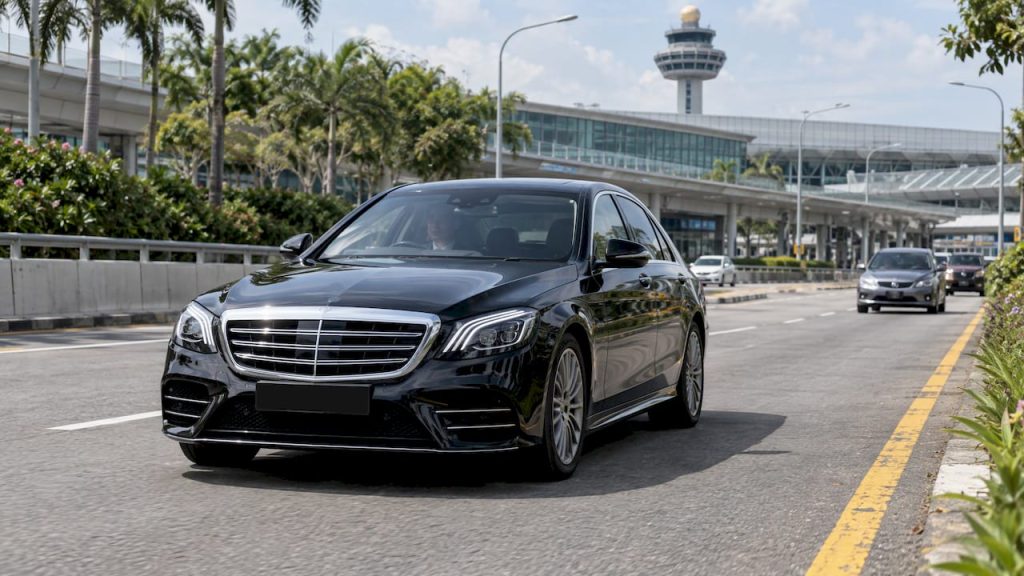
Good chauffeur etiquette in Singapore comes down to four habits: be ready at the agreed time and place, buckle up and keep children properly restrained, treat the driver as a professional rather than a rushed taxi, and know that tipping is a thank-you, not an obligation. Get those right and a pre-booked transfer is the calmest way to cross the island. With a service that sends an experienced, English-speaking driver, offers meet-and-greet and handles your luggage, most of the rest takes care of itself. This guide sets out what to expect from your driver and what your driver can reasonably expect from you.
TL;DR
- Be ready at the pickup point on time, and send your flight number, luggage count and passenger numbers when you book.
- Fasten your seat belt before the car moves. Any passenger under 1.35 metres needs an approved child restraint or seat belt, and the driver is the one who is guilty of the offence if not.
- Do not pressure the driver to speed, and do not ask for stops the route cannot legally allow. Plan extra stops at booking instead.
- Tipping is not expected in Singapore. A small amount for luggage help or a long day is a courtesy.
- Your driver must not insult, intimidate or harass you, and you should return the same respect.
Table of Contents
- What a chauffeured ride is, and why the etiquette differs
- Before the ride: what to settle at booking
- The pickup: meeting points, delays and luggage
- Inside the car: how to be a good passenger
- What you can expect from your driver
- Children, families and groups
- Tipping a chauffeur in Singapore
- Fees that surprise passengers
- Business travellers: a short protocol
- Etiquette for trips to Malaysia
- A simple checklist
- Book a driver who works this way
- FAQ
- Sources
What a chauffeured ride is, and why the etiquette differs
A chauffeured transfer is pre-booked. Your driver knows your name, your pickup time, your destination and, usually, how many bags to expect. That changes the social contract compared with flagging down a taxi or opening an app. You are a named guest, and the driver is working to your schedule. For a fuller picture of what separates a chauffeured service from an ordinary ride, see 5 signals that define chauffeured service.
The etiquette therefore runs both ways. The driver arrives early, opens doors, handles bags and keeps conversation to the level you set. You, in turn, are punctual, clear about what you need and considerate about the vehicle and the road.
The same habits suit anyone who is new to arranged private travel, from a first transfer to a first charter. A first-time private travel etiquette guide shows the same principle at work in another setting: arrive prepared, share your plans in advance, and let the crew do their job.
Before the ride: what to settle at booking
Most etiquette problems in chauffeured travel are really booking problems. Say the right things in advance and the day is smooth.
Give accurate details
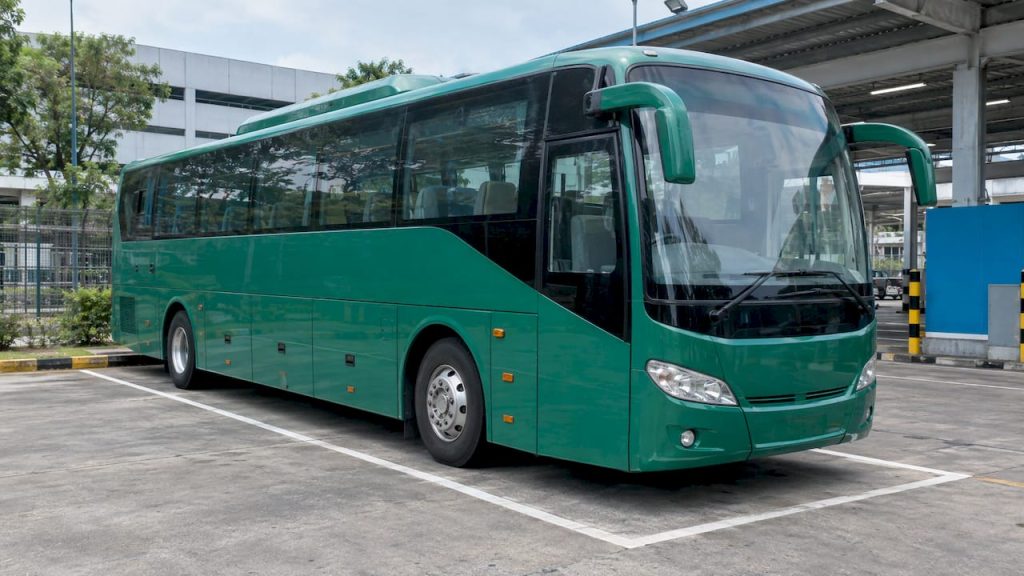
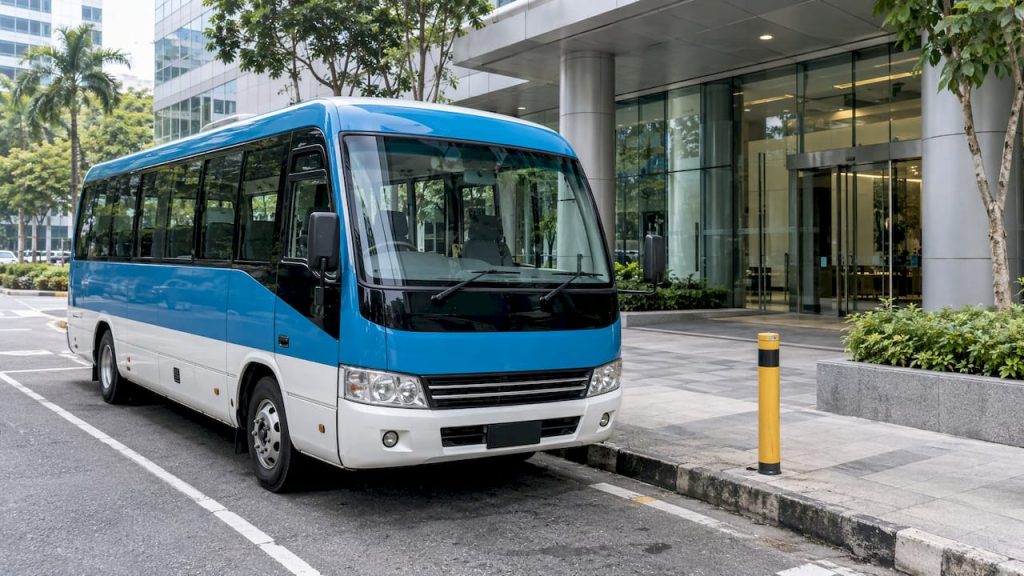
Tell the provider your flight number for airport pickups, the number of passengers, the number of suitcases and any large items such as golf bags, prams or musical instruments. Vehicle choice depends on this. Sedans suit small parties with limited luggage, while larger groups need an MPV, minibus or coach. If you are unsure, our guide to vehicle seating capacity in Singapore shows what fits where.
Kler Transport’s fleet runs from sedans and MPVs to minibuses and coaches, so the same booking process covers a solo business traveller and a large group.
Name children and their seats
If anyone in your party is under 1.35 metres tall, say so at booking. LTA says private hire cars, which must be pre-booked, let passengers indicate child-seat needs when they book so the driver can prepare in advance, as reported by AsiaOne. Turning up with a toddler and no warning puts the driver in a difficult position, because the law places the responsibility on them. More on that below.
Plan extra stops in advance
A quick detour to a pharmacy, a hotel pickup for a colleague or a stop at a cash machine is easy to arrange before the trip and awkward to demand during it. If your day has several legs, read our guide to planning multiple-stop transfers in Singapore. For a day of meetings, shopping or sightseeing, an hourly booking is usually the more comfortable fit than a series of separate transfers. Our published hourly rate is 50-100 SGD per hour, depending on the vehicle.
Know the cancellation and waiting terms
Plans change. Reading the cancellation terms before you book saves an uncomfortable conversation later. Our guide to private transfer cancellation in Singapore explains how rules, fees and refunds typically work. For how long a driver waits at the pickup point, see pickup grace periods in Singapore.
The pickup: meeting points, delays and luggage
At Changi Airport
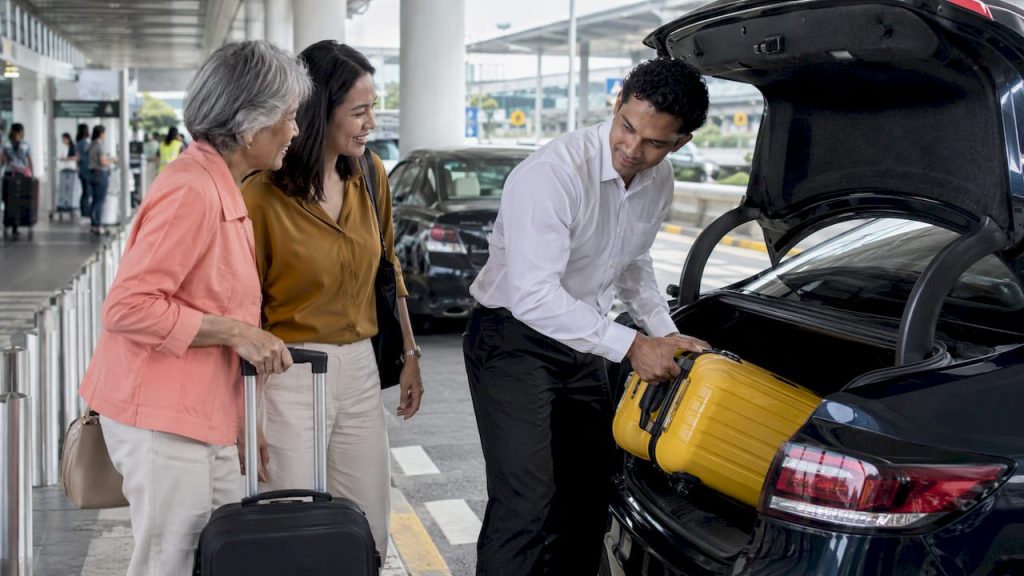
For an arrival, your driver tracks your flight and meets you rather than waiting for you to find them. Meet-and-greet is part of how we describe our service: the driver is there, you are recognised, and the luggage is handled. Your part is to keep your phone on after landing and tell the driver if immigration or baggage reclaim is taking longer than expected. A short message is courteous and lets the driver adjust.
For departures, be ready in the lobby at the agreed time. Singapore’s morning and evening traffic is predictable, and a time that looks generous on paper can shrink fast if you are still packing. Build in a margin for check-in rather than asking the driver to make up time on the road.
At hotels and residences
Confirm the exact pickup point in advance, especially at large hotels with separate lobbies or arrival areas, and at condominiums with visitor gates. If you can, wait inside near the entrance rather than at the kerb. Drivers cannot stop just anywhere: Singapore’s Road Traffic (Public Service Vehicles) Rules generally prohibit stopping a chauffeured private-hire car within 9 metres of a bus stop, except where the vehicle has a breakdown. If your driver asks you to walk a short distance to a legal pickup spot, that is the rule at work, not unhelpfulness.
Being ready
Be ready before the driver arrives. Motorist Singapore lists this among its passenger-etiquette basics, and it matters even more when the driver is working to a flight or meeting time. Have the bags at the door, the destination address to hand and everyone in the group present.
Luggage
Let the driver load and unload. Handling luggage is part of the service, and it keeps the boot packed safely. Tell the driver about fragile items. Do not stack heavy bags on seats or in the footwell, where they can become a hazard in a sudden stop.
Inside the car: how to be a good passenger
Seat belts first
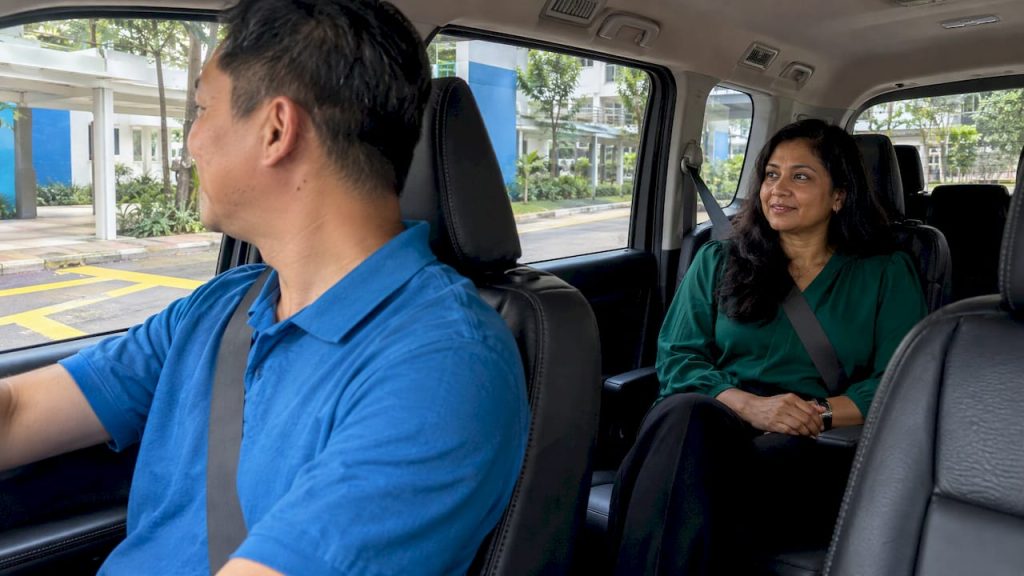
Fasten your seat belt before the car moves, rear seats included. It is the simplest courtesy in the vehicle, because it keeps the trip safe and means the driver does not have to ask. Motorist Singapore also lists this at the top of its advice for better passengers.
Do not rush the driver
Comments such as “we’re going to be late” can push a driver towards speeding or risky decisions. The same Motorist Singapore article makes the safety logic plain: a calm, focused driver is a safer driver, and arriving safely matters more than arriving a few minutes earlier. If time is tight, the right move is to say so at booking and leave earlier. Do not hurry the driver in the car.
Keep the driver focused
Avoid waving a phone screen at the driver, playing videos at volume or leaning forward to give constant directions. Professional drivers know the roads, and the route is usually agreed in advance. If you want a change, state it once, clearly and politely.
Conversation and privacy
Take your cue from the driver and set the tone yourself. Some passengers want local tips on the way from Changi, others want silence to take a call. Either is fine, and a good driver adapts. If you are on a confidential business call, you can simply say so. Executives travelling with colleagues often use the ride to prepare for meetings, and a professional driver treats what they overhear as private.
Food, drink and tidiness
Check with the driver before eating or opening a drink, and keep the car clean. Motorist Singapore’s guidance includes keeping the car clean and thanking the driver at the end of the journey, both of which are easy to follow.
Opening the door safely
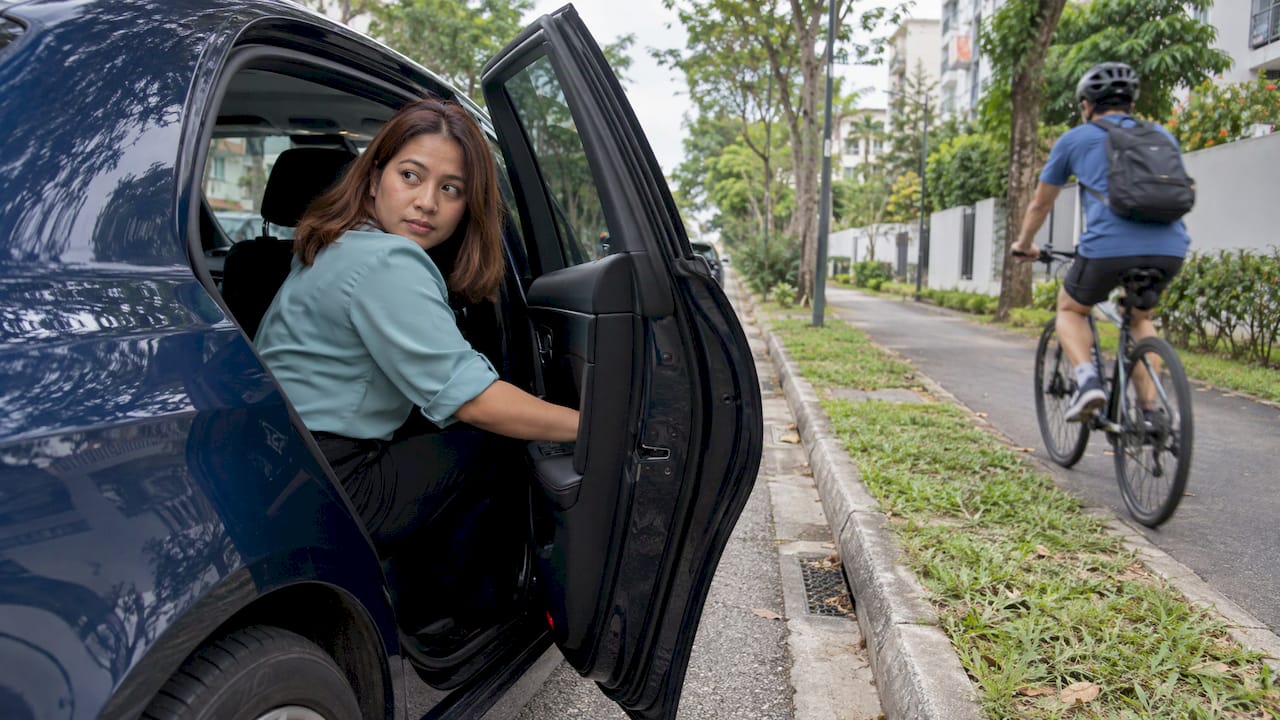
Singapore has plenty of cyclists, personal mobility users and motorcyclists, and a door opened without a look can cause a serious accident. Check before you open it. Motorist Singapore recommends the Dutch Reach: open the door with the hand furthest from it, which turns your body and makes you look back.
What you can expect from your driver
Etiquette is not only a passenger’s duty. A good chauffeur service sets standards, and the law backs the basics.
Under Singapore’s Road Traffic (Public Service Vehicles) Rules, a chauffeured private-hire-car driver must not verbally insult, intimidate or harass a passenger, and must not carry people or articles without the hirer’s consent. That second rule is worth remembering: your private booking should stay private, with no extra passengers added and no unrelated detours taken for someone else.
Beyond the legal minimum, we describe our service by the things a passenger notices: punctuality, a professional manner, experienced English-speaking drivers, meet-and-greet and luggage handling. For tourists new to Singapore, an English-speaking driver who knows the roads means directions, hotel names and tourist spots are never a negotiation.
Children, families and groups
Families and group organisers are where etiquette and the law meet most directly.
The child-restraint rule
Under the Road Traffic Act, as stated by Minister K. Shanmugam in a 2020 parliamentary reply and reported by AsiaOne, drivers commit an offence if they fail to make sure passengers below 1.35 metres wear an approved child restraint or body-restraining seat belt. The reported penalty is a $150 fine for light-vehicle drivers and $200 for heavy-vehicle drivers, plus three demerit points.
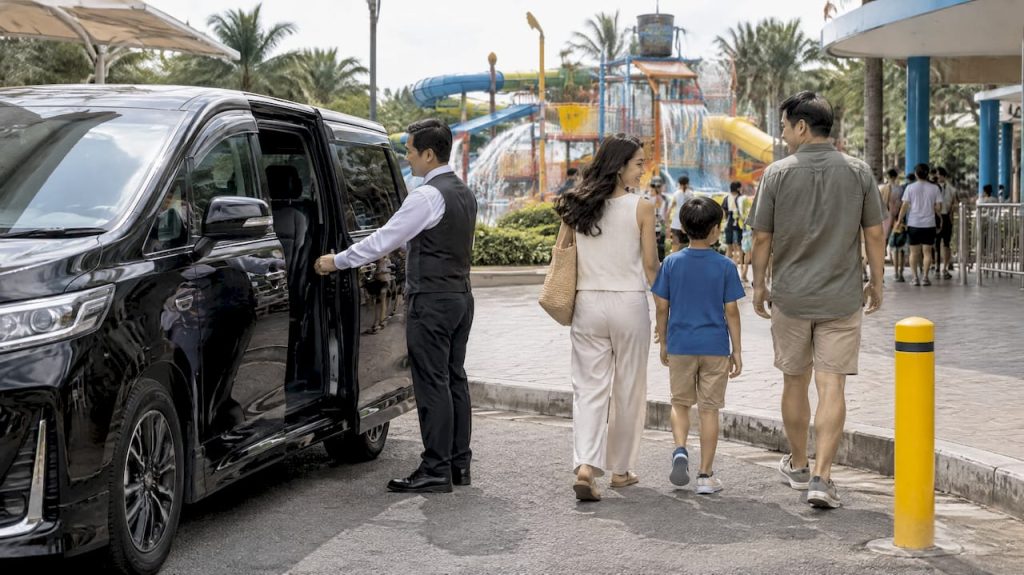
In practice, a driver who asks you to use a child seat, or declines to move off until a child is properly restrained, is protecting your child and following the law. It is not a personal slight. Arguing the point at the kerb helps no one, and the answer is to arrange the seat at booking. Our guide on airport transfers for families goes through how to avoid fines and demerit points.
Group travel
For a wedding party, a corporate delegation or a school outing, one person should speak for the group. Give the driver a single contact, a single list of pickup points and one set of timings. If you are organising a school or youth trip, our checklist on checking the licence and seat belts before booking school trips covers what to confirm.
With groups, punctuality is shared. A coach waiting for the last three guests holds up everyone else and may run into the booked time. Brief the group in advance on the pickup time and point, and ask them to be there five minutes early.
Event guests and daily commuters
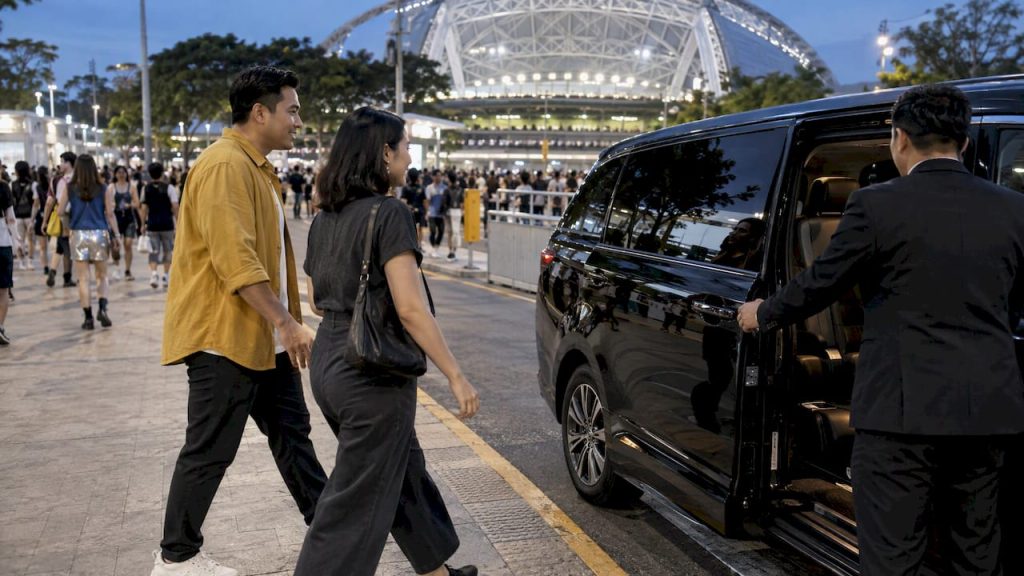
For event transfers, share the venue’s drop-off arrangements with the driver ahead of time, since many venues use designated entrances. For staff commuting, set a fixed pickup list and stick to it. Regular riders who are punctual and consistent make the whole route run on schedule.
Tipping a chauffeur in Singapore
Singapore does not have a strong tipping culture. Lonely Planet’s tipping guide for Asia says so, and describes a combined 10% for guide and driver on an organised tour as fair. It also says the local-currency equivalent of US$1 is a good tip for taxi drivers.
For a chauffeured transfer, there is no expectation, which means any tip is a genuine thank-you. A small amount makes sense when the driver has gone out of their way: heavy luggage, a late-night arrival, a long hourly booking or a last-minute change handled gracefully. If you carry cash in Singapore dollars, hand it over discreetly at the end of the journey with a clear thank-you. Our own piece on tipping drivers in Singapore sets out simple S$1 to S$5 guidelines for tourists.
If you tip, a few rules keep it comfortable:
- Tip at the end, not the start.
- Use Singapore dollars where possible.
- Keep it modest and personal. A tip is not a substitute for clear communication about waiting time or extras.
- Corporate travellers should check whether their company policy allows tipping before they claim it back.
Fees that surprise passengers
A lot of friction is avoidable if you know how charges work. Our published rates for point-to-point transfers are 65-140 SGD for airport arrival, 60-130 SGD for airport departure and 60-130 SGD for other transfers, depending on vehicle type and group size. Late-night rides carry a midnight charge of 10-20 SGD. Hourly bookings run 50-100 SGD per hour, and a charter vehicle for a day, including cross-border trips to Malaysia, is 450 SGD per day. The full tables are on our rates page.
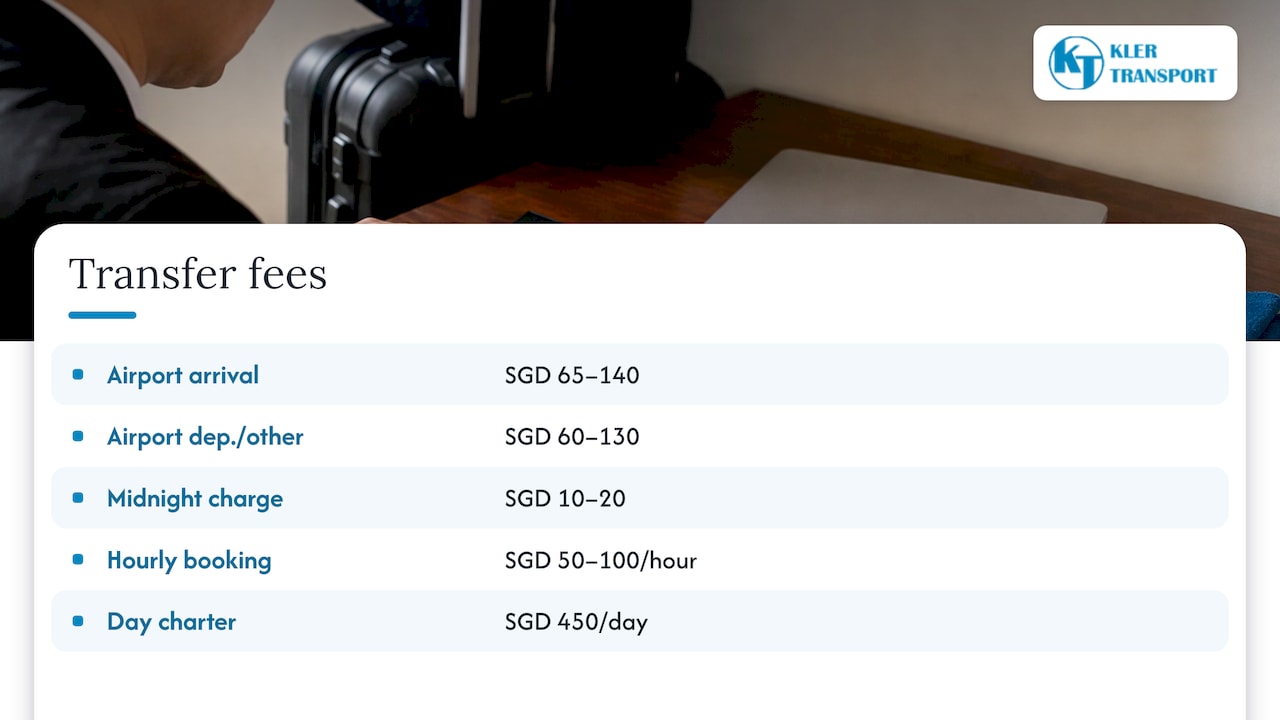
The etiquette point: know which category your trip falls in and say if your plans change. A flight that lands after midnight, or a dinner that runs late, can move a transfer into the midnight window. Telling the provider early is courteous and avoids a surprise on the day.
Business travellers: a short protocol
For corporate guests, a few habits stand out:
- Be clear on who is the host. If an assistant booked the car, share the driver’s details with the guest in advance.
- Share a realistic schedule. Meeting times, buffer minutes and the order of stops should be in the booking, not improvised.
- Use the car as a workspace on your terms. Tell the driver if you need quiet for a call.
- Keep requests within the booking. Extra stops or extended waiting should be agreed and, where it changes the price, confirmed.
These habits also help event organisers, who often arrange transport for guests they have never met. A clear itinerary reflects well on the organiser as much as it helps the driver.
Etiquette for trips to Malaysia
Cross-border transfers to Johor, Malacca and beyond add a layer: passports and travel documents must be ready for the checkpoints, and everyone in the vehicle should be prepared to get through immigration in good order. Keep documents within reach rather than in the boot, and tell your driver of any delay. Our pages on Singapore to Malaysia transport, Johor and Malacca set out what these trips cover.
A simple checklist
- Give accurate passenger, luggage and flight details when you book.
- State child-seat needs at booking.
- Confirm the pickup point and a contact number.
- Be ready on time, with luggage at the door.
- Fasten your seat belt before the car moves.
- Do not rush the driver: speak up earlier instead.
- Check for cyclists and motorcyclists before opening the door.
- Keep the car clean and thank the driver.
- Tip only if you wish, modestly and in Singapore dollars.
Book a driver who works this way
If you want these standards without having to manage them, we handle airport arrivals and departures, hourly charters, corporate and event transfers, staff transport and cross-border trips with a fleet of sedans, MPVs, minibuses and coaches. Our drivers are experienced and English-speaking, and meet-and-greet and luggage handling come with the service. You can see current rates on our rates page and arrange your ride through our booking form.
For Changi arrivals specifically, our airport transfer page shows how a pickup is arranged.
FAQ
Do I have to tip my chauffeur in Singapore?
No. Singapore has no strong tipping culture, according to Lonely Planet. A small tip is a courtesy for good service, such as help with heavy luggage or a long day, and it is never required.
Should I sit in the front or back of a chauffeured car?
Rear seats are the norm for a chauffeured ride, and the driver will usually open the door for you. A single passenger may sit behind the front passenger seat, which gives the driver a clear view. If you prefer the front, simply ask.
What should I do if my flight is delayed?
Tell your provider as early as you can, ideally before you board or as soon as you land. Giving your flight number at booking means the driver can follow your arrival. For how long a driver waits, see our guide to pickup grace periods.
Does my child need a car seat in a chauffeured car?
Yes, if the child is under 1.35 metres. Singapore’s Road Traffic Act requires an approved child restraint or body-restraining seat belt, and the driver bears the offence, as reported by AsiaOne. Mention it when you book so it is ready.
Can a chauffeur add passengers or stops to my trip?
Not without your consent. The Public Service Vehicles Rules prohibit carrying people or articles without the hirer’s consent. Agree any extra stops with your provider in advance.
Sources
- Road Traffic (Public Service Vehicles) Rules, Singapore Statutes Online
- How to be a better passenger in a car, Motorist Singapore
- The ultimate guide to tipping in Asia, Lonely Planet
- Child seat rule and fines, AsiaOne