A good staff shuttle plan starts with who travels, from where and at what hour, and only then with the vehicle. Count demand by shift, group staff into a few pickup clusters, match the vehicle to the headcount with spare seats, and write the timetable around real traffic at the hour you operate. Add a backup, check the LTA rules for the vehicle you use, and review the plan every quarter. If you would rather not run the vehicles, drivers and daily changes yourself, a chauffeured transport provider such as Kler Transport can supply sedans, MPVs, minibuses and coaches for staff and workers transport in Singapore.
This guide is for HR, admin and operations people who have to get a team to work on time, and for the employees who depend on that ride.
TL;DR
- Start with a demand count by shift and home area, not with a vehicle quote.
- Use two to four pickup clusters. A survey of Punggol shuttle users found about 60% wanted a say in where they board and alight.
- Size vehicles to the headcount per trip with a few spare seats, and keep one backup option for breakdowns and absent drivers.
- Budget for the full cost: driver time, fuel, waiting time, midnight charges and idle hours between shifts.
- Check the licence and vehicle rules with LTA, and review the plan every quarter.
Table of Contents
- Why plan before you book
- Step 1: Count who needs the ride
- Step 2: Choose pickup points people will actually use
- Step 3: Match the vehicle to the headcount
- Step 4: Build the timetable around real traffic
- Step 5: Plan for the day it goes wrong
- Step 6: Understand the cost before you sign
- Step 7: Know the rules that apply to you
- Step 8: Set service standards and keep score
- Step 9: Review the plan every quarter
- When a shuttle is not a daily route
- Let Kler Transport run the vehicles
- FAQ
- Sources
Why plan before you book
Most shuttle problems are planning problems. A vehicle that is the wrong size, a pickup point that is a 15-minute walk for half the team, or a timetable built on free-flowing roads at 3 am but used at 7.30 am will all show up as late arrivals within the first fortnight. Staff then drift back to driving or public transport, ridership falls and the shuttle looks like a failed experiment when it was only a badly drawn plan.
Planning takes a few hours with a spreadsheet and a map. It saves weeks of complaints.
Step 1: Count who needs the ride
Begin with a simple table. For each person who might use the shuttle, record:
- their home postal district or nearest MRT station;
- their shift start and end times;
- the days they work on site, including hybrid patterns;
- any special need, such as a wheelchair, a late finish or a night shift.
A short internal survey is enough. Ask how many days a week they would use the shuttle, because a team of 40 with hybrid schedules may need only 25 seats on a given day. Count demand per shift and per day, not as one total. A 40-person headcount split over an early and a late shift is two 20-person trips, not one 40-seat requirement.
Keep the numbers honest. Staff who say “yes” to a free ride in a survey do not all turn up. Plan for the people who gave a firm answer and treat the rest as spare demand for later.
Step 2: Choose pickup points people will actually use
Group the home locations into clusters. Look for a few points where five or more people live within a short walk of each other: an MRT exit, a bus interchange, a condominium drop-off bay or a mall frontage.
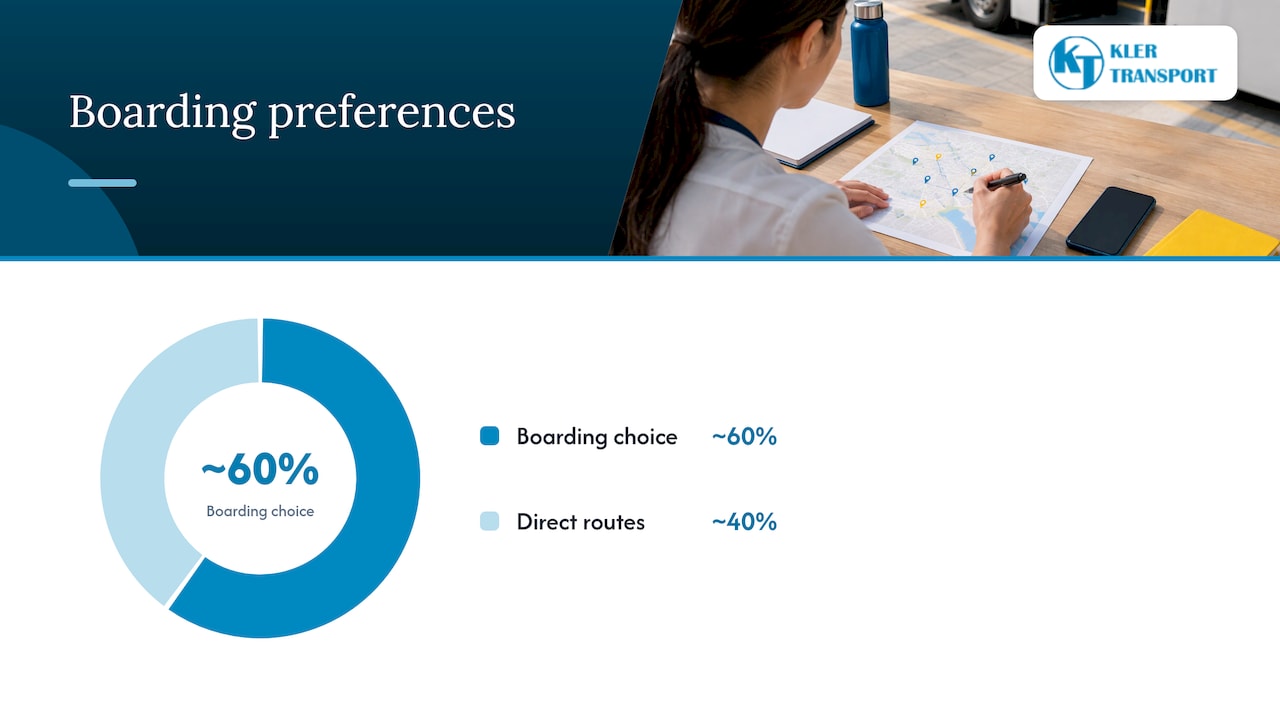
People care about where they board. In July 2026 a survey of about 900 passengers on Punggol’s self-driving shuttles found almost 60% preferred choosing where to board and alight, while about 40% preferred more direct routes. That was a public pilot, not an employer shuttle, but the trade-off is the same for staff: more stops give convenience, fewer stops give a faster ride.
A workable rule for an office shuttle:
- Two to four pickup clusters per route.
- No more than a few minutes of dwell time at each stop.
- A fixed order of stops, so people learn the pattern.
- A pickup point that is legal to use. Stopping at a public bus stop for pick-up and drop-off needs an application to LTA, so choose private bays, office driveways or properly permitted kerbside spots where you can.
Our guide to multiple stop transfers in Singapore shows how to sequence several pickups without adding long detours.
Step 3: Match the vehicle to the headcount
Vehicle choice follows the number of people on one trip, plus luggage or equipment, plus a small buffer. Here is a practical way to think about it.
| Riders per trip | Typical vehicle type | When it fits |
|---|---|---|
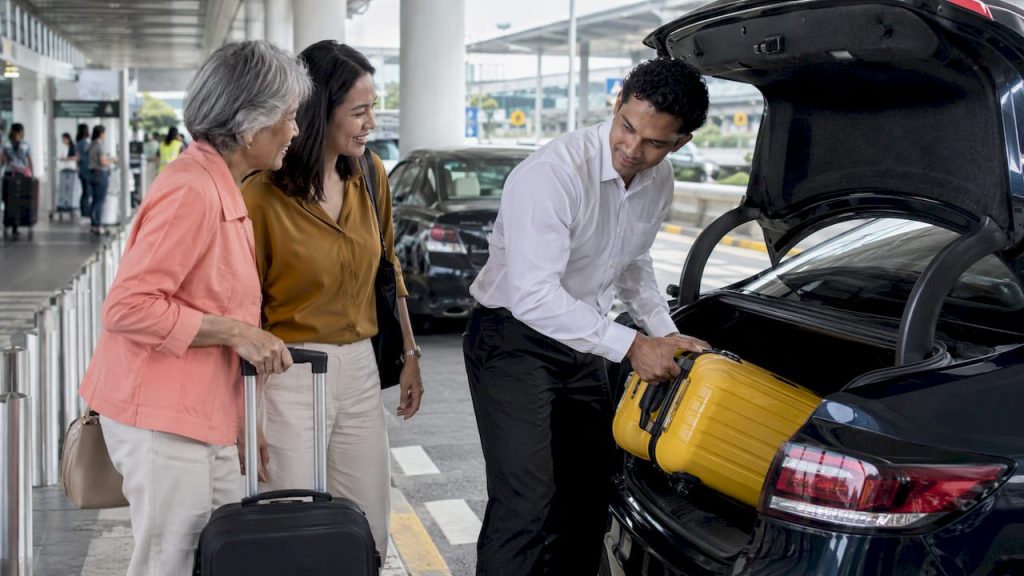
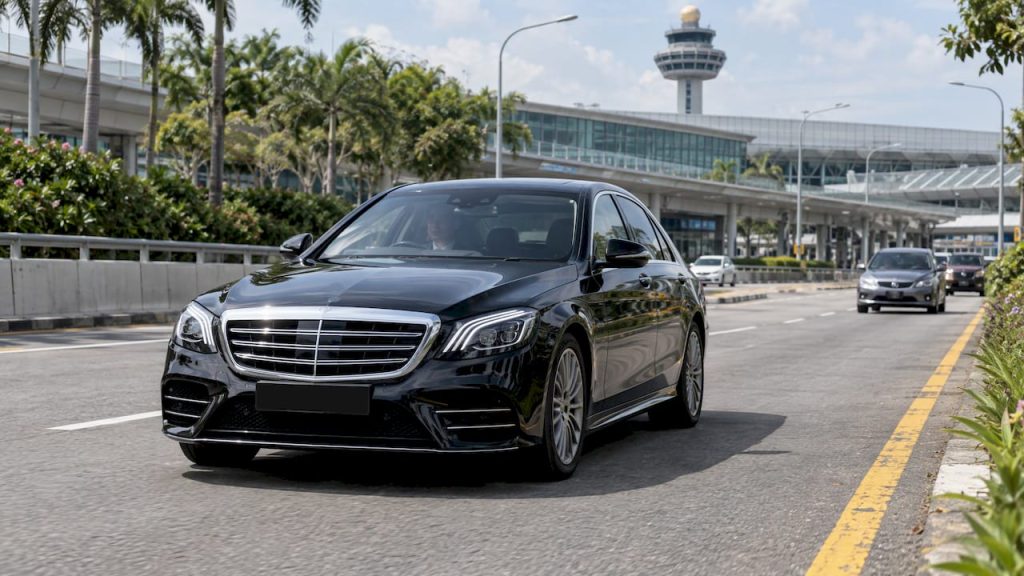
| 1 to 3 | Chauffeured sedan | Senior staff, visiting executives, early or late single trips |
| 4 to 6 | MPV or minivan | Small teams, project groups, split shifts |
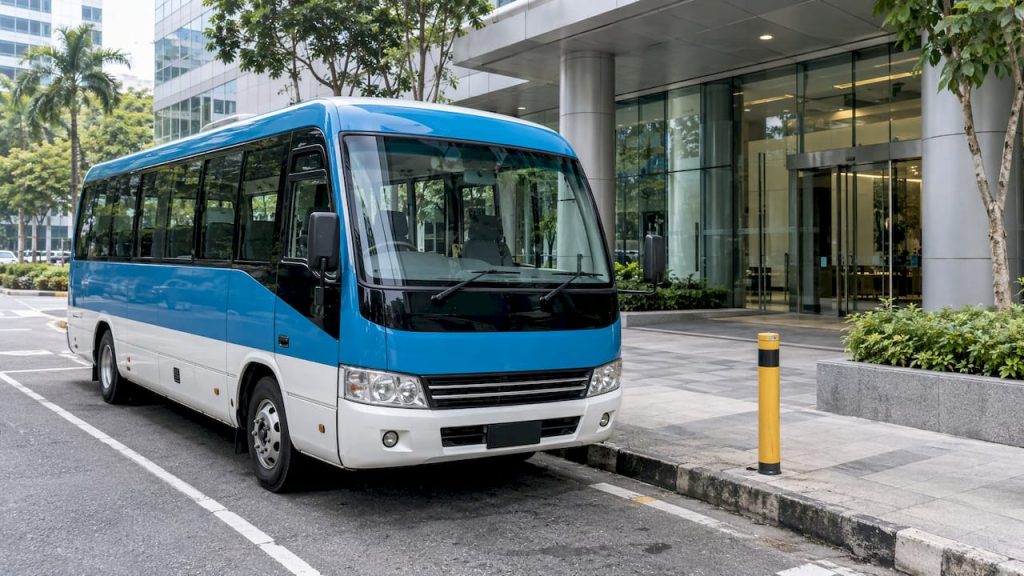
| 7 to 13 | Minibus | A single route with a steady group of staff |
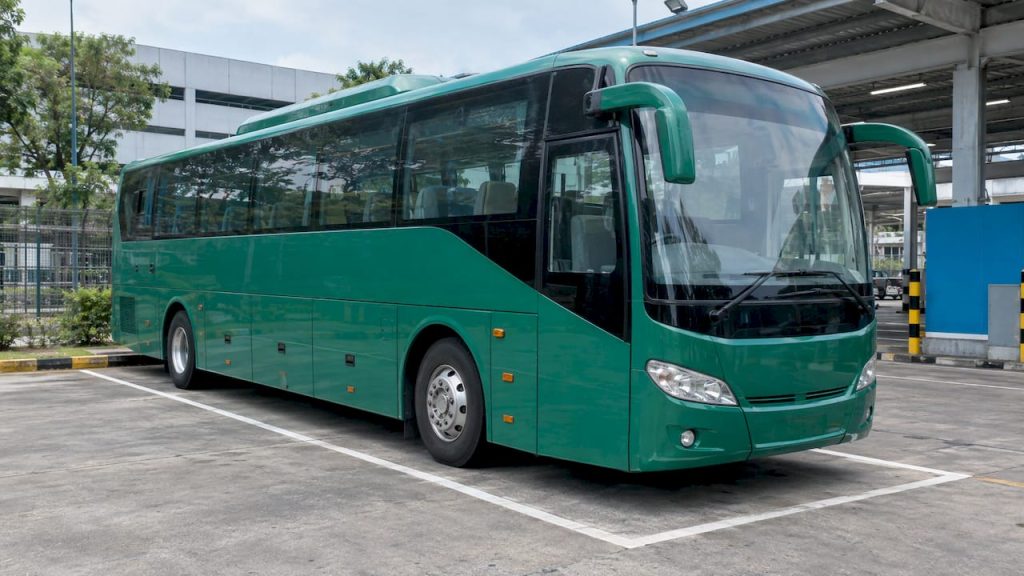
| 14 and above | Coach | Large teams, factory or campus routes, relocation days |
Two habits keep the fit right. First, leave a few empty seats, so one extra rider on a busy Monday does not break the plan. Second, do not oversize. A 40-seat coach carrying 12 people is a costly way to travel and feels empty to the staff on it. Vans in the LDV range, for instance, show how many seats a compact commercial vehicle offers before you need to step up to a minibus.
If your headcount changes through the week, use two vehicle sizes rather than one. A minibus on peak days and an MPV on quiet days usually costs less than a coach every day. Kler Transport’s fleet covers sedans, MPVs, minibuses and coaches, so the vehicle can change with the headcount rather than the other way round.
Step 4: Build the timetable around real traffic
A timetable is only as good as the travel times behind it. Take the journey time from a trial drive at the actual hour, not from a map app at midday. Morning peaks on the PIE, CTE and AYE and the approaches to business parks such as Changi Business Park, one-north and Jurong can run far slower than off-peak.
Build the schedule in three layers:
- The base pattern. Route, stops and core times, for example “depart cluster A at 7.10, arrive at the office lobby by 7.55”.
- The shift overlay. Which routes run on which days and how many seats each shift needs.
- The exceptions list. One-day changes such as an extra trip for a late meeting, a public holiday timetable or a temporary increase in headcount.
Set the arrival window earlier than the shift start. Staff need time to walk in, tap in and settle. A shuttle that arrives at 8.58 for a 9.00 start is late for everyone.
For evening and late-night runs, remember that late hours can carry a surcharge. Kler Transport publishes its midnight charge at SGD 10–20 on its rates page, so late finishes belong in the budget from the start.
Step 5: Plan for the day it goes wrong
A shuttle that works on 95% of days needs a plan for the other 5%. Write down, before launch:
- who staff call when the vehicle is late, and who calls them;
- what happens if the driver is unwell or the vehicle breaks down;
- the threshold at which staff are told to take public transport and claim the fare;
- a standby arrangement for peak weeks, wet weather or an MRT disruption, when more people want the shuttle than usual.
A provider with several vehicle types makes this simpler, because a spare vehicle of a different size can fill a gap. A booking you can extend by the hour also helps on days when a meeting overruns. Kler Transport’s hourly booking is published at SGD 50–100 per hour, which suits irregular cover better than a fixed contract.
Step 6: Understand the cost before you sign
Driver time is the largest part of a chauffeured service. In Singapore, traditional staffed buses have been reported to cost S$0.72–1.25 per passenger-km to operate, with drivers making up 40–70% of expenses. That is a published estimate for staffed buses and shows why waiting time and idle hours matter as much as distance.
When you compare quotations, make the same list for each:
| Cost item | What to ask |
|---|---|
| Base rate | Per trip, per hour or per day, and by vehicle type |
| Waiting time | Is it charged, and from which minute |
| Late-night or early-morning charge | Does it apply to your shift hours |
| Gaps between shifts | Is the vehicle released or charged while idle |
| Public holidays and Sundays | Are the rates different |
| Extra stops | Included or charged |
| Changes and cancellation | How much notice, and any fee |
For reference, Kler Transport publishes these rates: transfers at SGD 60–130 per trip, hourly bookings at SGD 50–100 per hour and a charter vehicle at SGD 450 per day, with rates depending on vehicle type, group size and the service chosen. Our staff shuttle cost guide walks through how those figures turn into a monthly budget.
A worked example
Suppose 18 staff live in the east and start at 8.30 am in one-north. You need one minibus doing one morning run and one evening run, five days a week. Rather than a daily charter, you could book the two runs as separate transfers or short hourly blocks and release the vehicle in between. Compare three options over a month: two hourly blocks per day, two point-to-point transfers per day, or one daily charter. The cheapest option is the one where you stop paying for the vehicle between the two runs. Ask for each quote on the same basis and the answer usually shows itself.
Step 7: Know the rules that apply to you
The rules depend on how the vehicle is used and who owns it. In outline, based on LTA’s bus guidance:
- A Private Bus is registered under a company and ferries employees or people related to the business, at no profit.
- A Private Hire Bus can ferry workers to and from their workplace and can also be chartered for other purposes, such as taking a group to an event.
- To drive a bus, a driver needs a Bus Driver’s Vocational Licence (BDVL) and a driving licence for the correct class of vehicle.
- Using public bus stops for pick-up and drop-off, or running a fare-collecting fixed-route service, needs an application to LTA.
- Buses with a maximum laden weight over 8,000kg have blind-spot safety requirements, covered on the same page.
If you hire a chauffeured service, the operator holds the vehicles and the driver licensing, and you work with a provider that already runs licensed vehicles. You still need to be clear about pickup points and any public-stop use.
If your workers are manual or site-based, the way they are carried matters. The inter-agency advisory on safe transportation of workers, issued by MOM, MOT, LTA, SPF and BCA, sets out the requirements for lorries used to carry workers, including canopies and protective side railings. Passenger vehicles such as MPVs, minibuses and coaches are the alternative for carrying staff in seats with proper restraints.
Rules are updated regularly, and Singapore Statutes Online lists new subsidiary legislation each year, so confirm the current position with LTA before you launch or change a route. For events with many vehicles or public stops, permits can take weeks: see how to avoid 30 working day permit delays for event shuttles.
Step 8: Set service standards and keep score
Write the standards into the booking or agreement, in plain terms:
- Punctuality. Arrival within a set window, and a clear rule for what counts as late.
- Driver conduct. Courteous, in the right uniform or attire, able to communicate with staff in English.
- Vehicle condition. Clean, air-conditioned, with working seat belts and enough luggage or bag space.
- Communication. A named contact, a number staff can call and a way to confirm changes the day before.
- Safety. Licensed drivers, a clean driving record and no phone use while driving.
Then measure. Keep a simple log of departure time, arrival time and rider count for each trip. Review lateness by stop, not just by route: a route can look fine on average while one pickup point is late every Wednesday. A short monthly note from staff on comfort and timing catches what the log misses.
Kler Transport positions its service around punctuality, meet-and-greet, luggage handling and experienced English-speaking drivers, which are the standards worth writing down for any staff route.
Step 9: Review the plan every quarter
A shuttle plan goes stale. People move home, teams change shifts, offices change floors and roads change. Set a quarterly review with three questions:
- Are the seats full enough? If a route runs under half full, merge or downsize.
- Is the arrival time still right? Re-time the route if the on-time rate drops.
- Has the cost per rider moved? Compare it with last quarter and with what the trips would cost if you booked them one by one.
Also review after any big change: a new office, a new shift pattern, a public transport disruption or a headcount increase of more than 10 to 15%.
When a shuttle is not a daily route
Some staff movements are one-off or occasional: a conference, a team day, an office move or a client visit. These fit event-style booking better than a regular route. Our guides on conference shuttle planning, team building transport and office relocation transport cover those cases, and the wider employee commute solutions guide compares the options for employers.
Let Kler Transport run the vehicles
Planning is the part you do once. Running the shuttle every day, with drivers, vehicles and last-minute changes, is the part most offices would prefer not to own. Kler Transport provides staff and workers transport in Singapore with sedans, MPVs, minibuses and coaches, bookable by the trip, by the hour or by the day, and with experienced English-speaking drivers.
See the published rates on our rates page, read about business and corporate transport, or send your route and shift details through the booking form to get a quote.
FAQ
How many pickup points should a staff shuttle have?
Two to four per route is a good range. More stops add convenience but also add dwell time, which makes the route slower and less punctual. Choose points where five or more staff live nearby, and keep the order fixed.
What size vehicle do I need for a staff shuttle?
Match it to riders per trip, not total headcount. A sedan suits one to three people, an MPV four to six, a minibus seven to thirteen and a coach larger groups. Leave a few seats spare for busy days.
How much does a staff shuttle cost in Singapore?
It depends on vehicle type, hours and distance. Kler Transport publishes transfers at SGD 60–130 per trip, hourly bookings at SGD 50–100 per hour and a charter vehicle at SGD 450 per day. Midnight charges of SGD 10–20 may apply to late runs.
Do I need a permit to use a public bus stop for staff pickup?
Yes, using public bus stops for pick-up and drop-off needs an application to LTA. Using a private bay or office driveway avoids that step. Check the current rules on the LTA OneMotoring bus page.
How often should I review the shuttle plan?
Every quarter, and after any change in office location, shift pattern or headcount. Check seat use, on-time arrival by stop and cost per rider.
Sources
- Revenue service for Punggol self-driving shuttles delayed to Q4, Grab to test on-demand rides (The Straits Times)
- LTA OneMotoring: Bus
- Singapore’s Driverless Proving Ground for Chinese AVs (Asia Tech Lens)
- Inter-agency advisory on safe transportation of workers (MOM)