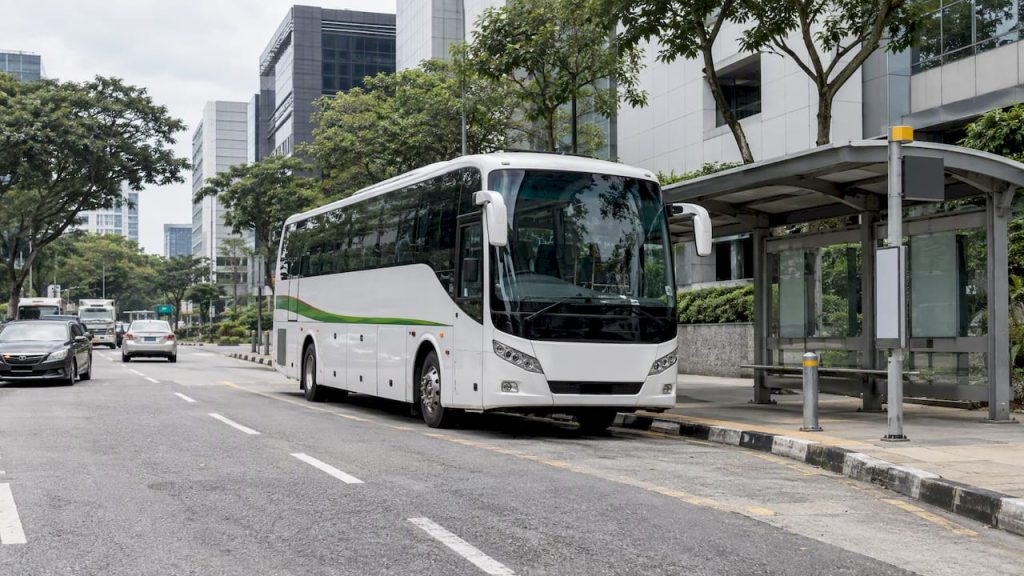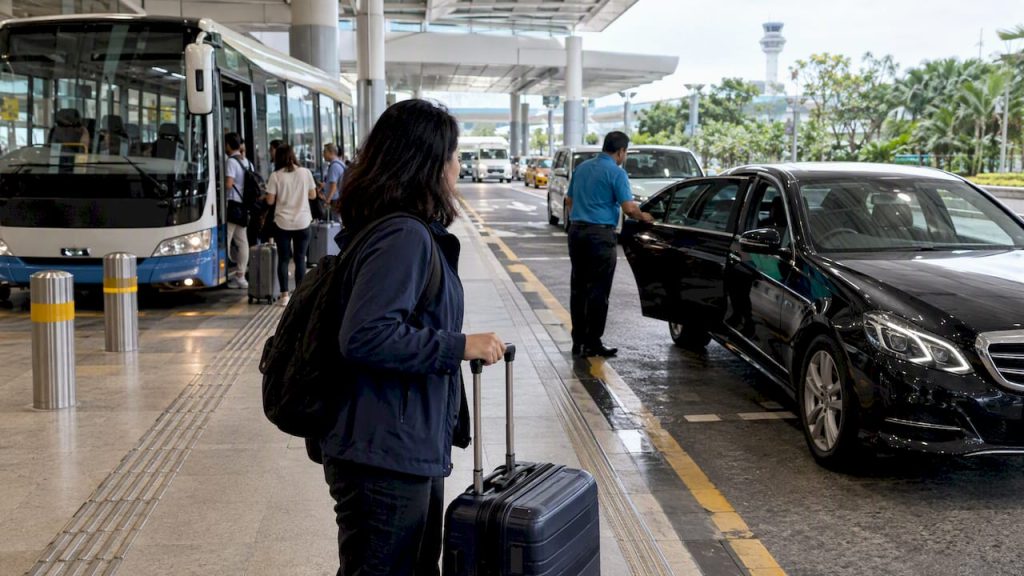

Pre-book a tiered chauffeured service, confirm the passenger manifest, and appoint a single ops contact before you touch anything else. Two checks come first: the driver holds a valid LTA private hire car licence, and your venue’s pickup and permit rules are confirmed in writing. Send a one-page brief to your transport provider today.
TL;DR:
- When planning vehicle types, match smaller groups with sedans or MPVs and use tiered fleets or shuttles for larger, multi-venue itineraries.
- Prepare a detailed one-page brief for your provider to prevent common failures, including vehicle details, time windows, passenger tiers, and freight information.
- Establish a corporate account for recurring events to secure priority service, dedicated contacts, and simplify billing and scheduling.
Table of Contents
- Which vehicle suits your board meeting format?
- Building the pickup sequence, staging plan and timing buffers
- What goes wrong on the day and how to prevent it
- Folding airport transfers into the meeting schedule
- When a corporate transport account makes commercial sense
- The one-page brief that gets your transport right
- How reliable execution actually looks on the ground
- Booking the transport once the plan is set
- Where to check the rules before you book
- Sources
- FAQ
Which vehicle suits your board meeting format?
A six-person board meeting and a forty-person offsite leadership day need different fleets, and getting this wrong is the most common planning mistake.
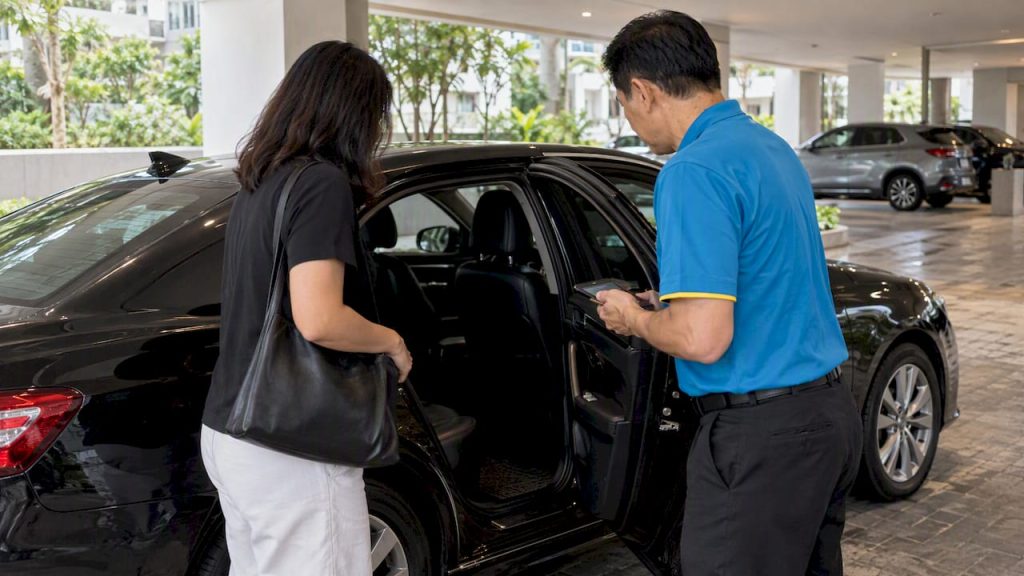
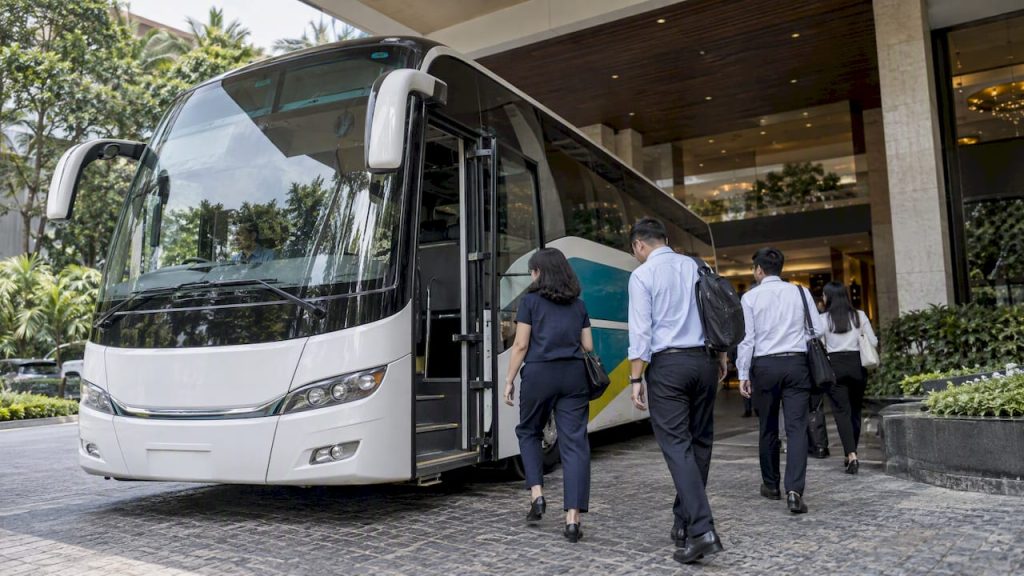
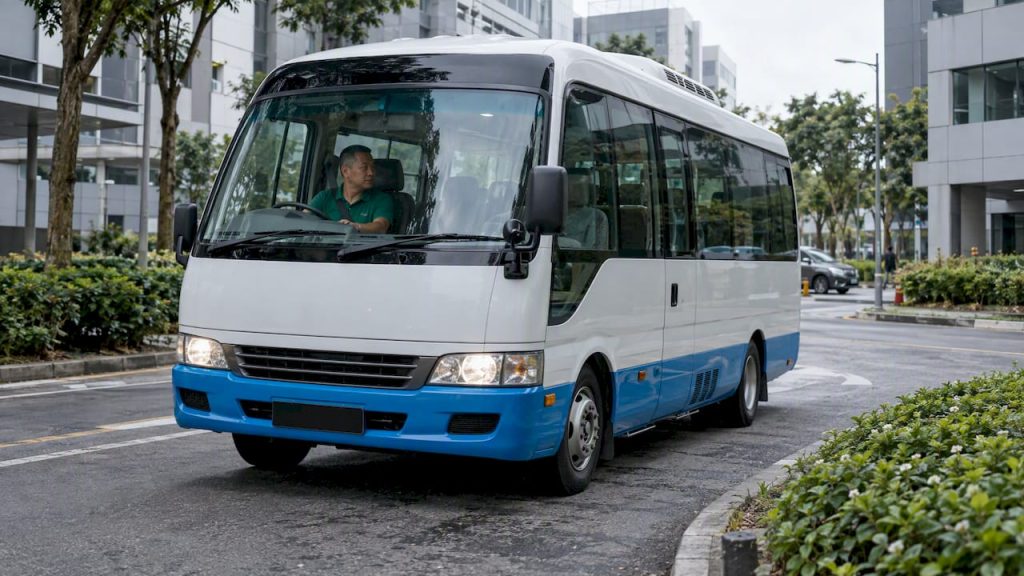
For a small board (four to eight people), an executive sedan or an MPV covers the group with room for laptops and presentation cases. An offsite leadership day with mixed seniority usually calls for a two-tier setup: a sedan or MPV for the chairman and VIP guests, and a minibus for the wider delegate group arriving on the same schedule. A multi-venue itinerary, where the group moves between a hotel, a meeting venue and a dinner location, is where a coach or several minibuses running a shuttle loop earns its cost, because it removes the need to marshal individual cars at each stop.
Tiering matters because VIP and delegate flows have different tolerances. A chairman arriving separately, ahead of the group, avoids the awkwardness of a shared vehicle and gives your provider a cleaner slot to manage; a shuttle running on a fifteen or twenty minute loop handles the rest of the delegate list without needing individual bookings.
Luggage and equipment change the calculation too: a coach trip with projector cases, printed materials and welcome gifts needs boot space and a driver briefed to help with loading, not just seats.
One regulatory point underpins all of this: any vehicle used commercially for this kind of transfer must be authorised under the correct class. The Road Traffic Public Service Vehicles Rules set out the licence classes, including chauffeured private hire car, private hire bus and excursion bus, that determine which vehicle can legally be used for which job.
- Small board (four to eight people): executive sedan or MPV, single pickup.
- Offsite leadership day (twenty to fifty people): tiered mix of sedan for VIPs and minibus for delegates.
- Multi-venue itinerary: coach or shuttle loop between fixed stops.
- Heavy luggage or AV equipment: choose a vehicle with confirmed boot capacity, not just seat count.
Building the pickup sequence, staging plan and timing buffers
Work backwards from the meeting start time or the VIP’s required arrival, not forwards from when people happen to be ready. Every pickup gets a latest-arrival time, and the sequence is built around whichever passenger has the tightest window.
- Fix the meeting start time and the VIP arrival deadline first, then set every other pickup time against it.
- Confirm staging: whether the vehicle waits kerbside or in an official venue bay, and whether the driver needs a standby instruction.
- Submit plate numbers to the venue in advance wherever a permit or dock booking is required.
- Build in a timing buffer of at least fifteen to twenty minutes for short inner-city routes, and thirty to forty-five minutes when the route crosses the city during peak hours or a scheduled event closure.
- Set a manifest deadline of forty-eight hours before the meeting, with a same-day confirmation window to catch last-minute changes, an approach also recommended in event transport planning guidance.
- Appoint one ops contact on your side who owns the brief, receives real-time driver updates and is the only person authorised to change the plan on the day.
Pro Tip: Give your ops contact the driver’s mobile number directly rather than routing every query through the booking office; it shaves minutes off every decision on the day.
A clear escalation chain matters as much as the plan itself: if a pickup is running late, the ops contact needs to know within minutes, not after the meeting has already started without half the attendees.
What goes wrong on the day and how to prevent it
Most transport failures on meeting day trace back to a handful of predictable causes, and each has a straightforward fix.
- Late arrivals or driver no-shows: assign a backup vehicle for VIP legs and build a buffer leg into the schedule.
- Venue access denial: confirm permits, plate numbers and staging windows in writing before the day, not on arrival.
- Traffic and planned road closures: check LTA event notices and publish an alternate route to your provider ahead of time.
- Passenger list errors: require phone numbers and, for airport legs, flight details, then confirm the list again on the morning of the meeting.
- Freight and AV logistics: treat equipment delivery as a separate flow from guest pickups, with its own dock window.
Multi-day road closures around Marina Centre and Padang during major events such as the Formula 1 Singapore Grand Prix can rule out normal kerbside pickup entirely, so any meeting near that district on an event date needs its route confirmed against the published closure notice rather than assumed.
Folding airport transfers into the meeting schedule
When part of your delegate list is flying in on the same day, the airport leg needs its own brief rather than being bolted onto the main plan.
- Arrival brief: confirm meet-and-greet at the gate, flight numbers, and a realistic pickup lead time from Changi that allows for immigration and baggage.
- Departure brief: build in a check-in buffer ahead of the flight, plus an allowance for traffic and the correct terminal routing.
- Multiple flights landing across a window: an hourly charter with holding-time provisions handles this more reliably than several fixed-time pickups, because it avoids missed connections when one flight runs late, a pattern also flagged in Singapore corporate transport planning guidance.
- Delay handling: agree in advance how holding fees apply and where the driver waits if a flight is delayed beyond the booked window.
When a corporate transport account makes commercial sense
Ad-hoc bookings work for a one-off meeting; a corporate account earns its keep once transport becomes a recurring line item.
- Set up an account once you have predictable recurring volume, such as monthly board meetings or regular airport transfers for visiting directors.
- Priority vehicle allocation and a dedicated ops contact are the main operational benefits over booking each trip separately.
- Negotiate cancellation windows, surge or cap clauses for major event dates, and an invoicing cadence that matches your finance team’s reconciliation cycle.
- Keep a simple log of trip dates, vehicles and costs against invoices; it catches billing errors early and speeds up any future negotiation.
The one-page brief that gets your transport right
Every field on this brief exists to stop a specific failure mode: missing plate numbers block venue access, missing time windows break the pickup sequence, and missing passenger tiers put a delegate in the wrong car.
- Event name and date, with the meeting start time clearly marked.
- Ops contact name and mobile number, the single point of contact on the day.
- Plate numbers for every vehicle, submitted ahead of time for venue permits.
- Exact pickup coordinates, not just a building name, for each leg.
- Passenger tiers (VIP, staff, delegate) and a headcount per tier.
- Luggage or equipment counts, and any freight that needs a separate dock window.
- Confirmed time windows for each pickup, with the buffer already built in.
- Venue liaison name, for coordination on staging and permits.
Two short examples show how this scales. A six-person board meeting brief is one paragraph: one sedan, one pickup point, one tight time window. A forty-eight person offsite day brief is longer: a VIP sedan, three minibuses on staggered pickup times, a separate freight run for AV equipment, and a named venue liaison for the dock window, an approach informed by the loading-bay planning detailed in the Marina Bay Sands loading bay guide.
| Brief type | Vehicles | Key detail |
|---|---|---|
| Small board (6 pax) | One sedan | Single pickup point, tight window |
| Offsite day (forty-eight pax) | VIP sedan plus three minibuses | Staggered pickups, separate freight run |
Kler Transport’s service pages set out the fleet mix available to fill in a brief like this against confirmed vehicle types.
How reliable execution actually looks on the ground
The priority on any board-meeting job is separating VIP and delegate flows early and giving both a single operations lead who can see the whole picture, not just their own leg.
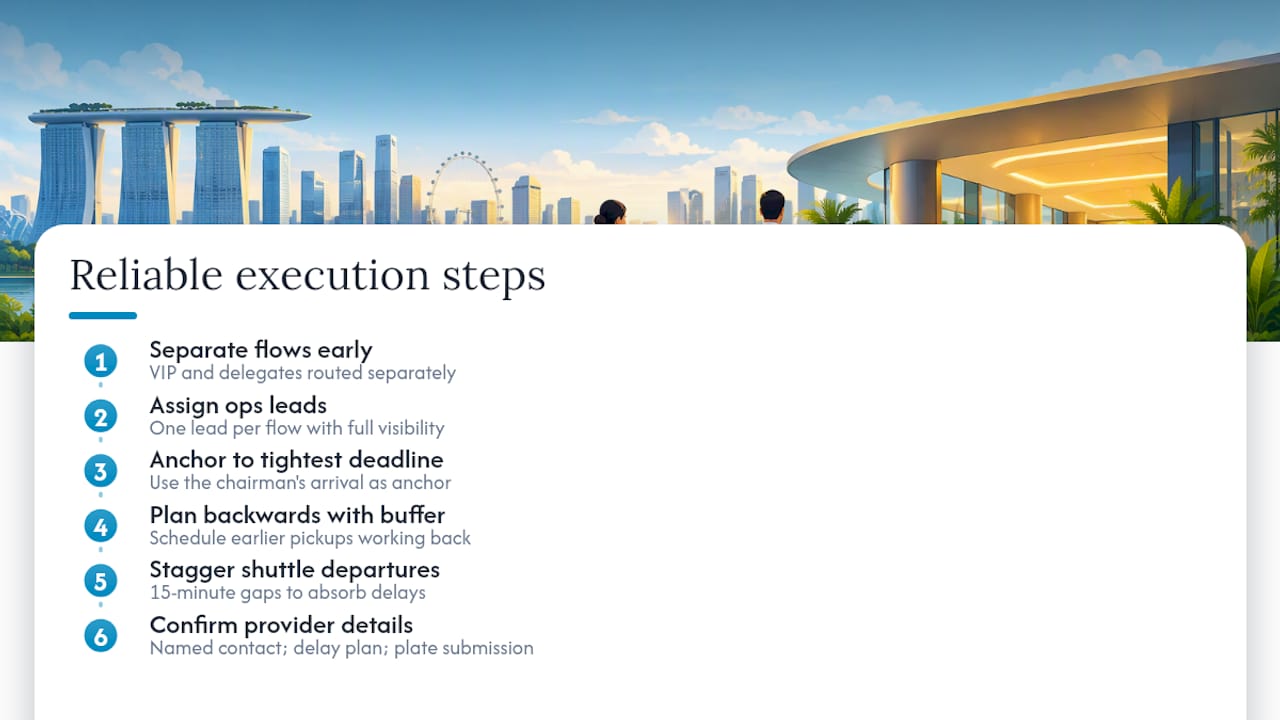
A recurring pattern that prevents disruption: build the schedule around the tightest deadline in the group, usually the chairman’s arrival time, then work every other pickup backwards from it with a buffer already included. On one recurring offsite booking, staggering delegate shuttle departures by fifteen minutes rather than sending them all at once absorbed a late-running earlier session without anyone missing the afternoon agenda.
Before signing off on any booking, ask the provider three things: who is the named ops contact on the day, what happens if a flight or a car is delayed, and how vehicle plate numbers get submitted for venue permits.
— Gurdip
Booking the transport once the plan is set
Kler Transport runs chauffeured sedans, minivans and coaches for exactly this kind of job, covering event transfers, business and corporate transport, and airport transfers for delegates flying in through Changi.
Once your one-page brief is ready, the next steps are straightforward: request a quote against the vehicle mix you need, confirm plate numbers and staging windows with the venue, and lock in pickup times against the meeting schedule.
- Airport arrival and departure transfers for delegates flying in or out of Changi.
- Hourly charter bookings for multi-stop or multi-flight days.
- Chauffeured minivans and coaches for delegate shuttles alongside a VIP sedan.
- A single quote request covering the full fleet mix for one event.
Full rates for arrivals, departures, transfers and hourly charters are listed on the booking and rates page, and reservations can be made directly through the booking form.
Where to check the rules before you book
Regulatory and venue rules change, so confirm the current position before finalising a brief.
- LTA private hire car licence sets out driver and vehicle licensing requirements.
- The Road Traffic Public Service Vehicles Rules define the licence classes covering chauffeured and bus services.
- LTA event road-closure notices confirm closures around major events.
- The Marina Bay Sands loading bay guide covers dock permits and vehicle access for large venues.
Sources
- LTA | Private Hire Car licence
- Road Traffic (Public Service Vehicles) Rules – Singapore Statutes Online
- LTA | Road closure and public transport arrangements for the Formula 1 Singapore Grand Prix 2026
- MBS loading bay booking guide: Sands Expo setup planning (GetOut!)
FAQ
What licence does a Singapore chauffeur service need?
A chauffeured car used for board meeting transfers must operate under the correct class set out in the Road Traffic Public Service Vehicles Rules, and the driver needs a valid private hire car licence from LTA. Ask your provider to confirm both before booking rather than assuming they hold them.
How far ahead should I confirm the passenger manifest?
A manifest deadline of forty-eight hours before the meeting, with a same-day confirmation window, gives the provider time to allocate the right vehicles and catch last-minute changes, an approach set out in corporate event transport planning guidance. Leaving it later than that increases the risk of a mismatched vehicle on the day.
Do I need separate permits for venues like Marina Bay Sands?
Yes, large venues such as Marina Bay Sands require plate numbers and a booked dock window ahead of time, and freight movements are typically treated separately from passenger pickups, as detailed in the Marina Bay Sands loading bay guide. Submitting these details late can mean the vehicle is turned away on arrival.
What happens if a flight is delayed and it affects the schedule?
For a delegate arriving on a delayed flight, an hourly charter with a holding-time provision handles this more reliably than a fixed pickup time, since the driver simply waits within the agreed window rather than the trip needing to be rebooked. This matters most on days with multiple arrivals spread across a few hours, where a single fixed-time booking per flight increases the chance of a missed connection.
Should I book transport for a single event or set up a corporate account?
A one-off board meeting is fine as a single ad-hoc booking, but once transport becomes a recurring need, such as monthly meetings or regular airport transfers, a corporate account brings priority allocation and a dedicated ops contact. It also simplifies invoicing, since trips are consolidated rather than paid individually.