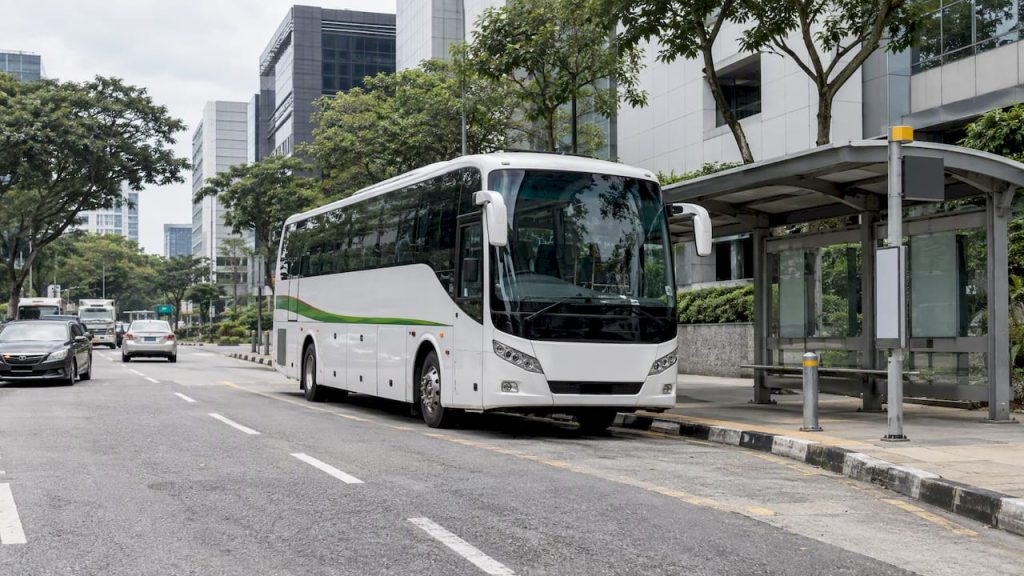
For most Singapore relocations, hiring a single provider with chauffeured minibuses and hourly charters is the most dependable way to move staff between offices, and we offer exactly that. The main regulatory check is LTA approval for public bus stop use. The payoff is on-time transfers, simpler logistics and luggage handled for your team.
TL;DR:
- Use scheduled charters for a single coordinated move, hourly service for staggered shifts, and sedans or MPVs when only a few employees need transport.
- Public bus stop use requires LTA approval; private buses may carry only employees or people connected to the business and cannot operate for profit.
- Request quotes once the date is fixed, submit any bus stop application well before use, then confirm passenger lists, pickup points, and a trial route.
- Compare quotes using identical pickup windows, waiting allowances, and cancellation terms; budget for vehicle type, charter duration, distance, idle time, and possible late night surcharges.
- Match vehicles to headcount and luggage, and allow extra boarding time at each stop when staff carry monitors, plants, or personal boxes.
Table of Contents
- Which transport approach suits your office move?
- When should you book and apply for bus stop use?
- What do LTA rules require for employee transport?
- Which vehicle fits which group size?
- What drives the cost, and how do you budget?
- What should you ask a provider before confirming?
- How can we support your relocation transfers?
- FAQ
- Sources
Which transport approach suits your office move?
The right choice depends on how your move unfolds. A single all-staff move day, a staggered shift over several days, and a handful of people changing desks each call for a different set-up.
- Scheduled charters suit a move day where many staff travel together between the old and new office at fixed times.
- Hourly charters suit staggered moves, where a vehicle stays on call and runs back and forth as teams are released.
- Sedans and MPVs suit a few employees, such as managers who need to be at both sites during the handover.
Using one provider with a mixed fleet means you coordinate one contact, one invoice and one set of terms, rather than juggling several suppliers. If the plan changes on the day, the same provider can swap a minibus for an MPV without a fresh round of quotes.
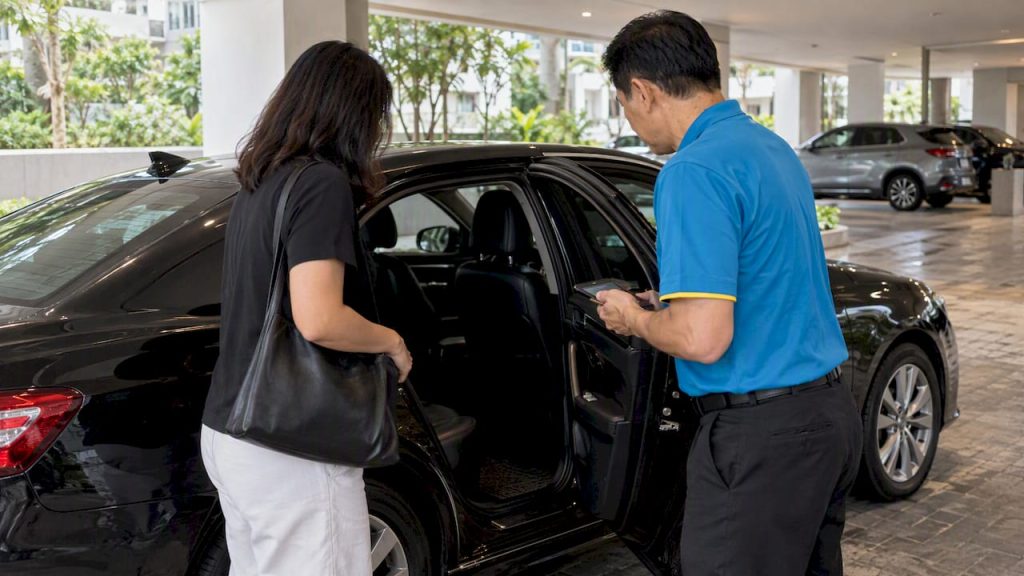
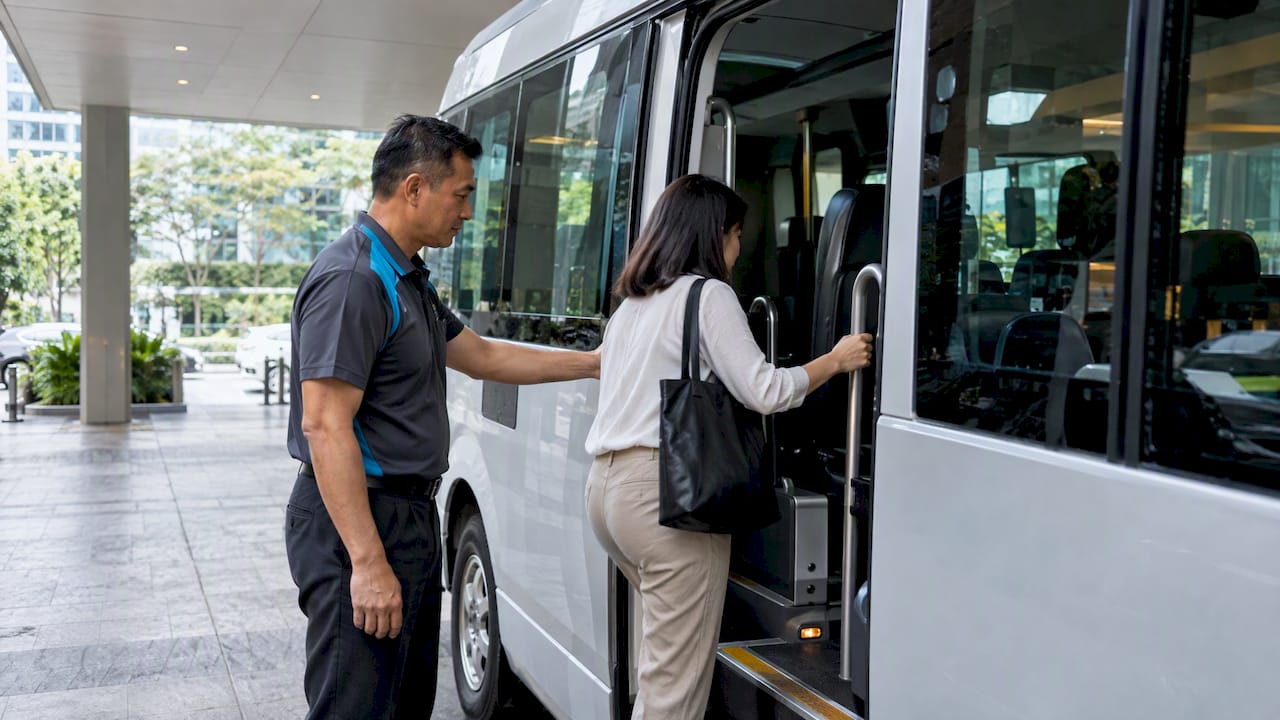
In Singapore, a good provider also gives you meet-and-greet at the pick-up point, boarding from a sheltered spot where possible, and a named contact who stays reachable throughout the day.
When should you book and apply for bus stop use?
Work backwards from move day. Allow time for quoting, for LTA paperwork if you plan to use public bus stops, and for a trial run.
- As soon as the move date is fixed: scope your needs and request quotes from your shortlisted providers.
- Well before first use: submit the bus stop application to LTA, if public bus stops are part of your plan.
- Ahead of the move: confirm vehicle bookings, allowing more lead time for larger moves.
- Before the move: finalise headcount and share the passenger list and shift groupings with your provider.
- Before the move: run a route trial and confirm staging and pick-up points.
- Before the move: circulate a contingency phone tree to team leads and drivers.
Pro Tip: Run your trial during non-peak hours and walk the sheltered route from the lobby to the boarding point, so you catch gaps in cover before staff do.
What do LTA rules require for employee transport?
Singapore classifies buses by purpose, and a bus can only be used for the purpose it is registered for. A private bus must be registered under a company and may only ferry employees or persons related to the business, at no profit. Private hire and excursion buses carry different permitted uses, so check which category your arrangement falls into.
- Registration and intended use: the LTA bus category guidance asks for the intended use, seating capacity and passenger estimates.
- Passenger documentation: some uses need a passenger name list or an agreement endorsed by the organisation.
- Drivers: they generally need a Bus Driver’s Vocational Licence (BDVL), so confirm this with any provider.
- Bus stop use: applications go to LTA through OneMotoring, and the applicant user guide explains each section of the form.
Approval from LTA is needed for private bus operators who wish to use public bus stops for pick-up and set-down. LTA’s licensing page says so, which is why we advise treating the application as an early task, not a last-week chore.
Which vehicle fits which group size?
Match the vehicle to headcount, luggage and how quickly people need to load.
- Sedans and MPVs work for small groups, ideal for senior staff with tight schedules.
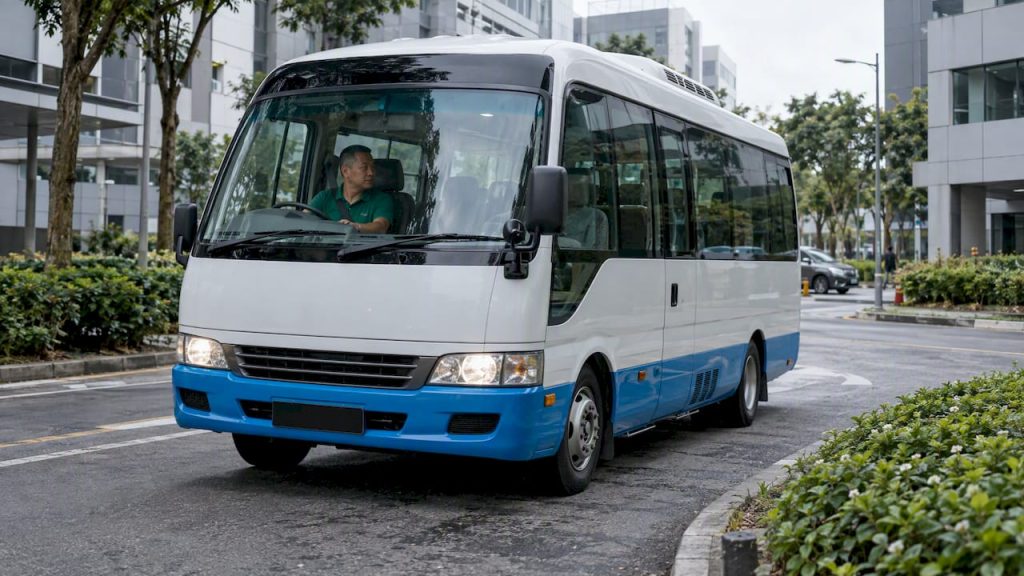
- Minibuses work for medium-sized groups, making them a possible choice for a department moving together.
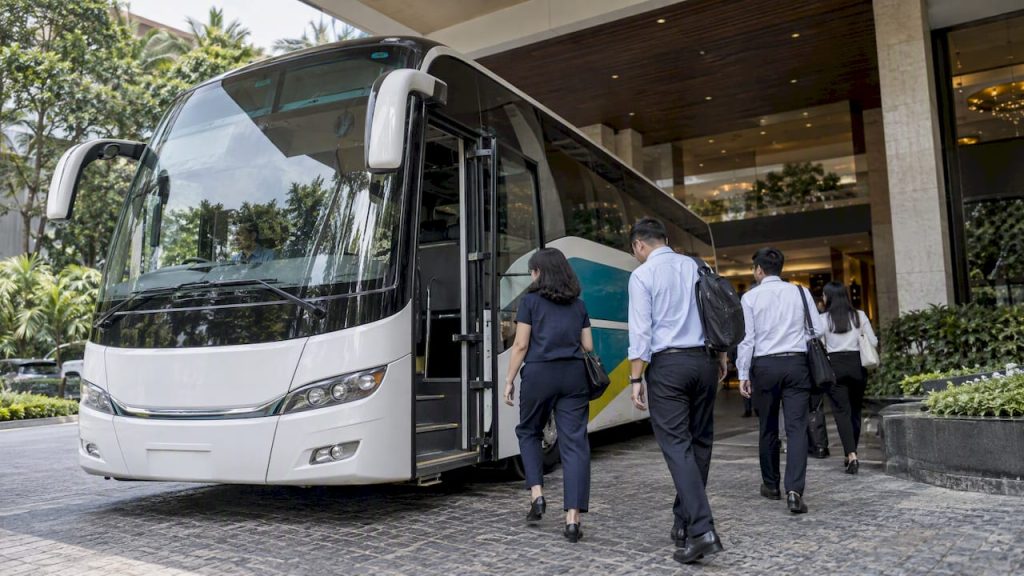
- Coaches work for larger groups, such as a full-floor move on a single morning.
Loading time matters more than most planners expect. A group carrying monitors, plants and personal boxes boards slower than commuters, so allow extra minutes at each stop and choose a pick-up point with shelter and clear kerb space.
Providers whose fleet runs from sedans to coaches make last-minute changes painless. If the headcount changes or a team drops out, the provider may be able to adjust within the same booking.
What drives the cost, and how do you budget?
Price follows a few predictable factors. Knowing them lets you compare quotes fairly.
- Vehicle type: a coach costs more than an MPV, though cost per head often falls as the group grows.
- Charter length: hourly bookings reward tight schedules, while per-trip pricing suits fixed point-to-point runs.
- Distance and waiting time: long idle periods between runs add up.
- Midnight charges: late or early starts may attract a surcharge.
- Cross-border legs: if any staff travel to Malaysia, price those separately.
For a working budget, estimate the base hire for each vehicle and allow a contingency for overruns and last-minute changes. For comparable quotes, give every supplier the same pick-up and drop-off windows, the same waiting allowance and the same cancellation terms. Our staff shuttle cost guide gives sample cost bands for HR teams.
What should you ask a provider before confirming?
Paste these into your request for quotation or email.
- Are all drivers BDVL-qualified, and can you share vehicle registration and insurance details?
- What is the pick-up and drop-off plan, and which routes are sheltered?
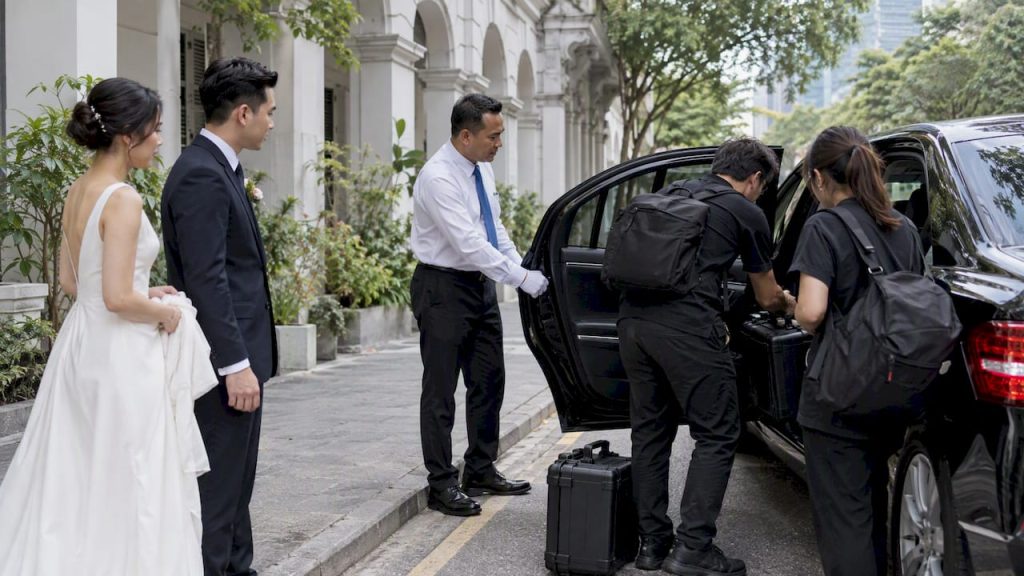
- Do drivers help with luggage and boxes?
- Who is the single contact on the day, and how do we reach them?
- What are the cancellation, waiting and overtime terms?
- Which staging area and exact pick-up times are confirmed in writing?
- Is there a contingency phone tree and a route map or trial?
For bus stop applications, gather the proposed routes, stopping places, operating hours, number of trips and supporting documents describing your organisation and the purpose of the service. A paste-ready RFP template for corporate transport can be adapted for relocations.
Pro Tip: Ask for every answer in writing and attach it to the booking, so the commitments hold on move day.
How can we support your relocation transfers?
We run chauffeured transport across Singapore, and several of our services fit an office move directly: business and corporate transfers, chauffeured minivan rental, hourly bookings, charter vehicles and staff and worker transport. Our fleet runs from sedans and MPVs to minibuses and coaches, so one booking can cover a full move day and the small adjustments around it.
To quote accurately, we need your headcount, your schedule, and the pick-up and drop-off points. Our drivers offer meet-and-greet and help with luggage. Send us your plan through our booking reservation page and we will come back with a quote.
FAQ
How far ahead should we book transport for an office move?
Book vehicles well ahead, allowing more lead time for larger moves. If you plan to use public bus stops, submit the LTA application well before first use.
Do we need LTA approval to move staff between offices?
It depends on how you operate. Using public bus stops for pick-up and set-down needs LTA approval, and drivers generally need a BDVL. Check with LTA or your provider for your specific case.
Is hourly or per-trip pricing better for a relocation?
Hourly charters suit staggered moves where vehicles run repeatedly, while per-trip pricing suits fixed runs. Ask each supplier to quote against the same waiting allowance so the comparison is fair.
How much does staff transport cost during a move?
Cost depends on vehicle type, hours, distance and any midnight charges. Our rates page lists current prices. Consider allowing a contingency when budgeting.