
A chauffeured service is pre-booked private transport, driven by a trained chauffeur in a premium vehicle, sold at a flat, quoted rate rather than a meter. It covers airport transfers, corporate travel, hourly charters and event logistics, and the whole point is predictability: you know the car, the price and the plan before you leave the house.
TL;DR:
- Booking a chauffeur service requires confirming a fixed vehicle class and upfront flat rates for predictable, stress-free transport.
- The scope of a chauffeur includes proactive route planning, luggage management, discretion, and coordinating with the client’s schedule.
- Most services cover airport pickups with flight monitoring, wait time allowances, and amenities, but extra charges can apply for parking, tolls, or last-minute changes.
- Professional chauffeurs are trained in etiquette, safety, and discretion, making them suitable for confidential, time-sensitive, or high-profile trips.
- Technology such as app-based booking and GPS tracking now ensures transparency, real-time updates, and better matching of vehicles to trip requirements.
Table of Contents
- What chauffeured transportation looks like once you actually book one
- Chauffeur vs driver: what actually separates the two
- The main types of chauffeur services and when to book each
- What a chauffeur actually does once you’re in the car
- What to check before you book: licences, screening and trust signals
- How booking, pricing and wait times usually work
- Why people choose a chauffeur over a taxi or ride-hail app
- A working example: how one Singapore operator structures its services
- Where the chauffeur title actually came from
- What passengers expect from a chauffeured service today
- How technology has changed booking and tracking
- Booking one? Here’s how I’d think about it
- Sources
What chauffeured transportation looks like once you actually book one
Understanding chauffeured transportation meaning in practice starts with the booking itself, because that’s where it diverges from hailing a cab. You book in advance, usually with a flight number, address, or itinerary attached, and you get a confirmation with a named or guaranteed vehicle class rather than “whoever happens to be nearby.” Pricing is agreed upfront as a flat rate for the route or the hour, not calculated on a meter that climbs with every red light or diversion. That single difference (fixed cost versus metered fare) is arguably the most practical distinction between a chauffeur service and a standard taxi.
The service itself tends to include a specific bundle of elements that operators build their reputation on. Industry guidance describes these as core to what a chauffeured service actually delivers:
- A meet-and-greet at arrivals, often with a name board, rather than a curbside scramble
- Flight tracking, so the pickup time adjusts automatically if your flight is early or delayed
- A guaranteed vehicle class confirmed at booking, not a surprise on the day
- A complimentary wait window built into the airport fare, covering baggage claim and immigration queues
- Small amenities such as bottled water, phone chargers or Wi-Fi, depending on the operator
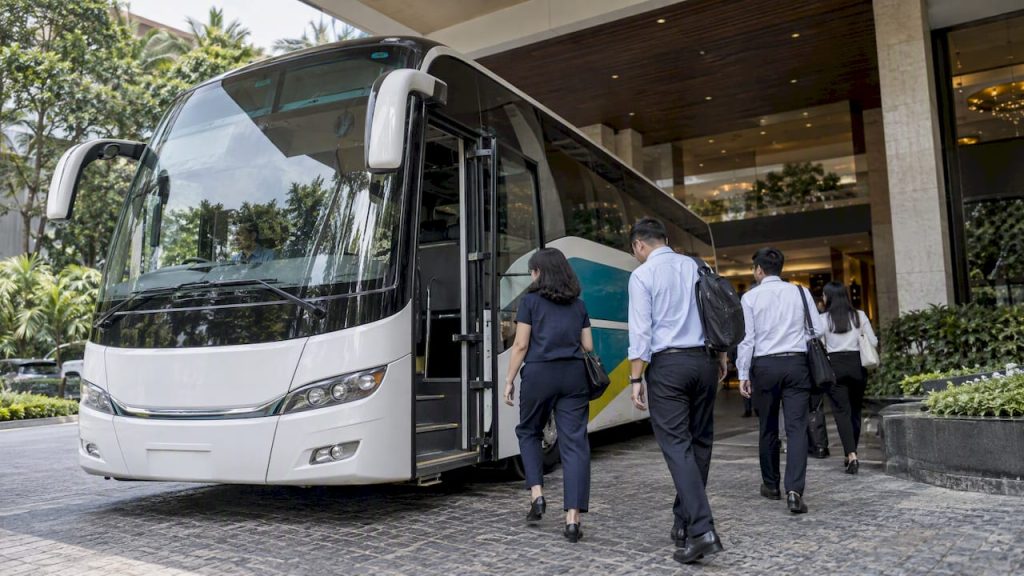
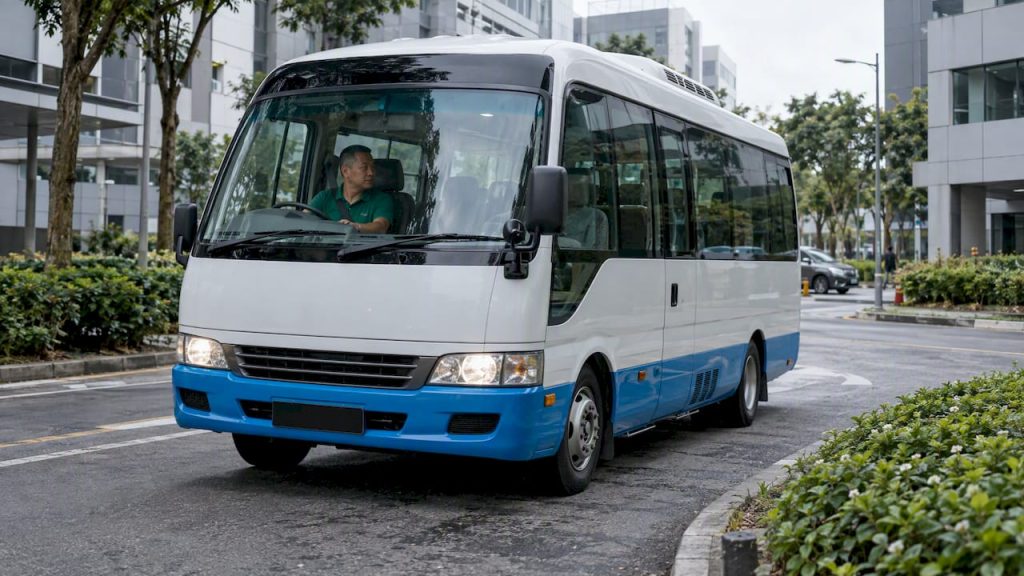
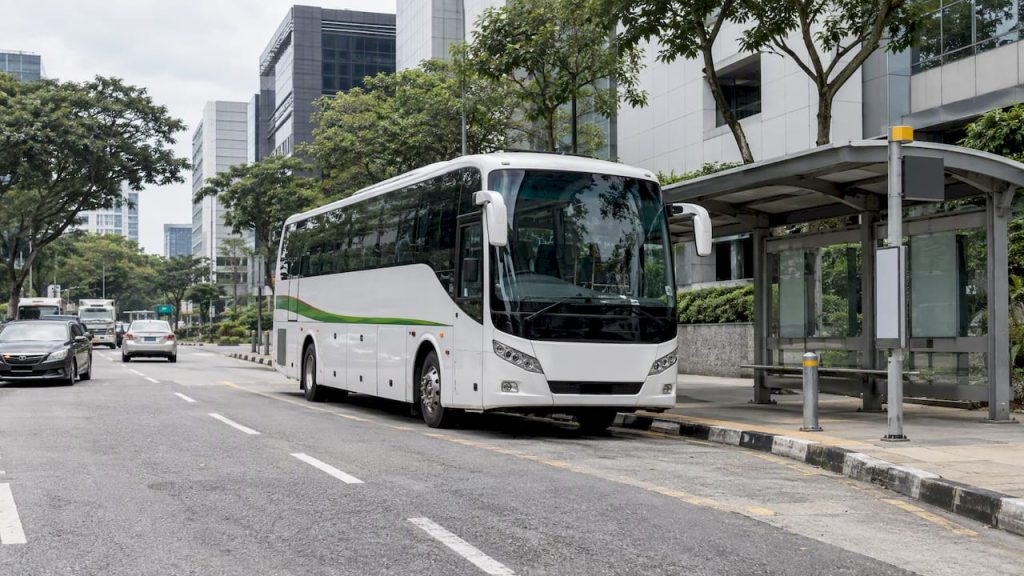
Vehicle classes vary by need. A luxury sedan (think Mercedes E-Class or BMW 5 Series equivalents) suits solo executives or couples wanting comfort and discretion. MPVs handle small groups or extra luggage without losing the premium feel. Minibuses step in for teams of eight to fifteen, useful for corporate offsites or wedding parties, while coaches cover larger conference transfers or tour groups. The vehicle should match the job, not just the budget.
Chauffeur vs driver: what actually separates the two
A “driver” gets you from A to B. A chauffeur, by definition, is trained in more than steering, according to Wikipedia’s entry on the role, which notes the term implies professional presentation and a service focus beyond simple driving. That training typically covers executive etiquette, defensive driving techniques, route planning under time pressure, and how to handle a car door, a suitcase and a nervous first-time flyer all in the same ninety seconds.
The scope of the job differs too. A chauffeur usually manages:
- Proactive timing: leaving early enough to absorb traffic, not just enough to arrive on time if everything goes perfectly
- Luggage handling without being asked
- Discretion during the ride, including not discussing who else they’ve driven or what they overheard
- Coordination with the client’s schedule, not just the address on the booking
Pro Tip: If a trip involves confidential conversations, tight connections, or a client you’re meeting for the first time, book a chauffeur rather than a standard driver. The extra planning and discretion are exactly what you’re paying for.
None of this means a standard driver or taxi is the wrong choice everywhere. A quick solo hop across town with no luggage, no time pressure and no need for privacy is a perfectly reasonable taxi job. Chauffeur vs taxi service isn’t about one being universally better. It’s about matching the level of service to what the trip actually demands.
The main types of chauffeur services and when to book each
Chauffeured services split into a handful of recognisable categories, and knowing which one you need shapes what you should ask for when booking.
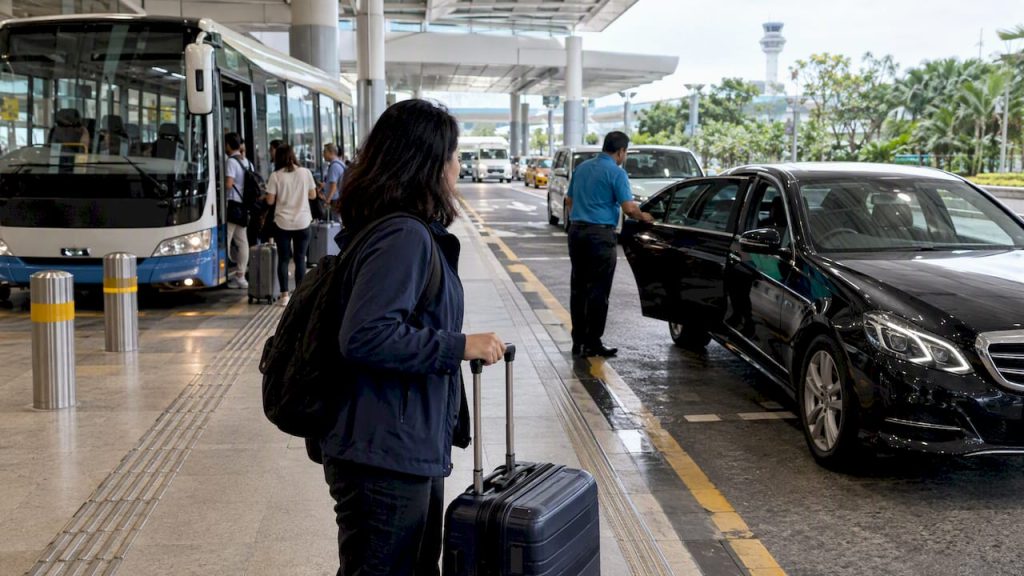
- Airport transfers. The most common use case, built around meet-and-greet at the terminal and flight monitoring so the driver adjusts for early or delayed arrivals rather than sitting on a fixed clock.
- Corporate and account services. Businesses that book regularly tend to set up account arrangements with consolidated invoicing, so finance teams aren’t processing dozens of individual receipts for recurring staff or client transport.
- Hourly or as-directed charters. You book the vehicle and chauffeur for a block of time rather than a single point-to-point trip, useful for a day of back-to-back meetings or a multi-stop shopping and sightseeing run.
- Event and VIP transport. Weddings, conferences and product launches need staged arrivals, timed departures and sometimes multiple vehicles moving in coordination, which is a logistics job as much as a driving one.
- Group and long-distance transport. Minibuses and coaches cover teams, tour groups or cross-border trips where a single sedan isn’t practical, and long-distance bookings often need route planning around border checkpoints or rest stops.
Each type carries slightly different expectations. An hourly charter, for instance, should come with a clear definition of what counts as an “hour” (does waiting time at each stop count against the clock?), while event transport should involve a staging plan agreed in advance, not worked out on the day. Asking the operator to specify which category your trip falls into is a simple way to avoid mismatched expectations later.
What a chauffeur actually does once you’re in the car
The visible part of the job (meet-and-greet, opening the door, handling your case) is only the start. A chauffeur’s real value shows up in what happens before you notice anything’s wrong.
- Route planning that accounts for likely traffic and unusual events, not just the shortest path on a map
- Continuous monitoring of flight status or meeting schedules to adjust pickup or arrival timing
- Door service and luggage handling without being asked twice
- Maintaining discretion about your conversations, your destination and your schedule
- Clear, proactive communication if something changes, rather than silence followed by an apology
Proactive timing is the detail passengers underrate most. A good chauffeur builds in a buffer for the traffic that hasn’t happened yet, and adjusts the whole plan the moment a flight lands fifteen minutes late. That kind of anticipation, paired with local knowledge of which routes actually save time at 5pm on a Friday, is what separates a chauffeur from someone who simply knows how to drive.
Discretion matters more than most passengers realise until they need it. Corporate clients discussing a deal in the back seat, or a family managing a sensitive personal trip, both rely on the chauffeur treating the ride as private by default, not as something to mention to the next passenger.
What to check before you book: licences, screening and trust signals
Verifying a provider before you book is straightforward if you know what to ask. A handful of checks separate a professional operation from someone with a nice car and a website.
- Licensing and permits. Chauffeur and private-hire licensing requirements vary by jurisdiction, so confirm the operator holds whatever local permit applies to commercial passenger transport in your market.
- Background screening. Reputable operators screen drivers before they’re allowed near paying passengers, covering criminal history and driving record, not just a valid licence.
- Vehicle maintenance routines. Ask how often vehicles are serviced and inspected. A fleet on a fixed maintenance schedule is a stronger sign of reliability than a single well-photographed car.
- Insurance and liability cover. Commercial passenger insurance should be in place and distinct from a standard personal motor policy.
- Published policies. Look for clear, written terms on wait times, flight delays, cancellations and vehicle substitution. Operators willing to put this in writing tend to be the ones who actually honour it.
- Track record. Corporate accounts, repeat business and genuine testimonials are harder to fake than a polished homepage.
One detail worth remembering: the terms “black car service” and “private car service” get used almost interchangeably with “chauffeur service” across the industry, but as Detailed Drivers points out, what actually defines the category is the pre-booked, fixed model, not the label on the website. Whatever the operator calls itself, the checklist above still applies.
How booking, pricing and wait times usually work
Most chauffeured services quote a flat rate for the trip or the hour, agreed before you travel. That figure typically covers the base fare, the driver’s time and standard waiting at the pickup point. It does not always cover everything, so it’s worth knowing what commonly sits outside the quoted price.
- Parking and tolls. Frequently billed as separate line items, particularly for airport or CBD pickups with metered parking bays.
- Extended waiting. Most operators build in a grace period, but time beyond that is usually charged, often in fifteen or thirty minute increments.
- Cancellations and amendments. Policies vary, but same-day cancellations or last-minute vehicle upgrades are the most common source of extra charges. Ask before you book, not after.
- No-shows. If a passenger doesn’t turn up within the agreed window and can’t be reached, most operators charge the full fare.
Airport pickups deserve particular attention because delays there are common and rarely the passenger’s fault. Operator guides generally note that a complimentary wait window is standard practice for arrivals, covering the stretch between landing and actually reaching the car through immigration and baggage claim. Exact minutes vary by operator, so it’s worth confirming the figure at booking rather than assuming it matches whatever a previous provider offered.
Why people choose a chauffeur over a taxi or ride-hail app
The case for booking a chauffeur usually comes down to four things: reliability, time, privacy and reduced stress. None of them are abstract. A fixed pickup time and guaranteed vehicle mean you’re not gambling on surge pricing or driver availability during a rainstorm or a public holiday rush.
- Reliability. A confirmed booking with flight tracking removes the guesswork around delayed arrivals.
- Productivity. Executives use transfer time to prep for meetings or take calls, which a chaotic ride-hail pickup doesn’t easily allow.
- Privacy. Sensitive conversations, first dates with a client, or simply not wanting a stranger’s music playlist, all favour a private, professional service.
- Stress reduction. Not having to think about parking, navigation, or currency for tolls frees up mental bandwidth for whatever actually matters that day.
Pro Tip: A simple rule of thumb: if the trip involves a flight, a deadline, or someone you’re trying to impress, book a chauffeur. If it’s a short, low-stakes hop with flexible timing, a taxi or ride-hail app is fine.
The value case is clearest for elderly or less mobile passengers too, where door-to-door assistance and a calmer pace matter more than the fare difference. Cost versus value tips toward the chauffeur whenever the consequence of a bad ride (a missed flight, a stressed client, a fall on an unfamiliar staircase) outweighs the extra amount on the invoice.
A working example: how one Singapore operator structures its services
Kler Transport operates as a practical illustration of how these principles translate into an actual booking menu, though it’s one operating model among many, not the only way to run a chauffeured fleet. The service covers airport transfers, corporate event transport, hourly charters and group commuting, with some cross-border runs layered on top of standard local trips.
The fleet mapping follows the logic covered earlier: sedans for solo executives or couples wanting a discreet, comfortable ride; MPVs for small groups or extra luggage; minibuses and coaches for larger teams, conference groups or event transport where groups need to move together. Matching the vehicle to the group size rather than defaulting to whatever’s available is part of what keeps a service like this workable at scale.
Operational commitments center on punctuality and flight monitoring for airport work, paired with positive testimonials that tend to accumulate around reliable operators. It’s a useful reference point for what “chauffeur service” looks like when the definition moves from the dictionary to an actual booking form.
Where the chauffeur title actually came from
The word “chauffeur” is French, originally meaning “stoker” or “one who heats,” a nod to the early steam-powered cars that needed someone to manage the boiler before they could move at all. As Wikipedia’s history of the role notes, the term shifted meaning as petrol engines replaced steam, and “chauffeur” came to describe the professional driver rather than the person tending a fire.
By the early twentieth century, wealthy households in Europe and America employed chauffeurs much as they employed butlers or cooks: a permanent staff role tied to a specific family, often living close to the property and on call for whatever the household needed. Cars were expensive, mechanically unreliable, and genuinely difficult to drive well, so the chauffeur’s technical skill mattered as much as their manners.
The role professionalised further through the twentieth century as licensing, formal driver training and, eventually, corporate car services replaced the private household model for most bookings. What used to be an employee attached to one family became an industry: fleets, dispatch systems and account management replacing the single car in a private garage. The Cambridge Dictionary’s definition still carries a trace of that history, describing a chauffeur as someone “employed to drive a private car,” even though most chauffeurs today work for a service rather than a single household.

What passengers expect from a chauffeured service today
Modern expectations have shifted from the household-employee model toward something closer to a concierge standard, and the bar has risen accordingly. Passengers now expect the chauffeur to know their flight number before they mention it, to have the vehicle spotless and stocked with water without being asked, and to communicate proactively rather than waiting to be chased for an update.
Punctuality is treated as non-negotiable, and appropriately so. Being fifteen minutes early and adjusting for traffic is the baseline, not a bonus. Passengers also expect consistency: the same standard of vehicle, presentation and service whether it’s a one-off airport run or the fiftieth trip with a corporate account.
Discretion remains a firm expectation, particularly for corporate and VIP passengers who need to work, take calls or simply sit in silence without the driver treating that as an invitation to chat. And increasingly, passengers expect flexibility: the ability to add a stop, extend the booking by an hour, or change the pickup point without a lengthy renegotiation of the fare.
Where a provider falls short of these standards, it tends to be visible immediately, whether that’s a chauffeur who’s late without warning or a vehicle that doesn’t match what was booked. Consistency across every trip, not just the best ones, is what separates services people rebook from ones they try once.
How technology has changed booking and tracking
App-based booking has replaced the phone call for most chauffeur services, letting passengers confirm a vehicle class, see the price upfront and get a confirmation instantly rather than waiting for a callback. That shift alone has done more to standardise pricing transparency than any regulation.
GPS tracking now lets both the operator and, in many cases, the passenger see exactly where the vehicle is in real time, which matters most for airport pickups where a five minute discrepancy used to mean anxious phone calls. Flight tracking integration takes this further: the system flags a delayed or early landing automatically, and the dispatch adjusts the chauffeur’s pickup time without the passenger needing to call anyone.
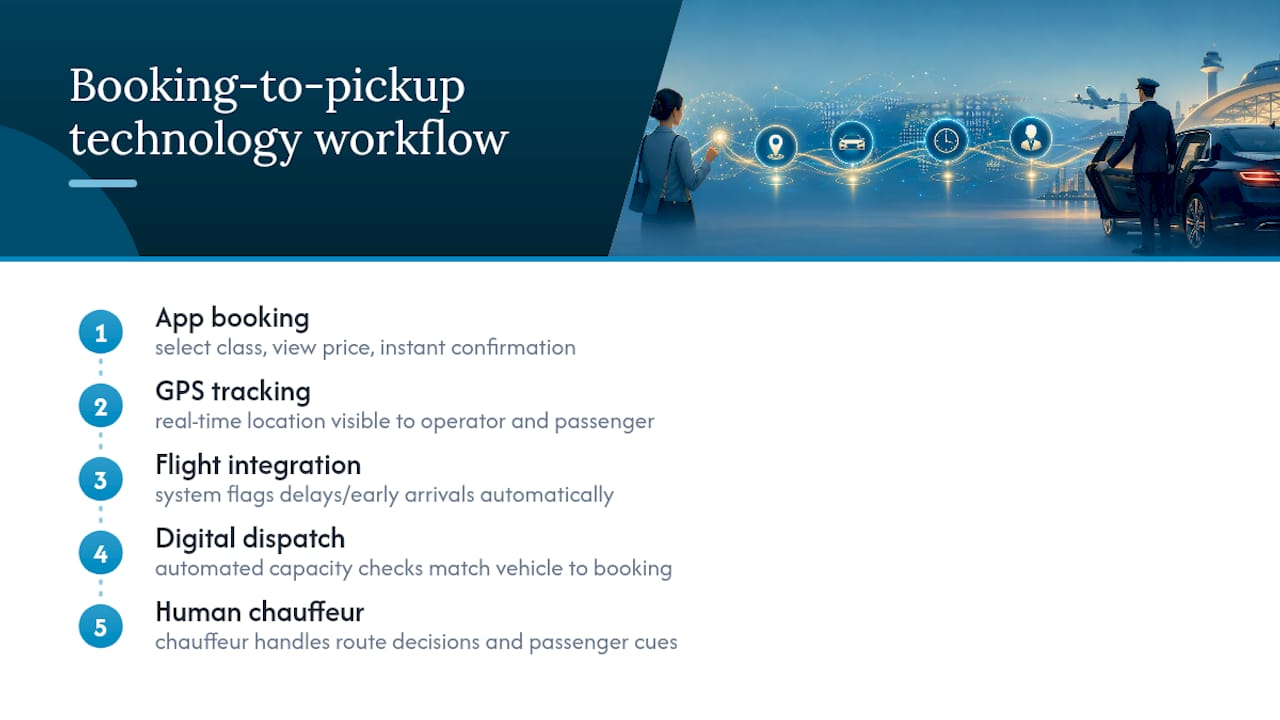
Digital dispatch also means better matching between vehicle and job. A minibus booking for twelve people doesn’t get accidentally assigned a sedan because a dispatcher misread a note on paper. Automated systems check capacity against the booking before confirming.
None of this replaces the human judgement a good chauffeur brings to a route decision or a passenger’s unspoken preference for a quieter ride. Technology handles the logistics layer, tracking, matching, timing, so the chauffeur can focus on the part that still can’t be automated: reading the passenger and adjusting the service accordingly.
Booking one? Here’s how I’d think about it
If I were advising a friend, I’d say book a chauffeur whenever a trip has a deadline attached to it: a flight, an interview, a client meeting where being flustered on arrival costs you something real. I wouldn’t bother for a five minute trip to a restaurant with no luggage and no time pressure.
Three heuristics worth keeping: check the wait-time policy before you need it, not after a flight delay; confirm the vehicle class in writing rather than trusting a verbal promise; and treat published cancellation terms as a genuine signal of how the operator runs its business, not fine print to skip.
On cost versus convenience, I don’t think chauffeur services are automatically worth the premium. They’re worth it when the alternative (a stressed arrival, a missed connection, a compromised conversation) costs more than the fare difference. That calculation changes trip by trip, and it’s worth making deliberately rather than defaulting either way.
— Gurdip
Sources
For readers who want to go deeper into the terminology and history covered here, a few sources are worth bookmarking. Wikipedia’s entry on the chauffeur role covers the term’s origins and its evolution from steam-era “stoker” to modern professional driver. The Cambridge English Dictionary offers the tightest formal definition, useful if you need a precise, citable wording of what the word actually means.
For the operational side, including how flat-rate pricing, flight tracking and meet-and-greet protocols work in practice, Detailed Drivers’ guide to chauffeur service breaks down the industry standard in more detail than most consumer-facing sites bother to. Between the three, you get the etymology, the formal definition and the practical mechanics covered from separate angles.
- Chauffeur — Wikipedia
- chauffeur | Definition from Cambridge English Dictionary
- What is Chauffeur Service? Complete Definition & Guide (2026) — Detailed Drivers