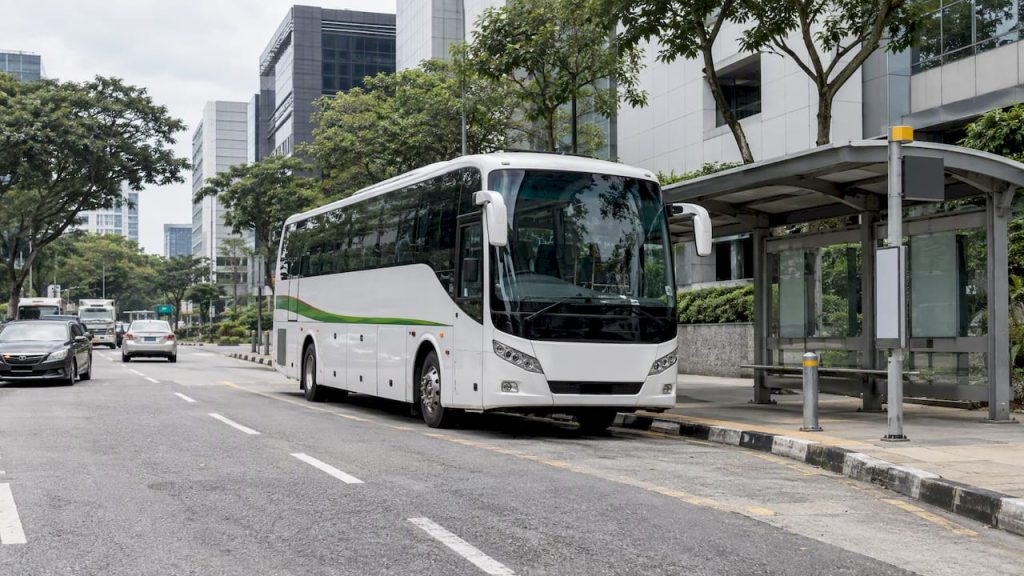
Charter a minibus in Singapore by contacting a licensed operator with your passenger count, pick-up and drop-off points, date, time and luggage needs, then asking for the vehicle’s registration type and the driver’s Bus Driver’s Vocational Licence (BDVL) before you accept a quote. A written quote should list exactly what is included and what costs extra. If you want a quicker route, request a quote from a chauffeured transport provider such as Kler Transport and compare it against at least one other operator.
TL;DR:
- Booking early, especially for large vehicles or during peak events like F1 weekend, ensures availability and better rates.
- Confirm the vehicle’s registration category and driver’s licence, such as BDVL, before finalizing the booking to ensure compliance.
- Specify luggage size and count when requesting a quote to avoid space issues at the curb, especially with full-size suitcases.
- Include special needs like wheelchair access or child seats in your initial request, as not all vehicles are fitted for these requirements.
- Make sure to clarify what extras, such as ERP, parking, and waiting time, are included or billed separately to avoid unexpected costs.
Table of Contents
- Vehicle types and capacities: which minibus or maxi cab suits your group
- Typical costs and pricing models in Singapore
- The booking process: step-by-step from request to the day of travel
- Licences, permits and legal checklist for Singapore charters
- Practical planning checklist and what to ask operators before you book
- How far ahead should you book a minibus charter?
- Diesel, hybrid or electric: does the fuel type of your minibus matter?
- What are the passenger safety rules for minibus charters?
- Cancellation policies and refund procedures you should check
- How Kler Transport can help you book a minibus in Singapore
- Sources
- FAQ
Vehicle types and capacities: which minibus or maxi cab suits your group
Picking the right vehicle size matters more than most organisers expect. Book too small and you are paying for a second trip or a taxi top-up; book too large and you are paying for empty seats on a route where a smaller vehicle would have done the job just as well.
Singapore charters generally fall into a few recognisable classes:
- 6/7-seater MPVs: suited to small families, airport transfers or executive pick-ups where comfort matters more than headcount.
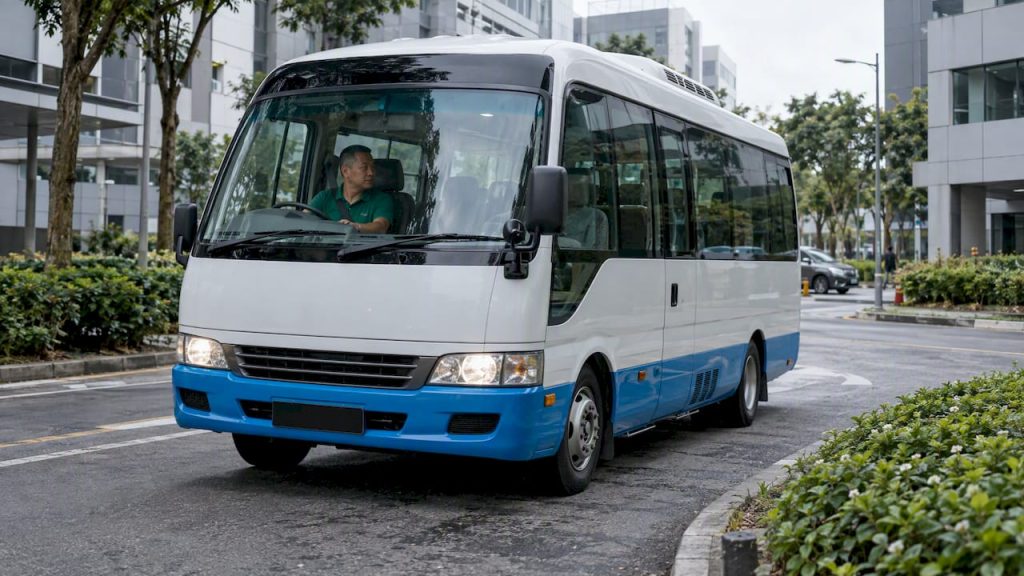
- 13-seater minibus: the workhorse for small corporate groups, wedding parties and school outings.
- 23-seater minibus: fits mid-sized teams, tour groups or a department heading to an offsite.
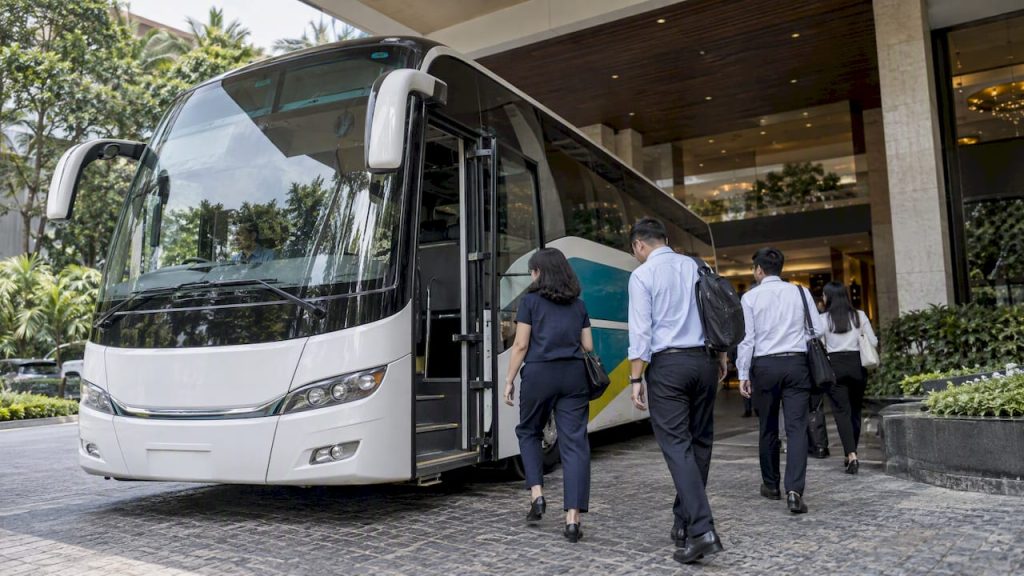
- 40 to 50-seat coach: needed for conference delegations, large weddings or full-scale event logistics.
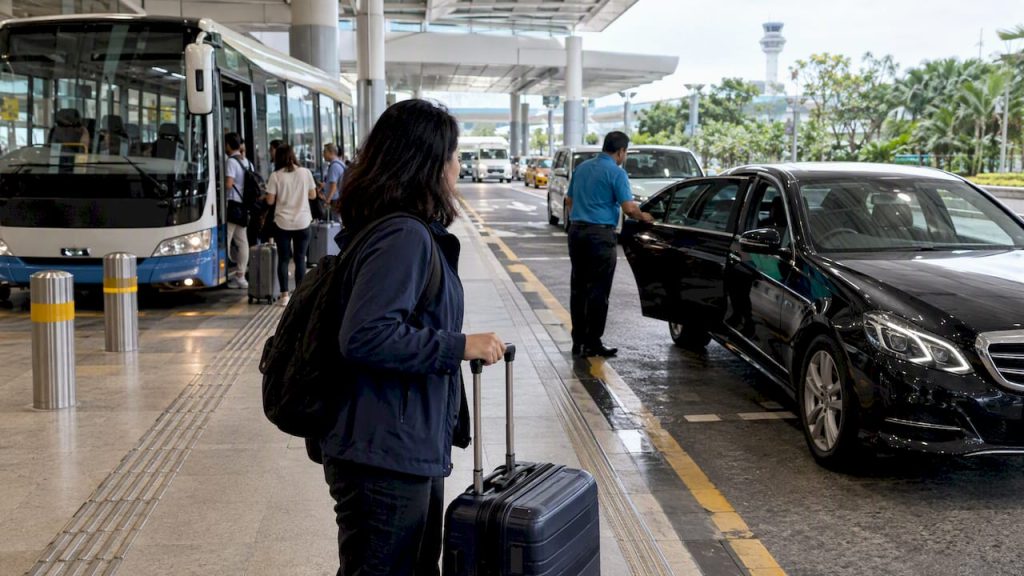
Luggage capacity is the detail organisers most often underestimate. A 13-seater minibus with 13 passengers and full-size suitcases rarely has boot space for all of them, so if your group is flying in or out, tell the operator the exact bag count rather than just the headcount. Requesting luggage measurements, or simply describing bags by size and number, avoids the awkward moment at the curb when cases will not fit and a second vehicle has to be called.
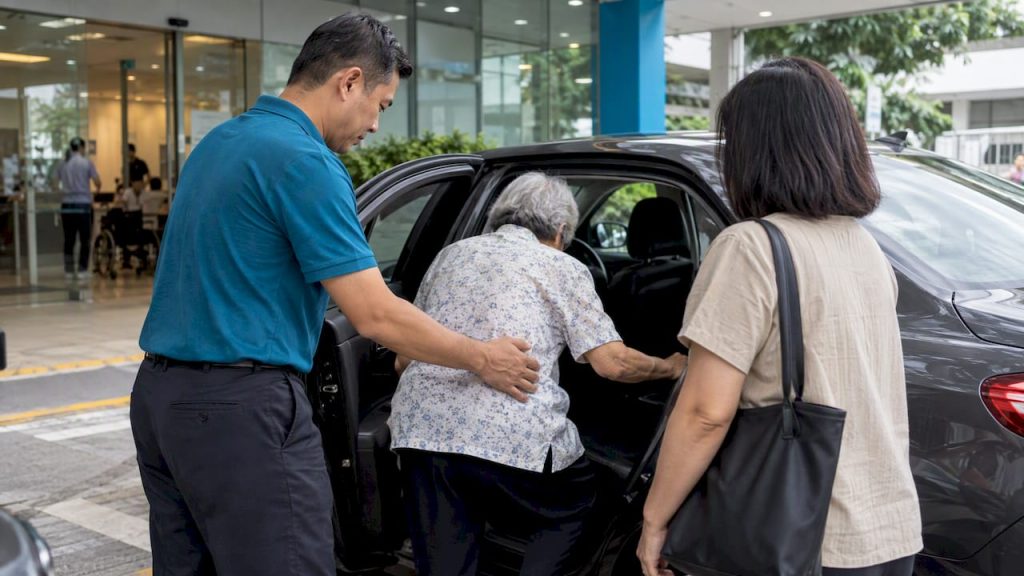
If anyone in your group needs wheelchair access, a child seat or another accessibility requirement, raise it when you first request the quote rather than on the day. Not every minibus in the fleet is fitted for wheelchair access, and child seats often need to be requested in advance so the right vehicle is assigned. Kler Transport’s service catalogue sets out the vehicle types on offer, which is a useful reference point when you are deciding what to ask for.

Typical costs and pricing models in Singapore
Charter pricing in Singapore is not one-size-fits-all, and the model an operator quotes you often depends on your itinerary rather than the vehicle alone. The common structures are per-hour hire, half-day and full-day rates, a flat per-trip fee for a single point-to-point run, an event flat-rate for multi-stop days, and monthly contracts for businesses running regular staff transport.
- Per-hour or half/full-day hire suits itineraries with multiple stops or waiting periods, such as a wedding day or a corporate roadshow.
- Per-trip flat rate suits a single pick-up and drop-off, such as an airport run or a transfer to an event venue.
- Event flat-rate or monthly contract suits recurring needs, such as staff shuttles or a multi-day conference.
A half-day 13-seater minibus charter in Singapore commonly falls within a typical price range, though exact rates vary by operator and event date; current prices are available on the operator’s pricing page. Larger coaches cost proportionally more, and rates on peak dates such as F1 race weekend tend to rise while vehicle availability tightens, so booking early matters more than usual around those dates.
Most quotes include the driver, fuel and basic third-party passenger insurance as standard. What they typically exclude, unless the operator states otherwise, is ERP charges, parking fees and waiting time beyond an agreed allowance. If your itinerary crosses into Malaysia, expect border-related fees and paperwork to be quoted separately too. Always ask the operator to confirm, in writing, whether these extras are bundled in or billed on top.
The booking process: step-by-step from request to the day of travel
A clear request gets a clear quote. Before you contact any operator, prepare the following:
- Passenger count and luggage, including any oversized items such as instrument cases or sports equipment.
- Pick-up and drop-off addresses, with any intermediate stops listed in order.
- Date, timings and duration, including whether the booking is one-way, return or multi-stop.
- Special needs, such as wheelchair access, child seats or a border crossing into Malaysia.
Once quotes come back, compare them on more than price alone. Check what is included against what is excluded, the deposit amount and payment terms, and the cancellation and refund policy. A quote that looks cheap but excludes ERP, parking and waiting time can end up costing more than a fuller quote from another operator.
Before the day itself, get written confirmation of the driver’s name, the vehicle’s registration number, the exact meet-and-greet arrangement (where the driver will wait and how you will find each other), and a contact number for last-minute changes. Ask what the operator’s contingency plan is if a vehicle breaks down or a driver is delayed, since a charter with no backup plan leaves you stranded on the day.
Pro Tip: Save the driver’s mobile number and the operator’s office line separately, so you have a way to reach someone even if one line is unreachable on the day.
Licences, permits and legal checklist for Singapore charters
Compliance is where a charter can go wrong quietly, usually because nobody checked the paperwork until it was too late. Singapore’s LTA defines several bus registration types, including private bus, private hire bus, excursion bus and school bus, and a vehicle registered under one category must only be used for that registered purpose.
- Private hire bus: the category most charter and event minibuses fall under.
- Excursion bus: typically used for tours and day trips.
- School bus: registered specifically for school transport, not general charter use.
- Private bus: usually restricted to a company’s own staff or members rather than public hire.
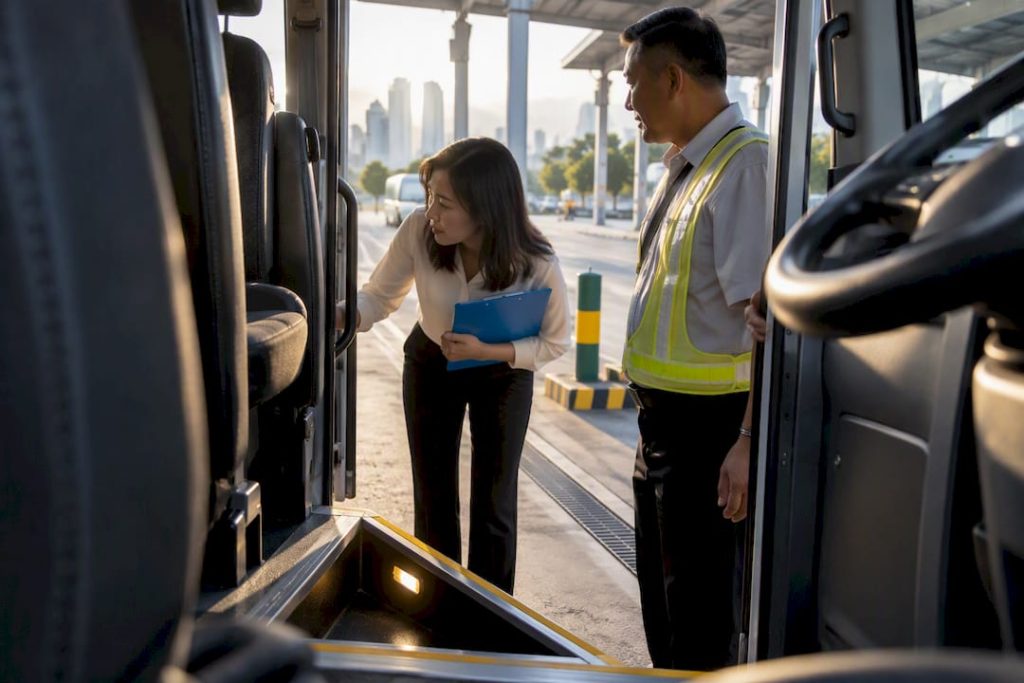
Drivers matter as much as the vehicle. Under GoBusiness licensing guidance, drivers of buses registered as private hire bus, school bus or excursion bus must hold a Bus Driver’s Vocational Licence, known as the BDVL. Ask the operator to confirm the driver holds a valid BDVL before you book, and treat any hesitation to confirm this as a warning sign.
Public bus stop pick-up and drop-off requires prior approval, and applications must be submitted at least one month before intended usage (LTA). If your itinerary involves a stop at a public bus stop, factor that lead time into your planning early, not the week before your event.
Standing passengers are only permitted on certain bus types, and only when technical requirements are met and the correct application procedure has been completed. This rule has applied to excursion, private hire, private and school buses since 31 May 2018, so never assume a minibus can carry standing passengers without checking first.
Practical planning checklist and what to ask operators before you book
A short checklist before you commit saves most of the day-of headaches organisers run into.
- Confirm the essentials: passenger count, luggage plan, exact itinerary, pick-up and drop-off locations, and any accessibility or border-crossing needs.
- Ask about insurance limits and what happens if there is an incident during the charter.
- Ask the operator to confirm the driver’s BDVL and the vehicle’s registration category matches your intended use.
- Ask what the rate covers, specifically ERP, parking and waiting time, and get the cancellation terms in writing.
- Ask about late finishes, since running past midnight often triggers a separate surcharge.
Watch for red flags. An operator who cannot confirm licensing details, sends an invoice with vague line items, will not put the booking in writing, or offers a quote noticeably lower than everyone else with a long list of exclusions is a risk not worth taking for an event that matters.
How far ahead should you book a minibus charter?
Lead time depends on your dates and your group size. For a standard weekday transfer or a small corporate booking, a few days’ notice is often enough, since operators keep some vehicles free for short-notice requests. For weekends, event season or larger vehicles such as 23-seater minibuses and coaches, booking one to two weeks ahead gives you a wider choice of vehicle and driver.
If your plans involve a public bus stop pick-up or drop-off, remember that LTA approval alone needs at least one month’s lead time, so that requirement should shape your overall timeline regardless of how flexible the operator is (LTA).
Major event weekends compress availability fastest. Around F1 race weekend, hotel-heavy conference dates or large public holidays, minibuses and coaches book out early and rates tend to climb as availability tightens. If your date falls near one of these, treat a month or more of lead time as the safer target rather than the exception.
Cross-border trips to Malaysia add another layer, since drivers and vehicles need the right documentation for the crossing itself. Building in extra lead time for a Johor or Malacca trip, rather than treating it like a domestic transfer, avoids last-minute paperwork stress.
Diesel, hybrid or electric: does the fuel type of your minibus matter?
Most minibuses on Singapore’s roads today run on diesel, and that remains the default option most operators will offer you without being asked. Diesel minibuses are widely available, and their running costs and servicing are well understood by most fleets, which is part of why they remain common for charter work.
Hybrid and electric minibuses are appearing in more fleets as operators update their vehicles, though availability varies and you may need to ask specifically if a lower-emission option matters to you. An electric or hybrid minibus can be a reasonable choice if your organisation has a sustainability policy to meet, or if you simply prefer a quieter ride for a long transfer.
Fuel type rarely changes the charter rate on its own, since pricing is driven more by vehicle size, duration and route than by what is under the bonnet. What it can affect is availability. If you specifically want an electric or hybrid vehicle for an event, ask early, since fewer vehicles of that type may be in a given operator’s fleet compared with diesel.
What are the passenger safety rules for minibus charters?
Passenger safety in a chartered minibus in Singapore rests on the vehicle being registered for the correct use and the driver holding the correct licence for that vehicle category. A minibus registered as a private hire bus, school bus or excursion bus must have a driver holding a valid BDVL, and mismatching the vehicle’s registration with its actual use is a compliance issue you do not want to discover mid-booking (GoBusiness).
Group size limits are set by the vehicle’s registered seating capacity, and standing passengers are only allowed on specific bus types that meet technical requirements and have completed the correct application process. Never assume extra passengers can simply stand in the aisle unless the operator has confirmed that specific vehicle is approved for it.
For organisers, the practical safety checklist is short: confirm the vehicle’s registered capacity matches your headcount, confirm the driver’s licence category is correct for the vehicle, and avoid squeezing extra passengers in beyond the seating plan. Asking the operator to state these details in writing before the trip is a reasonable request, not an excessive one.

Cancellation policies and refund procedures you should check
Cancellation terms vary by operator, so this is one of the details worth confirming before you pay a deposit rather than after something changes. Ask specifically what happens if you cancel a week before your date, 48 hours before, or on the day itself, since most operators tier their refund terms around those windows.
Deposit terms matter just as much as the cancellation window. Some operators take a partial deposit that is non-refundable close to the travel date, while others may offer a full refund outside a set cutoff and a partial refund inside it. Get this in writing at the time of booking, not as a verbal assurance, so there is no ambiguity if plans change.
Rescheduling is often more flexible than outright cancellation, and many operators will move your booking to a new date at no extra charge if you give reasonable notice. If your event date is uncertain, ask whether a reschedule option exists before you commit to a fixed date.
Event-heavy dates change the calculation. Around F1 weekend or other high-demand periods, some operators tighten their cancellation terms because vehicles are in short supply, so read the fine print more carefully for bookings around those dates than you would for an ordinary weekday transfer.
How Kler Transport can help you book a minibus in Singapore
Once you know your headcount, route and dates, the fastest way to move forward is a straightforward quote rather than another round of comparison. Kler Transport runs a fleet covering solo passenger sedans through to minibuses and coaches, so the same operator can handle an airport pick-up, an event transfer and a Singapore to Malaysia trip without you juggling multiple bookings.
Services relevant to a minibus charter include:
- Chauffeured minivan and minibus charter for corporate groups, weddings and event transport.
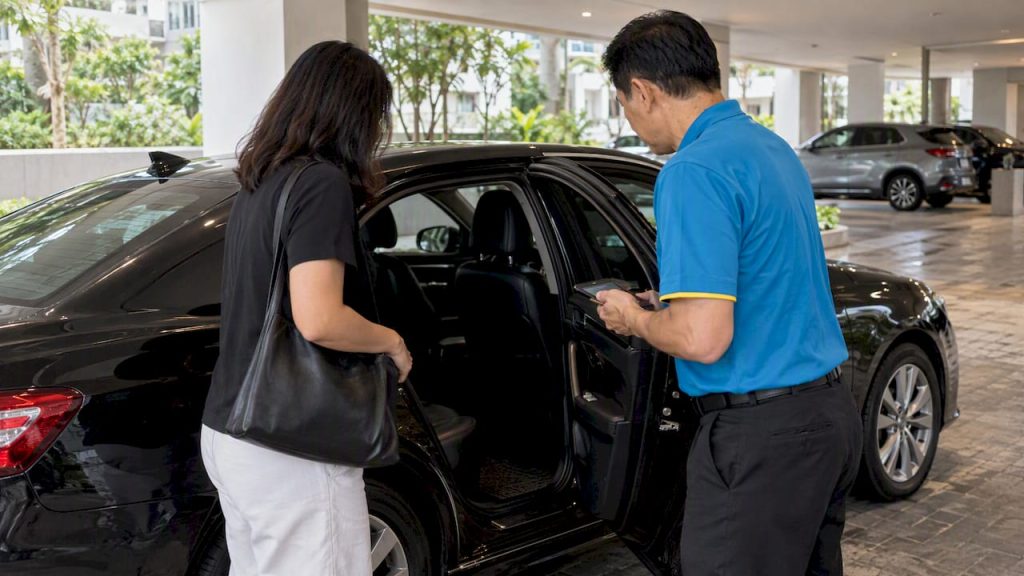
- Singapore airport transfers, including Changi pick-ups with meet-and-greet and luggage handling.
- Event and attraction transfers for conference delegations, tour groups and day trips.
- Singapore to Malaysia transport, including trips to Johor and Malacca.
Some operators position themselves as offering a wide fleet range and a focus on reliable, professional service backed by positive customer testimonials, which is worth weighing against smaller, single-vehicle operators you might otherwise be comparing. If you have already gathered a few quotes elsewhere and want a benchmark, check current rates or go straight to the booking reservation form to lock in your date.
Sources
For regulatory checks and booking action, these pages cover the essentials:
FAQ
How much does a minibus charter cost in Singapore?
Pricing depends on vehicle size, duration and route, with common models being hourly, half-day, full-day or per-trip rates. A half-day 13-seater minibus commonly falls between S$150 and S$220, though exact rates vary by operator and event date.
Do minibus drivers in Singapore need a special licence?
Yes. Drivers of buses registered as private hire bus, school bus or excursion bus must hold a valid Bus Driver’s Vocational Licence, and organisers should ask operators to confirm this before booking.
How far in advance should I book a minibus charter?
For a standard transfer, a few days’ notice is often enough, but weekends, event dates and larger vehicles are safer booked one to two weeks ahead. Public bus stop pick-ups need LTA approval with at least one month’s lead time, so factor that in if your route includes one.
Can a chartered minibus pick up passengers at a public bus stop?
Only with prior approval from the LTA, and applications must be submitted at least one month before intended use. Organisers planning a public bus stop stop should build this lead time into their schedule early.
What is typically included in a minibus charter quote?
Most quotes include the driver, fuel and basic third-party passenger insurance, but often exclude ERP, parking and waiting time beyond an agreed allowance. Always ask the operator to confirm inclusions and exclusions in writing before you accept the quote.