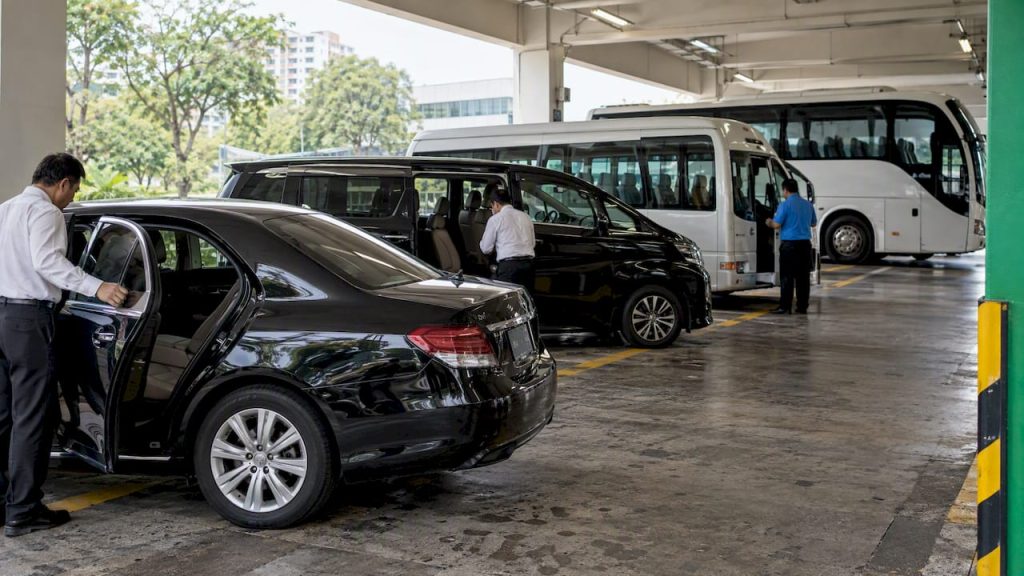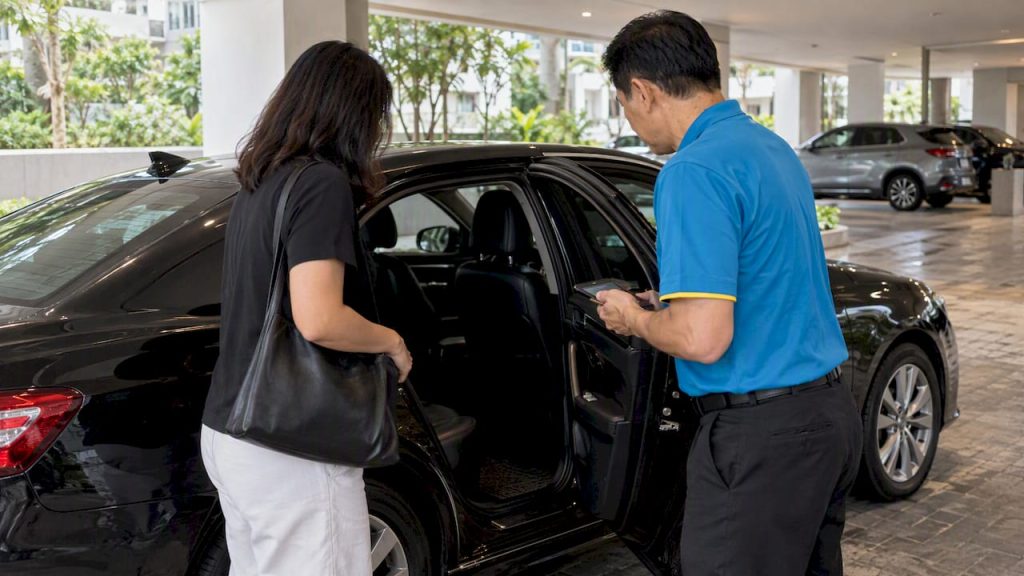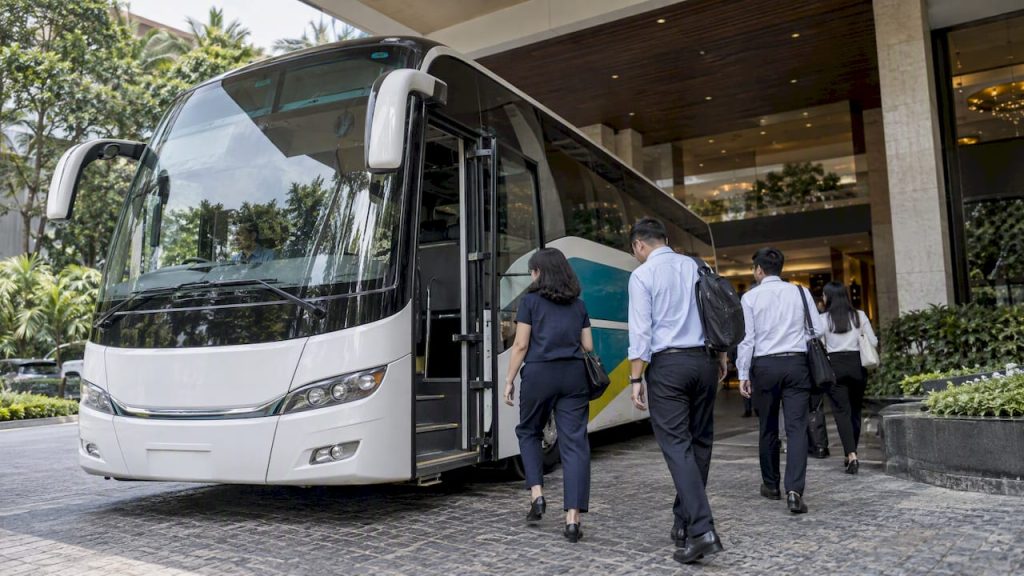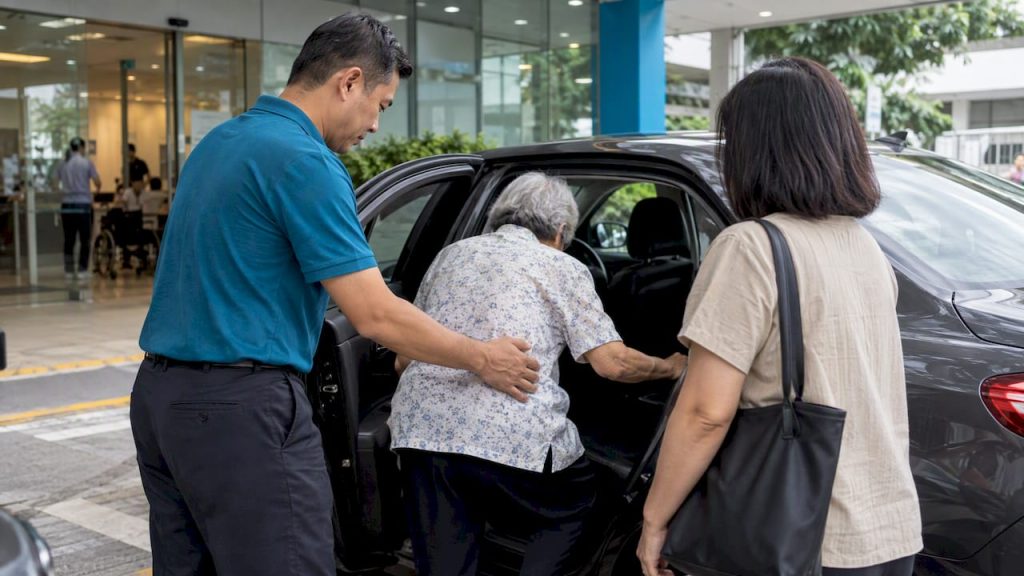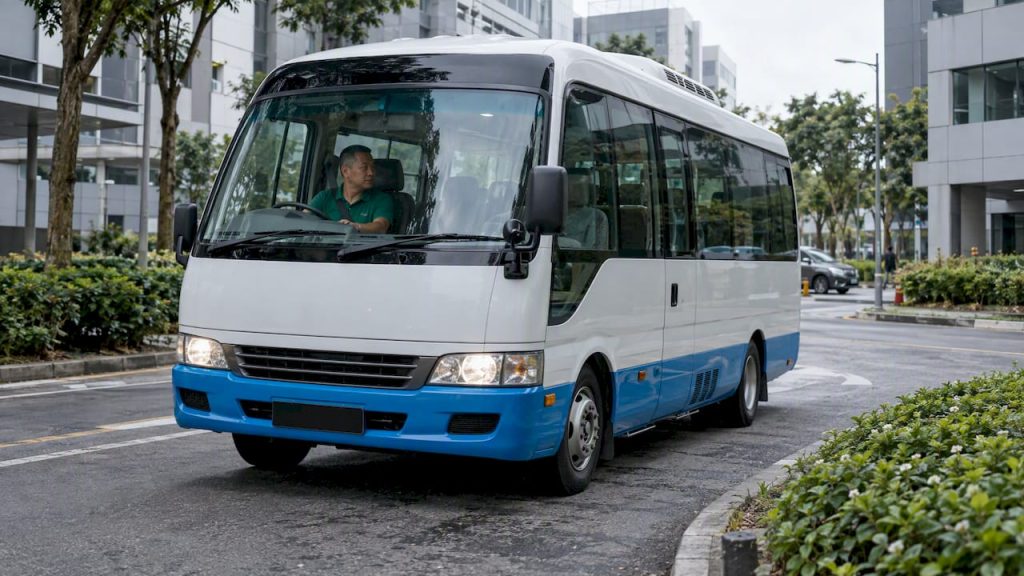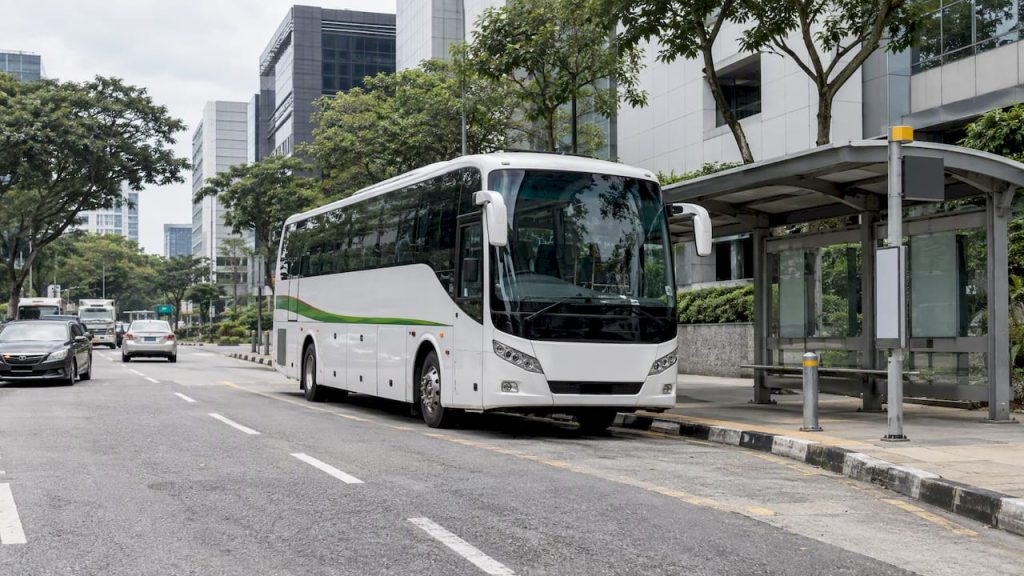
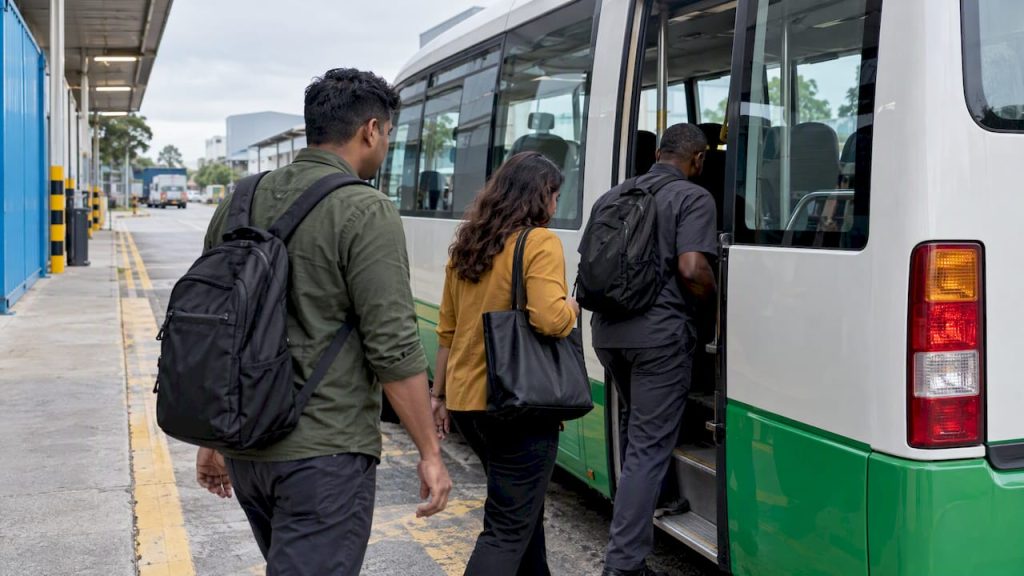
The right commute solution for a Singapore employer depends on three things: where your staff live relative to MRT and bus links, what hours they work, and how predictable the headcount is. For fixed shifts and recurring routes, a contracted minibus or coach is usually the most economical. For small teams, late finishes or senior staff, chauffeured cars on an hourly or per-trip basis are often simpler. For everyone else, a mix of public transport support and flexible working may be enough.
This guide sets out each option, what it costs, where it breaks down, and the checks to run before you sign anything.
TL;DR
- Match the solution to the pattern: fixed shifts suit a contracted minibus or coach, irregular or late hours suit per-trip or hourly chauffeured cars.
- Kler Transport publishes per-trip rates of SGD 60 to 130 for transfers and SGD 50 to 100 per hour for hourly bookings, with a SGD 10 to 20 midnight charge.
- Check that any provider holds the right licence for the vehicle type, and ask what the backup plan is when a vehicle or driver is unavailable.
- Staff commuting is not only a transport question: flexible work requests and staggered hours can cut the number of seats you need to fund.
- Start with a two-week pilot on your hardest route before committing to a long contract.
Table of Contents
- Why employers in Singapore look beyond public transport
- The main commute options compared
- Contracted minibuses and coaches for fixed routes
- Hourly and per-trip chauffeured cars
- On-demand shuttle platforms and software
- Making the cost predictable
- Reduce the demand before you buy the seats
- How to choose: a five-step process
- How Kler Transport helps
- FAQ
- Sources
Why employers in Singapore look beyond public transport
Singapore’s MRT and bus network serves most office districts well. The gaps appear elsewhere: industrial estates such as Tuas and Jurong, business parks away from stations, early or late shifts when services thin out, and teams that live in scattered estates and would face several transfers.
Research from a shuttle technology provider describes the pattern in suburban and industrial areas: employees face stressful commutes with multiple transfers between buses and rail. The same source reports that dynamically routed shuttles can reduce commute time by more than 30% for employees. That is a vendor’s own figure from a case study, so treat it as an indication rather than a promise for your site.
There is also a cost that never shows on an invoice. Academic work on commute time and labour supply notes that commuting imposes financial, time and emotional costs on workers, which raises the cost of supplying labour. For an employer, that surfaces as lateness, turnover and tired staff on arrival.
The main commute options compared
| Option | Best for | Cost pattern | Main weakness |
|---|---|---|---|
| Contracted minibus or coach | Fixed shifts, 15 or more people on one corridor | Per route, per month or per trip | Wasted seats if headcount changes |
| Hourly chauffeured car or MPV | Small teams, split schedules, executives | Per hour | Cost rises quickly on long, daily use |
| Per-trip private transfers | Late-night finishes, one-off events, airport arrivals | Per trip, plus midnight charge | Less economical for identical daily runs |
| On-demand shuttle platform | Large sites with varied start times | Software plus vehicle fees | Needs enough volume and an internal owner |
| Public transport allowance | Central offices with good MRT access | Fixed monthly sum | Does nothing for shift or remote-site gaps |
| Flexible hours and remote days | Knowledge work | Policy time, not cash | Not possible for on-site roles |
Most employers end up combining two or three. A common pattern is a fixed shuttle for the main shift, per-trip cars for late finishers, and an allowance for staff who live near a station.
Contracted minibuses and coaches for fixed routes
If thirty people start at 8 am in the same industrial estate and live in three or four clusters, a minibus or coach on set pick-up points will almost always beat individual rides on cost per head. It also gives you a predictable timetable, which matters for attendance.
The trade-off is rigidity. Static loops leave seats empty when people take leave, work from home or change shifts. Work out your real average occupancy from a month of rosters before you size the vehicle. A 13-seat minivan that is 90% full is better value than a 40-seater that is half empty.
For a fuller breakdown of how prices are built and what HR should ask about routes and permits, see our guide to staff shuttle costs in Singapore.
What to check on the licence
Singapore’s land transport rules are enforced by the Land Transport Authority (LTA). Its December 2024 announcement on the point-to-point framework shows how seriously contingency and exit rules for operators are now treated: operators of point-to-point services must notify LTA of system-wide service impairments within one hour, and market exits need 120 days’ notice, up from 60.
Those rules govern the point-to-point sector, but the lesson carries over to staff transport. Ask any provider:
- Which licence covers the vehicles you will be riding in, and can they show it?
- Is passenger insurance in place for staff on board?
- What happens if the vehicle or driver is unavailable on the day? Look for a named backup arrangement, not a general assurance.
- Are drivers experienced on your route and able to communicate clearly in English?
- Where will pick-ups happen? Stops on public roads can need approval, which is covered in our note on office relocation transport.
Shift-based workforces feel disruption hardest. If one early bus fails, a whole production line or service counter starts late.
Hourly and per-trip chauffeured cars
A contracted bus is the wrong tool when your need is irregular. Per-trip and hourly chauffeured transport fills those gaps.
Kler Transport’s published rates give a sense of scale for Singapore:
- Transfers: SGD 60 to 130 per trip, depending on vehicle and service.
- Airport arrival: SGD 65 to 140. Airport departure: SGD 60 to 130.
- Hourly booking: SGD 50 to 100 per hour.
- Midnight charges: SGD 10 to 20 on top.
- Charter vehicle: SGD 450 per day, as listed on our Malaysia rates page.
The full list sits on our rates page. Where within each range you land depends on the vehicle type, group size and service selected.
Where per-trip transport makes sense
- Late finishers. A team closing a deal or running a night inventory count can be taken home in one MPV rather than each person paying for an individual ride. The midnight charge is a known, fixed add-on.
- Airport and visitor movements. Visiting colleagues and clients arriving at Changi need meet-and-greet and luggage handling more than a timetable.
- Cross-border staff. Teams travelling between Singapore and Johor or Malacca can use a day charter instead of arranging separate rides each way.
- Events and offsites. Moving a group to a venue is a one-off exercise; our checklist for company offsite transport lists ten things to confirm first.
A worked example
Suppose six sales staff finish a client dinner at 11.30 pm and live in two directions. Two per-trip transfers at the published SGD 60 to 130 range, each with the SGD 10 to 20 midnight charge, give a clear ceiling and floor before the evening starts. Compare that with six individual rides at unpredictable surge-style prices, and the advantage of a quoted fixed rate is less about the cheapest fare and more about being able to budget it.

For a daily commute covering the same distance, the maths flips. Twenty working days of two trips each adds up fast, and a shared minibus becomes the better fit.
On-demand shuttle platforms and software
Many of the pages that rank for this topic are from software vendors selling employee transport management systems. These automate rostering, routing, live tracking and billing, and they make sense at scale: several hundred employees, multiple shifts, and a transport coordinator who needs data.
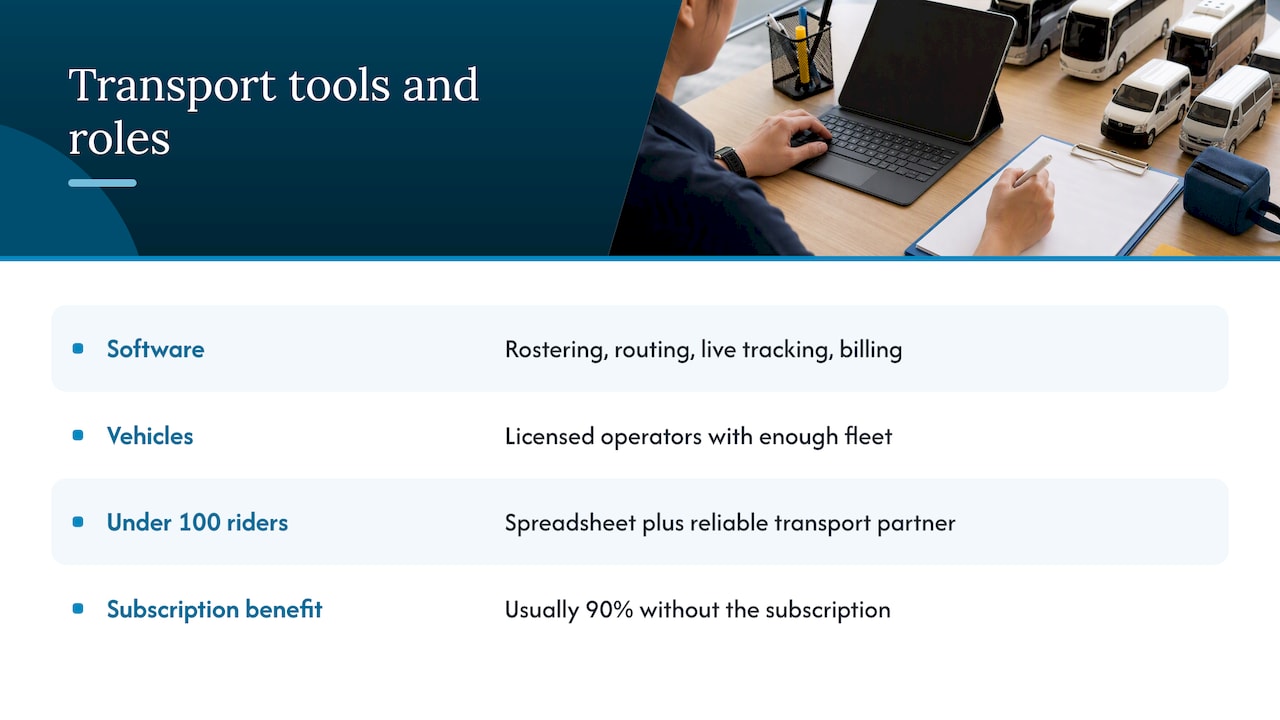
The software does not provide vehicles. You still need licensed operators with enough fleet. For a company with under a hundred riders, a spreadsheet of rosters and a reliable transport partner usually achieves 90% of the benefit without the subscription.
The market is also moving toward predictability. A report on a Singapore-founded bus-sharing business that pivoted to corporate clients notes growing preference for subscription-style transport for recurring commutes, with ad-hoc travel still needed alongside it. That matches what we see in practice: a base of fixed routes, with flexible cars on top.
Making the cost predictable
Employers often worry less about the average price and more about surprises. Three habits help:
- Separate the baseline from the exceptions. Contract the routes that repeat every week, and keep ad-hoc bookings for everything else.
- Ask for rates by vehicle type and time band. Know in advance what midnight, weekend and public holiday trips cost.
- Review quarterly. Headcount, shift patterns and office moves change the right vehicle size.
If you are comparing how rental and recurring vehicle arrangements keep costs stable, this overview of vehicle rental options for B2B is written for the Italian market but the budgeting logic applies equally to Singapore employers.
Reduce the demand before you buy the seats
Transport is the most visible lever, but not the only one. Since 1 December 2024, Singapore’s Tripartite Guidelines on flexible work arrangement requests require every employer to have a formal process for handling such requests. That includes requests to change hours or work location.
Two practical uses for a commute strategy:
- Staggered start times thin out the morning peak, which can shorten journeys on public transport and reduce the number of seats you need on a shuttle.
- Remote or hybrid days for roles that allow them lower the headcount on any given day, so a smaller vehicle may be enough.
Peak-hour congestion on the roads is also managed nationally. Singapore’s Electronic Road Pricing system charges vehicles passing gantries, which is one reason shared vehicles are cheaper per head than individual car travel into the central area.
How to choose: a five-step process
- Map your people. Pull home postcodes, shift times and current commute durations. Anonymise the data.
- Find the problem routes. Mark where public transport takes over about 60 minutes, needs two or more transfers, or does not run at shift start or end.
- Sort demand into fixed and flexible. Fixed goes to minibus or coach. Flexible goes to per-trip or hourly cars.
- Shortlist providers and verify. Ask for licence proof, insurance, backup arrangements and references from other corporate clients.
- Pilot for two weeks. Track punctuality, occupancy and staff feedback, then adjust before committing.
Our business and corporate transport page describes how we set up corporate arrangements.
How Kler Transport helps
We provide chauffeured sedans, MPVs, minibuses and coaches in Singapore, with staff and worker transport, corporate transfers, hourly charters and cross-border runs to Malaysia. Drivers are experienced and English-speaking, and our service includes meet-and-greet and luggage handling where the booking calls for it. Because the fleet spans solo passengers to large groups, you can use one provider for the shuttle and for the late-night cars.
To see what suits your team, browse our transport services, or send your routes and shift times through the booking reservation form for a quote.
FAQ
What are the main staff commute options in Singapore?
The main options are contracted shuttles (minibus or coach), hourly or per-trip chauffeured cars, on-demand shuttle platforms, public transport allowances and flexible working arrangements. Most employers use a combination, with fixed routes for regular shifts and flexible cars for exceptions.
How much does staff transport cost in Singapore?
It depends on vehicle type, distance and frequency. As published, Kler Transport’s per-trip transfers range from SGD 60 to 130, and hourly bookings from SGD 50 to 100 per hour, with a SGD 10 to 20 midnight charge. Recurring routes are quoted on request, so share your schedule to get a figure.
Do I need to check licences for a company shuttle?
Yes. Ask the provider which licence covers the vehicle type used, and confirm passenger insurance. LTA is the regulator for land transport, and its framework puts weight on service contingencies, so ask what the backup plan is.
Is a shuttle better than a transport allowance?
A shuttle works better where public transport is poor, shifts are fixed and many staff share a corridor. An allowance works better for central offices with good MRT access and scattered homes. Many employers offer both, depending on the team.
Sources
- RideCo: on-demand commuter shuttles for employees
- Commute Time and Labor Supply (SSRN)
- LTA: Award of operator licences and Phase 1 of the point-to-point framework review
- Vulcan Post: RushOwl’s pivot to B2B
- Singapore FWA Guidelines: Employer Guide
- ITF-OECD: Congestion control in Singapore