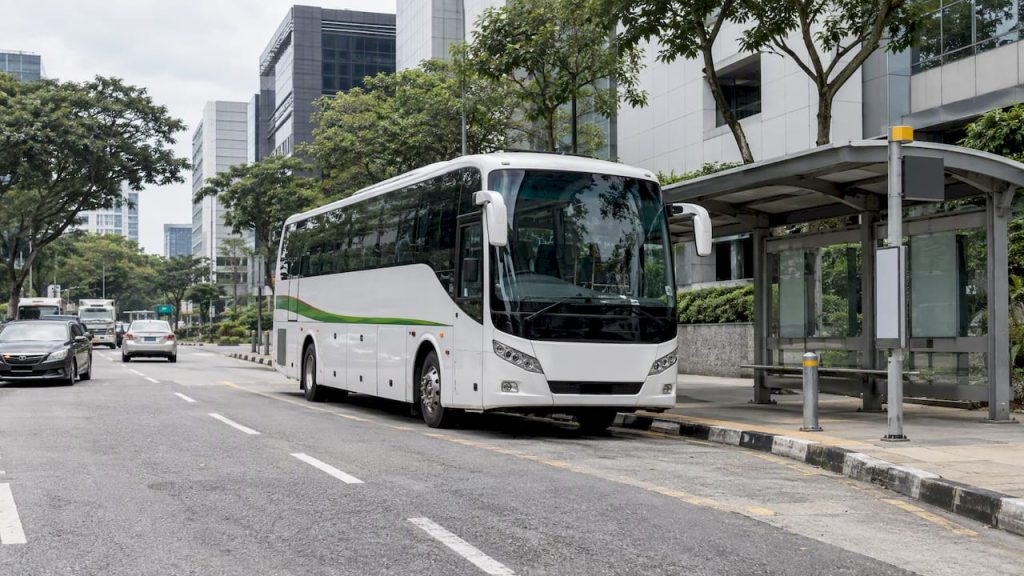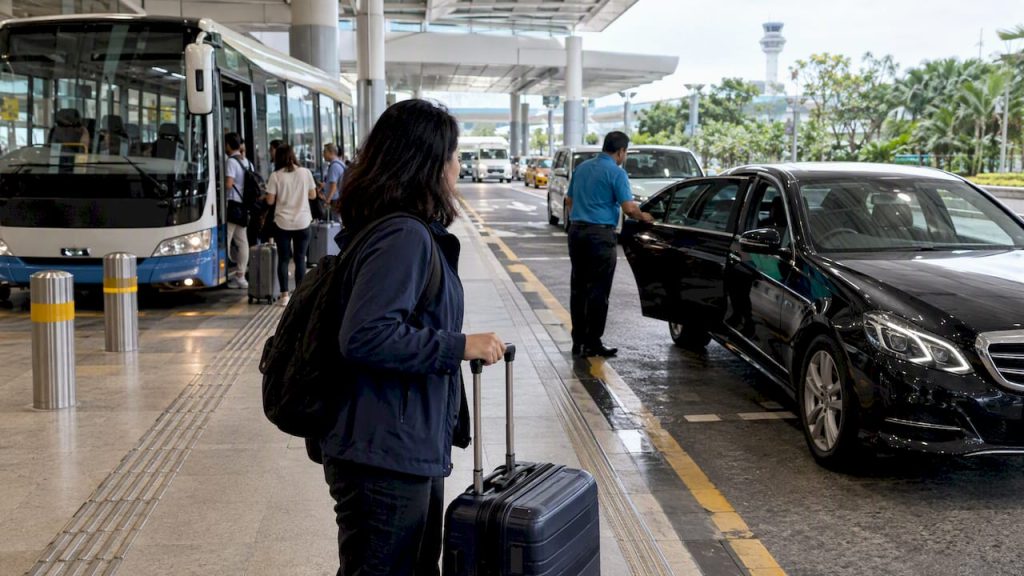
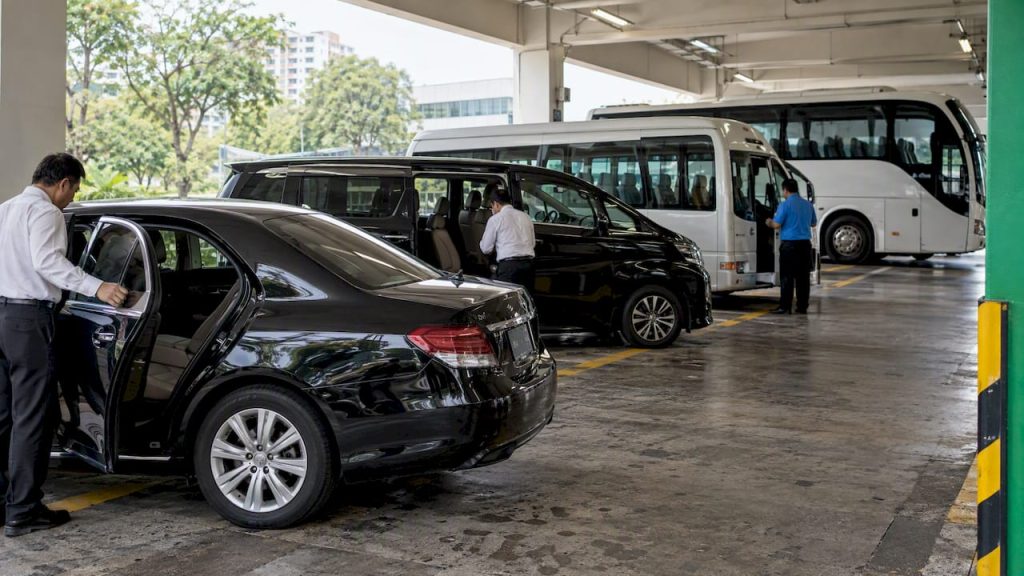
A private vehicle in Singapore can carry only as many people as it has registered seats with working seatbelts, and luggage and child seats use up some of that room. In practice, a sedan suits 3 to 4 passengers with bags, an MPV suits small groups of up to about 6, a minibus covers mid-sized groups, and a coach handles the large ones. The detail below should help you pick the right size before you book.
TL;DR
- Every passenger needs their own seat and seatbelt. There is no allowance for squeezing in an extra person, and a chauffeur should refuse an overloaded vehicle.
- Seat count is not the same as usable capacity. Large suitcases, golf bags, prams and child seats take up room, so a vehicle that is full on paper can be too small once the bags are loaded.
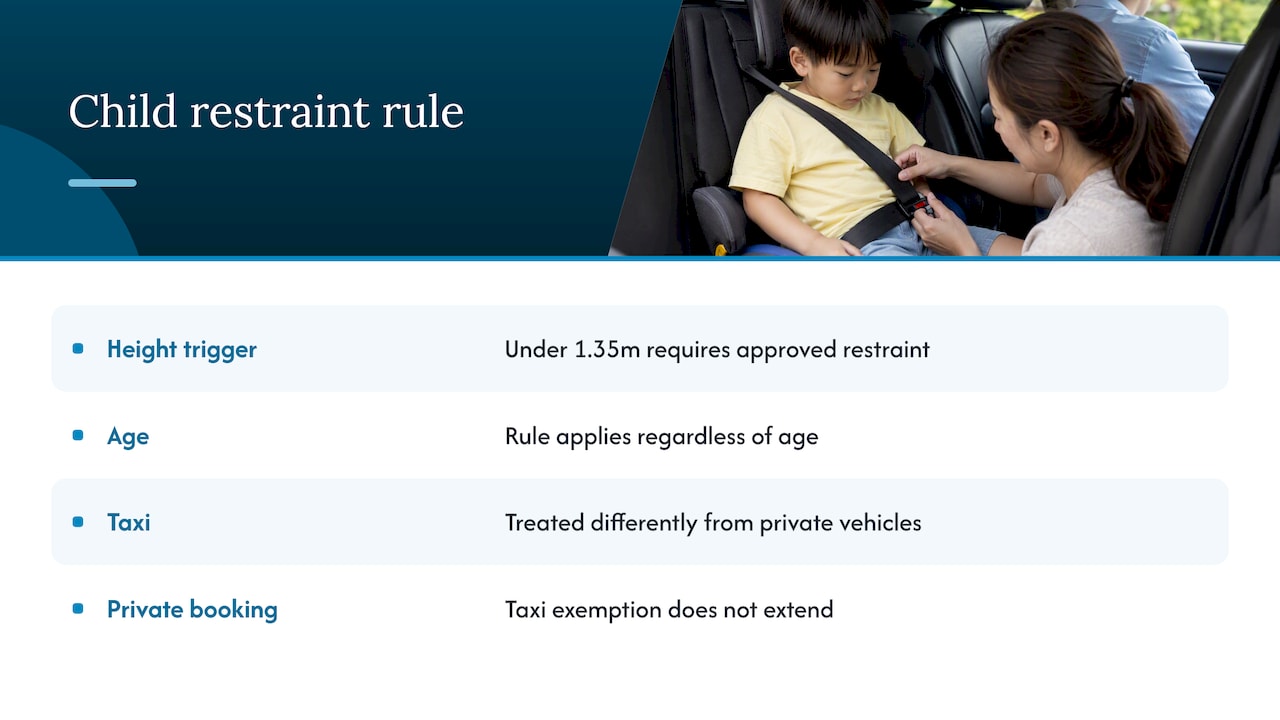
- In Singapore, the child restraint rule follows height, not age: any passenger under 1.35m must be properly secured, and that includes short adults.
- Going up one vehicle size is usually cheaper than splitting a group across two cars or running a second trip.
- Check the pick-up point as well. Some basement car parks and narrow drop-off bays do not suit minibuses or coaches.
Table of Contents
- What seating capacity actually means
- Typical capacity by vehicle type
- Children, booster seats and capacity
- Luggage: the limit most groups miss
- Check the pick-up point, not just the vehicle
- Choosing the right size: a quick decision guide
- What it costs to move up a vehicle size
- Book the right vehicle with Kler Transport
- FAQ
- Sources
What seating capacity actually means
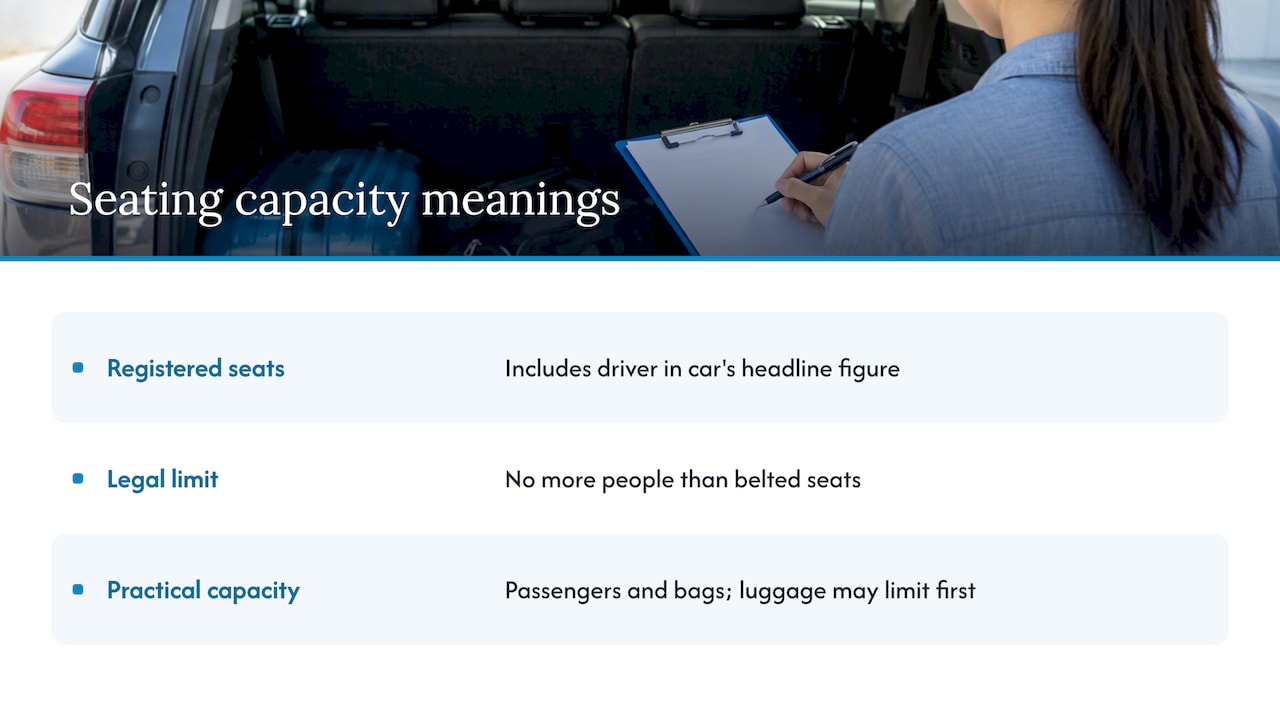
People use the phrase in three different ways, and mixing them up causes most booking mistakes.
Registered seats. This is the number of seats the vehicle is built and registered to carry, normally including the driver’s seat in a car’s headline figure. A 7-seater car carries the driver plus six passengers. Readers often forget this when they count heads.
Legal passenger limit. You cannot carry more people than there are seats with belts. This answers a question people often ask: can six people sit in a five-seater car in Singapore? No. The sixth person has no seat or belt. A chauffeur working for a professional company will not take the booking as an overloaded vehicle, and shouldn’t.
Practical capacity. This is how many people fit comfortably with their luggage. Articles on Singapore group travel make the same point: a vehicle has two separate limits, the number of seated passengers and the space left for bags. For an airport run, the second limit is usually the one you hit first.
When we quote a transfer, we ask for passengers and bags together for this reason. A headcount alone does not tell us which vehicle you need.
Typical capacity by vehicle type
The table gives rules of thumb for the vehicle classes commonly used for chauffeured transport in Singapore. Exact numbers vary by make and model, so treat them as a planning guide and confirm the figure for the vehicle assigned to your booking.
| Vehicle type | Passengers (typical) | Luggage situation | Best for |
|---|---|---|---|
| Sedan | 3 to 4 | 2 to 3 medium suitcases | Solo travellers, couples, business trips |
| SUV or 7-seater car | 5 to 6 | Reduced boot space when all rows are in use | Families with moderate luggage |
| Premium MPV or minivan | 5 to 6 | Good boot space, roomier cabin | Small groups, families with large bags, executives |
| Minibus (about 13 seats) | 10 to 13 | Limited if all seats are taken | Teams, wedding parties, tour groups |
| Medium bus | Around 20 to 30 | Underfloor or rear storage depends on model | Corporate outings, school and club trips |
| Coach | Around 40 to 50 | Large hold | Conferences, large tours, staff shuttles |
Singapore’s roads are dominated by smaller vehicles. Light-duty vehicles made up about 67% of the national fleet in 2023, while buses were only 2%. Larger vehicles are a specialist part of the market, so it pays to book them early.
Sedans: comfortable but limited
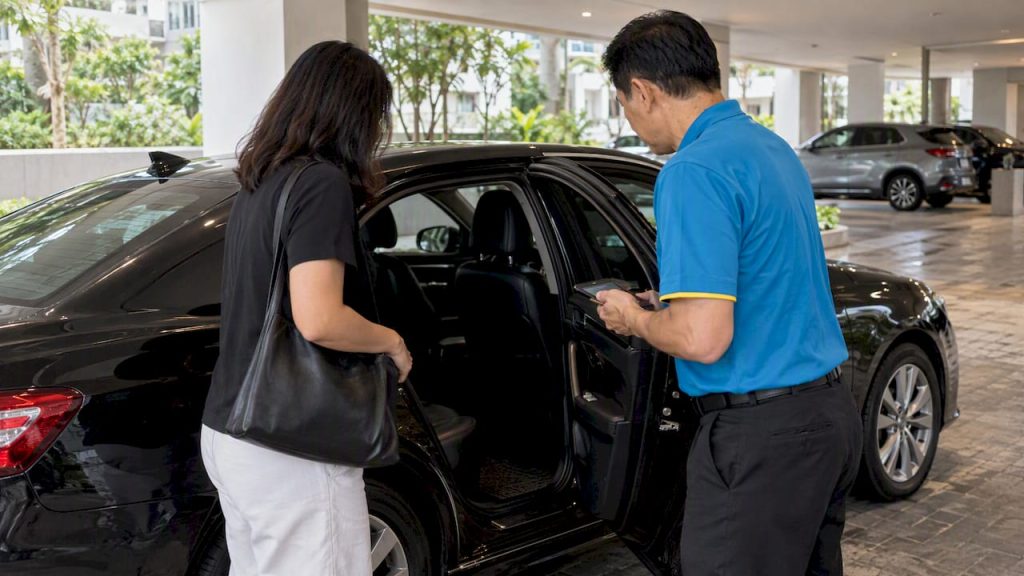
A luxury sedan is the right choice for one to three people. Four can fit, but the boot then limits the luggage, and four adults with four check-in suitcases will not work. For a couple with two large suitcases and hand luggage, a sedan is comfortable. Add a third large suitcase and you should move to an MPV.
MPVs and minivans: the Singapore workhorse
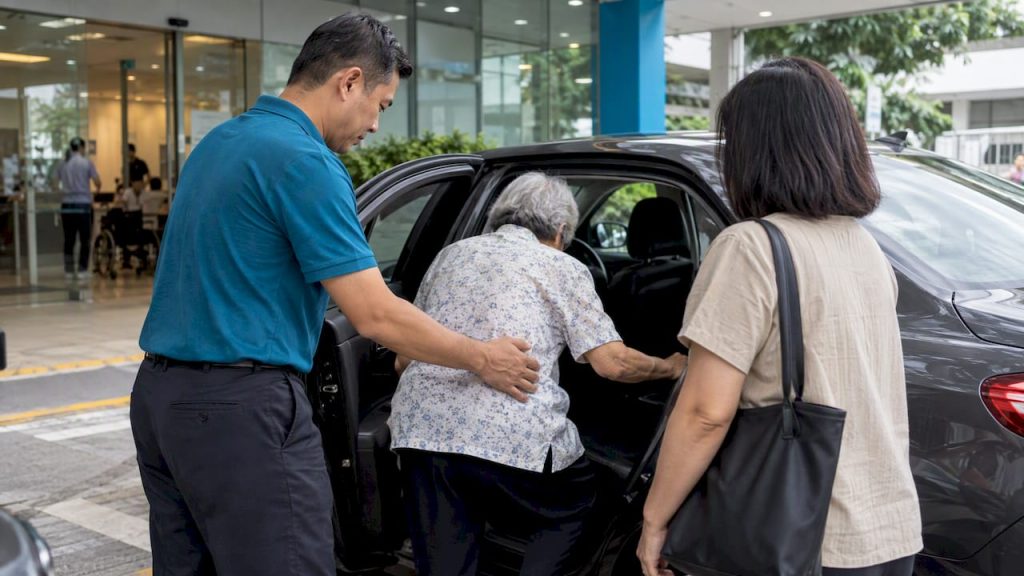
For groups of up to six, a premium MPV is usually the best balance. The cabin is taller and wider than a sedan’s, sliding doors make boarding easier for older passengers and children, and the boot space allows for bags that would otherwise need a second car. This is also where child seats matter most, because a booster or a rear-facing seat takes the place of a passenger. Our chauffeured minivan rental covers these bookings, and the group airport transfer guide explains how to size the vehicle for a group arrival.
Minibuses: where the luggage rule matters most
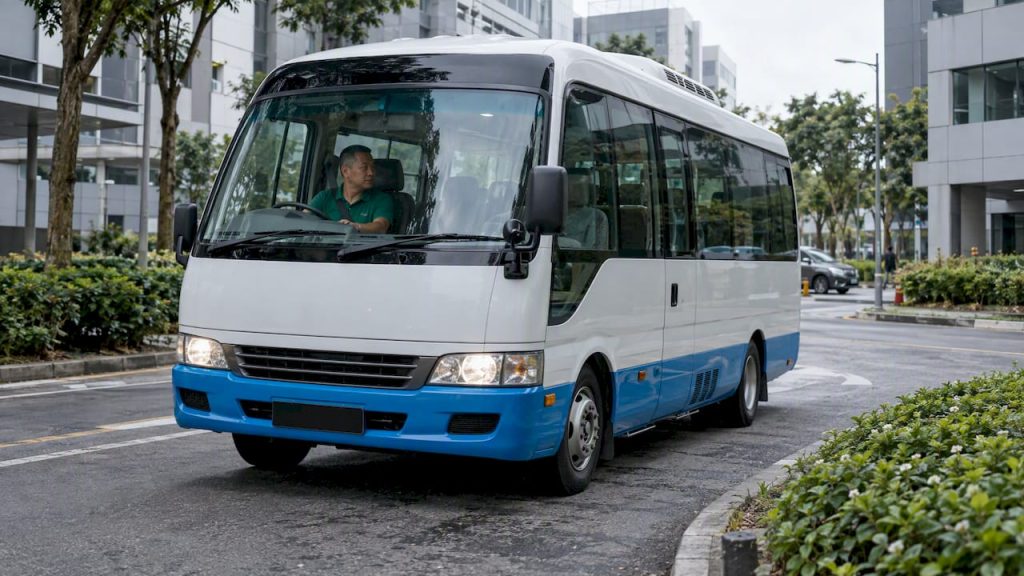
A minibus of about 13 seats looks as if it solves every group problem, but it is the vehicle where seat count and luggage clash hardest. If every passenger brings a large suitcase, some of those suitcases will occupy seats. A sensible planning rule is that one large bag takes the space of one seat. A group of 13 with 13 large suitcases therefore cannot all travel in a 13-seater. Either reduce the headcount per vehicle, bring smaller bags, or add a second vehicle for luggage.
If you are arranging a charter, our minibus charter checklist for organisers covers the compliance points to confirm before the day.
Coaches: planning beyond the seat count
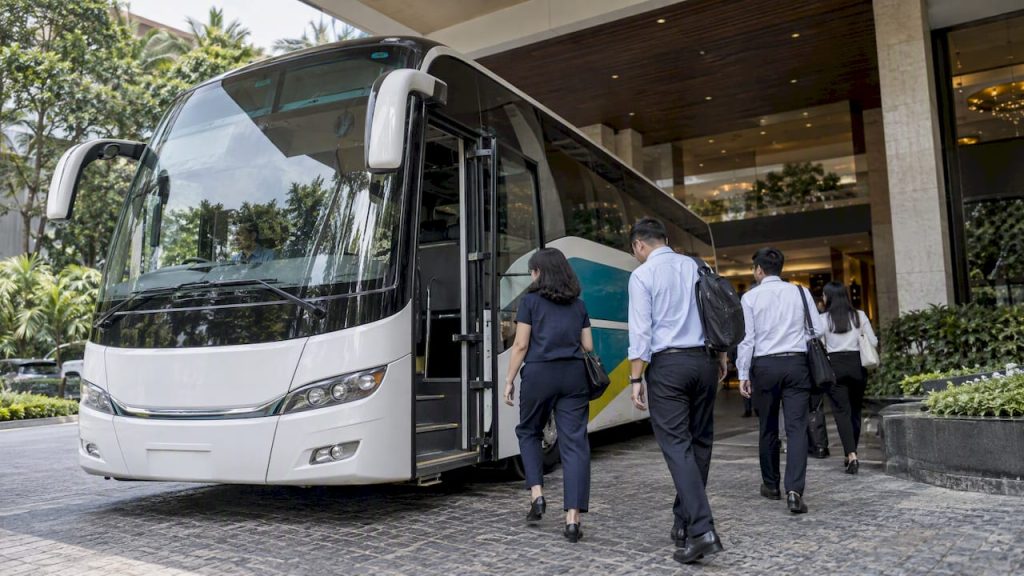
Coaches carry the most people, but the practical limits shift from seats to access. You need a place where the coach can stop, turn and pick up safely. Our coach charter guide covers five checks on vehicle fit and LTA rules. For events, the conference transport guide explains how to use shuttles for crowds and cars for VIPs.
Children, booster seats and capacity
This is the area where families most often get the numbers wrong.
The 1.35m rule
The law is based on height. According to guidance on installing child seats in Singapore, a passenger under 1.35m must be secured by an approved child restraint, a booster cushion with a belt that restrains both the upper and lower body, or an approved adjustable belt. Legal commentary makes the same point and adds that the rule applies regardless of age, so a small adult is covered as well. Taxis are treated differently from other private vehicles, and that exemption does not extend to a private chauffeured service, so plan for child restraints on a private booking.
The Ministry of Home Affairs has published enforcement figures on drivers caught for not securing passengers under 1.35m, which shows the rule is actively enforced. The penalties have changed over the years and sources quote different amounts, so check the current position with the Traffic Police or LTA rather than relying on a single article.
How child seats change the count
A child seat does not add a seat. It uses one, and a bulky seat can block the adjoining place as well. A family of two adults and three young children in a 7-seater car can run out of room faster than the numbers suggest, because of how the seats fit together. You may also have a pram to carry.
Some point-to-point operators, such as taxis, count several children as fewer adults for their own seating rules. Do not carry that logic over to a private booking. Each child with a seat needs a belt position, and the registered seat count is the ceiling. Tell us the ages and heights of the children when you book and we will advise on the vehicle. Our guide for families on airport transfers goes through the rules and what to prepare.
Luggage: the limit most groups miss
A suitcase is the most common reason a group needs a bigger vehicle than expected. Here is a simple way to check your own situation.
- Count the large bags. Include check-in suitcases, golf bags, sports equipment and anything that cannot sit on a lap.
- Count the oversize items. Prams, folded wheelchairs, musical instruments and surfboards need dedicated room.
- Add child seats. Each one takes space.
- Compare with the boot, not the cabin. Bags that fit in the cabin reduce passenger comfort.
- Round up. If the answer sits between two vehicles, choose the larger one.
Worked examples:
- Four adults, four large suitcases, four cabin bags, arriving at Changi. A sedan will not hold all of this. A premium MPV will.
- Family of five with two young children, a pram and three suitcases. A 7-seater car may seat everyone, but the third row reduces boot space. An MPV or minivan is the safer choice.
- Eleven colleagues, each with a cabin bag only. A 13-seater minibus works, as the bags are small.
- Eleven colleagues, each with a large suitcase. A 13-seater is too small once the bags are counted. Choose a larger vehicle or add a second one.
If you are travelling with a lot of baggage, our guide to airport transfers matched to large luggage gives more examples.
Check the pick-up point, not just the vehicle
A vehicle that fits your group may still not fit the place where you are being collected. Singapore’s parking code sets standard lot dimensions for developments, and those standards are designed around cars. Older buildings and tight basement car parks may restrict access for minibuses and coaches, and spaces beside walls or columns need extra width for doors to open.
For a hotel, office or event venue, ask these questions in advance:
- Is there a coach bay or a covered drop-off area?
- What is the height clearance at the basement entrance?
- Can a larger vehicle wait, or must it keep moving?
- Is there a better pick-up point nearby for a larger vehicle?
The last stretch of the journey is often the hardest part of an event. Our guides on corporate roadshow transport and Sports Hub transfers show how to plan around the drop-off zone.
Choosing the right size: a quick decision guide
| Your group | Luggage | Suggested vehicle |
|---|---|---|
| 1 to 2 people | Light to normal | Sedan |
| 3 to 4 people | Moderate | Sedan or MPV |
| 3 to 6 people | Heavy, or children with seats | Premium MPV |
| 7 to 13 people | Cabin bags only | Minibus |
| 7 to 13 people | Large suitcases | Minibus plus a second vehicle, or a larger vehicle |
| 14 or more people | Any | Medium bus or coach |
Two vehicles are sometimes better than one large one. If your group arrives at Changi with a lot of bags, two MPVs can load quickly and leave together, while a single minibus may take longer to pack and may be too tight. For corporate groups, the five-step group transport checklist and the company offsite checklist help you decide.
What it costs to move up a vehicle size
Prices depend on vehicle type, group size and the service selected. Our published rates on the rates page are:
| Service | Published rate |
|---|---|
| Airport arrival | S$65 to S$140 per trip |
| Airport departure | S$60 to S$130 per trip |
| Transfers | S$60 to S$130 per trip |
| Hourly booking | S$50 to S$100 per hour |
| Midnight charges | S$10 to S$20 per booking |
A full-day charter vehicle to Malaysia is S$450 per day. The range in each line reflects the vehicle you choose and the destination. Larger vehicles sit towards the top of the range. Because the rates are per trip, one larger vehicle is often cheaper than two smaller ones, and it keeps your group together.
Book the right vehicle with Kler Transport
We run chauffeured sedans, MPVs, minibuses and coaches in Singapore, with English-speaking drivers, meet-and-greet and luggage handling. Tell us how many passengers, how many bags and the ages of any children, and we will match the vehicle. You can find our services on the services page, our airport transfer page, or go straight to the booking form. For regular group commuting, see our staff and workers transport.
FAQ
Can 6 people sit in a 5-seater car in Singapore?
No. Each passenger needs a seat with a seatbelt, so a 5-seater, which includes the driver, carries four passengers. A sixth person would have no seat and no belt. Book an MPV or minivan instead.
Do children count as passengers for seating capacity?
Yes, on a private vehicle. Each child needs a seat position, and any passenger under 1.35m needs an approved restraint under Singapore’s height-based rule. A child seat can use more than one place, so tell the operator the ages and heights when you book.
How many people fit in a minibus or coach?
A minibus usually seats about 13 passengers, while a coach carries around 40 to 50. These figures vary by model, so confirm the registered seat count for your booking. Remember that large suitcases also use space, so a full minibus often has no room for bags.
How do I know if my luggage will fit?
Count the large bags, oversize items and child seats, and give those numbers when you book. As a rule, one large bag takes the space of one seat in a minibus. If you are between two sizes, choose the larger one.
Sources
- Installing a Child Car Seat in Singapore: A Fitting Guide
- Car Seat Rules in Singapore: A Guide for Parents
- Singapore Road Safety Profile 2025, Asian Transport Observatory
- Written reply on passengers below 1.35m, Ministry of Home Affairs
- Vehicle Parking code of practice, LTA